
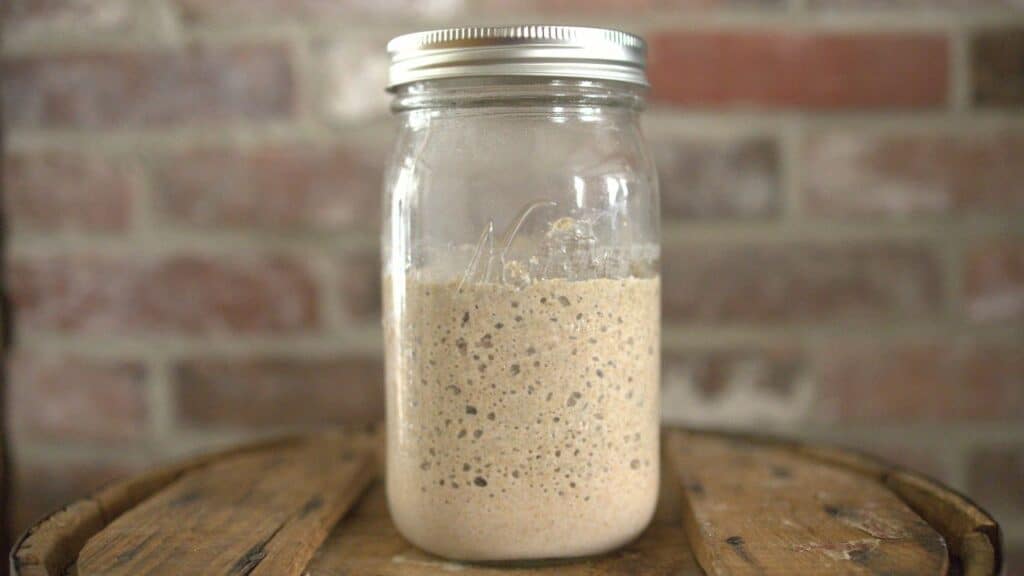
Last Updated on August 14, 2026 by Michelle
Sourdough was my original love, before fresh milled flour entered the picture.
Once I started using my grain mill on a daily basis, sourdough fell of my radar for a while. I was so captivated by wheat berries, mills, fresh flour, and fresh milled bread, that my sourdough starter became neglected.
A coincidence? Maybe.
Once I got a handle on fresh milled flour with commercial yeast, I slowly added sourdough back into my life, with the nutritious addition of fresh milled flour.
But honestly? I gave up a few times. There’s just a steep learning curve with fresh milled flour + sourdough.
But we’ll master it together.
And it turns out that a huge help is to actually start a new sourdough starter, from scratch, with fresh milled flour. Sometimes starters used to commercial flour don’t like being switched over to fresh flour.
Why combine fresh flour and sourdough?
So, if it’s difficult, why bother? I’m glad you asked.
Sourdough is using natural yeast and natural fermentation to make bread. While this process is commonly seen as a more nutritious way to make bread, that’s only half true. You see, sourdough bread is long-fermented, which means that it’s easier for our bodies to digest in the end. It’s already started to “digest” through it’s long, natural fermentation process. That’s a good thing.
What’s not good is that long-fermenting bread made with traditional commercial flour (store bought flour is essentially just highly-processed starch, missing 2/3 of the natural wheat), is simply a missed opportunity. (Learn more about the effect of sourdough fermentation on fresh milled flour.)
Fresh milled flour + sourdough? A long-fermented powerhouse of nutrition, digestibility, and flavor. It’s truly the best bread you can eat.
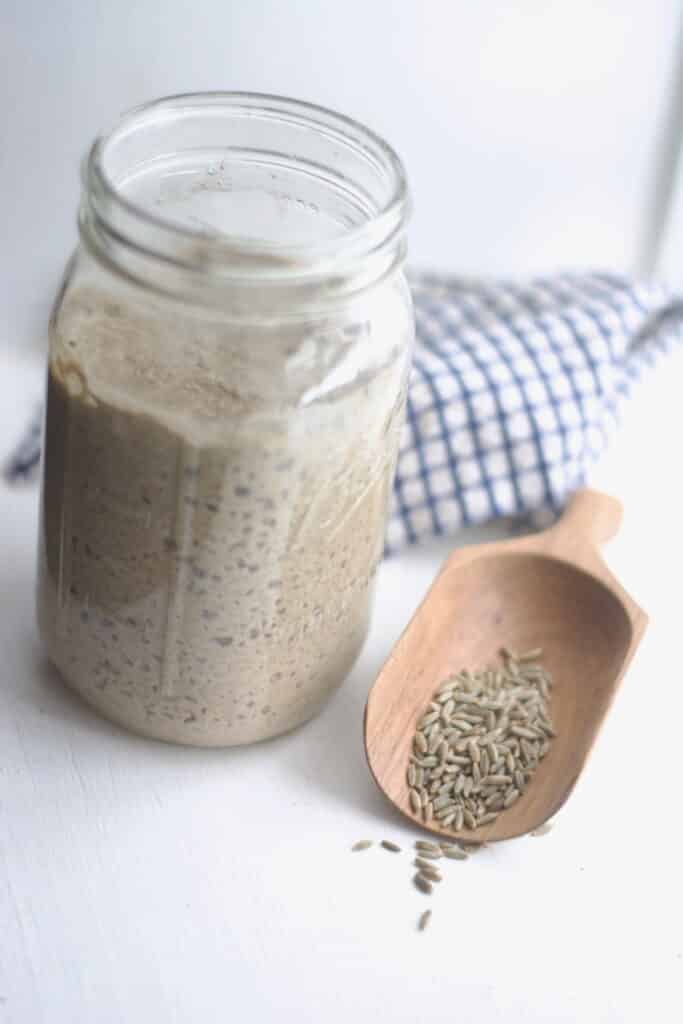
Sourdough with fresh milled flour: getting started
If you’re new to milling flour, let’s get started.
You’ll need a good grain mill. You have three options–a stone mill, an impact mill (steel blades), or a hand-crank mill. I personally choose an on-demand style stone mill, but to each his own. Not sure which mill you might want or need? I wrote an entire guide to choosing a grain mill that breaks down everything you need to know.
Next, you need some wheat berries. It can get confusing with tons of variety, but if you’re starting out with fresh flour, you’ll most likely want to stick to either hard white or hard red for making bread like sourdough.
Then you’ll need a sourdough starter (if you’re making sourdough bread, that is). Good news; you’re in the right place! We’ll cover the whole process of making a fresh milled sourdough starter from scratch, right here.
It’s that simple!
Wheat berries for sourdough starter
Wheat berries can be confusing.
But, when it comes down to it, most wheat berries (ground into flour) can be used to feed your sourdough starter. Just be sure to keep in consistent so your starter knows what to expect. However, my personal preference is to use fresh milled rye flour to feed my starter on the daily. This is for two reasons: 1) my starter is happier, bubblier, and more active when it’s fed rye, and 2) rye is the most affordable grain I purchase.
Great options for fresh flour to feed your sourdough starter include:
- Rye (my personal choice)
- Hard white
- Hard red
- Einkorn
- Khorasan (A.K.A. Kamut)
- Spelt (my second favorite)
- Durum
- Alternative (GF) grains
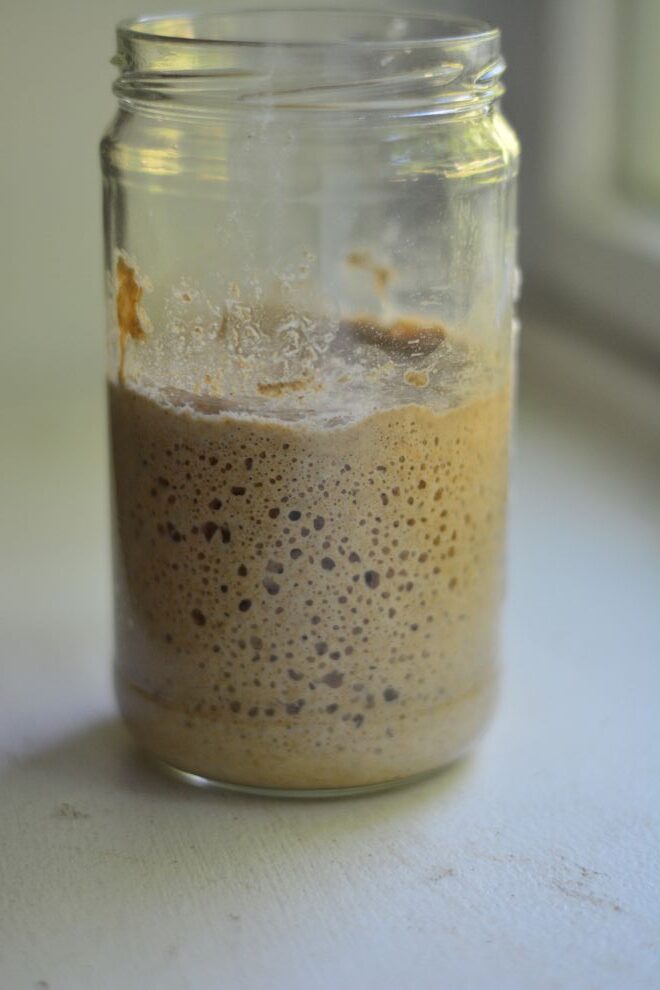
What fresh milled flour is best for sourdough
The flour you’ll use to feed your sourdough starter and the flour you’ll use to make sourdough bread may or may not be the same. For instance, I personally use rye flour to feed my starter every day, but I stick with grains like Turkey Red (a hard red wheat) or Dakota Snow (a hard white wheat) to make sourdough bread.
Make sure you don’t try to use any soft wheat berries or low-gluten grains to make sourdough bread.
AVOID using:
soft white wheat
soft red wheat
rye
ancient grains (if using, no more than 50%)
In general, stick with hard grains (hard white, hard red) for the best results with sourdough bread. Later one once you’ve mastered fresh milled sourdough bread, experiment with other grains. But I recommend keeping it as simple as possible when you’re starting out.
How to make a fresh milled sourdough starter
Without further ado, let’s make a fresh milled sourdough starter, from scratch. Making a fresh flour sourdough starter is a simple process of mixing flour and water together, but it does take some patience as you wait for it to become active.
I recommend using fresh milled rye flour, but other options are hard white/red wheat, spelt, einkorn or khorasan.
Day 1: In a clean jar, mix equal parts water and flour by weight together, stir well, and cover with something breathable (NOT airtight). Let sit. You can measure with volume or weight, just keep the flour and water in a roughly 1:1 ratio.
Day 2: Discard about half of your starter, then feed it. The easiest way to make sure you’re feeding the proper amounts at first is to weigh how much starter you have, then feed it the same weight in both flour and water, making sure it’s a thick, pancake batter-like consistency. If it’s thinner than that, add a little more flour.
As an example, if you have 25 g of starter, feed it 25 g of flour and 25 g of water.
Day 3: Discard half of your starter (again), and feed it the same amount of flour and water that the starter weighs.
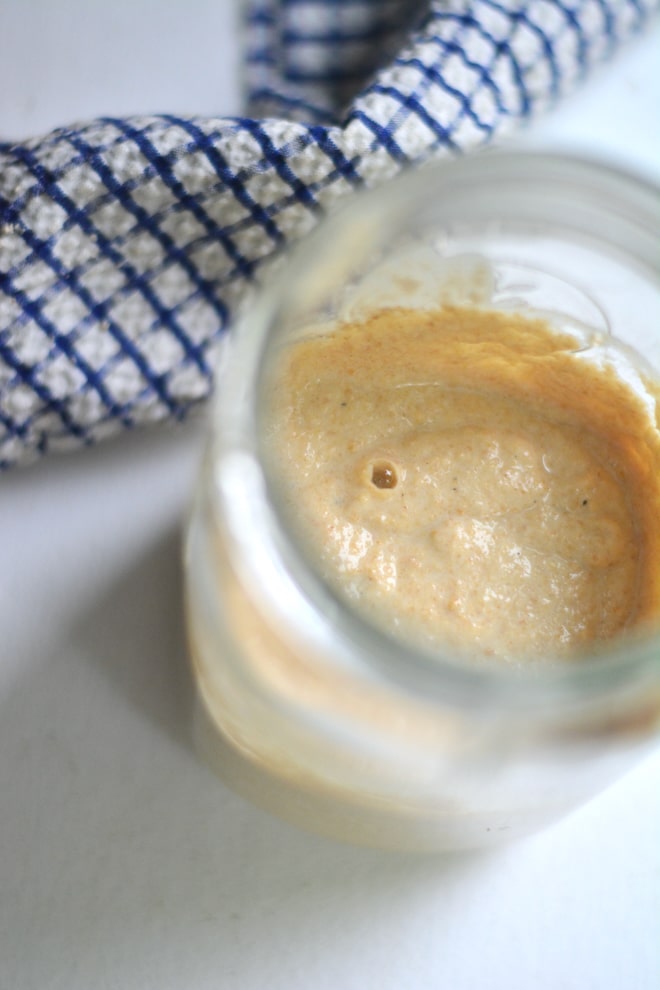
Days 4-6: Continue this feeding pattern, feeding every 12-24 hours. I like to feed my starter first thing each morning to stay in a routine. You should start to see bubbles and some activity in your starter by now.
Week 1-2: Your starter should be bubbling, doubling in size after it’s fed, and looking happy by the beginning of week two. But don’t try to make bread with your starter before it’s actually active and established. In the first few weeks, even if a starter looks active and happy, it most likely isn’t strong enough to make bread with yet. Be patient and try making discard recipes with your starter at first (like discard crackers or overnight griddle cakes) before diving into fresh flour sourdough bread.
Feeding sourdough starter with fresh milled flour
If you’re used to feeding your sourdough starter store bought flour and are transitioning it to fresh milled flour (or starting a brand-new fresh milled starter), you’ll notice differences. Because fresh milled flour is so different from commercial flour, your starter will react to it differently.
You’ll notice that your starter rises and becomes active more quickly. That’s because fresh flour is alive with nutrients that your starter loves. The downside? It also stays active for much shorter times. A fresh milled sourdough starter needs routine in order to thrive, and is much less flexible than a commercial flour starter. When I was feeding my starter commercial flour, skipping a feeding or two here and there? No big deal. With a fresh flour starter? Skipping a feeding or two leads to crusty tops, very sad starter, and a longer bounce-back time than with commercial flour.
A fresh milled starter needs to be fed very regularly and routinely to survive.
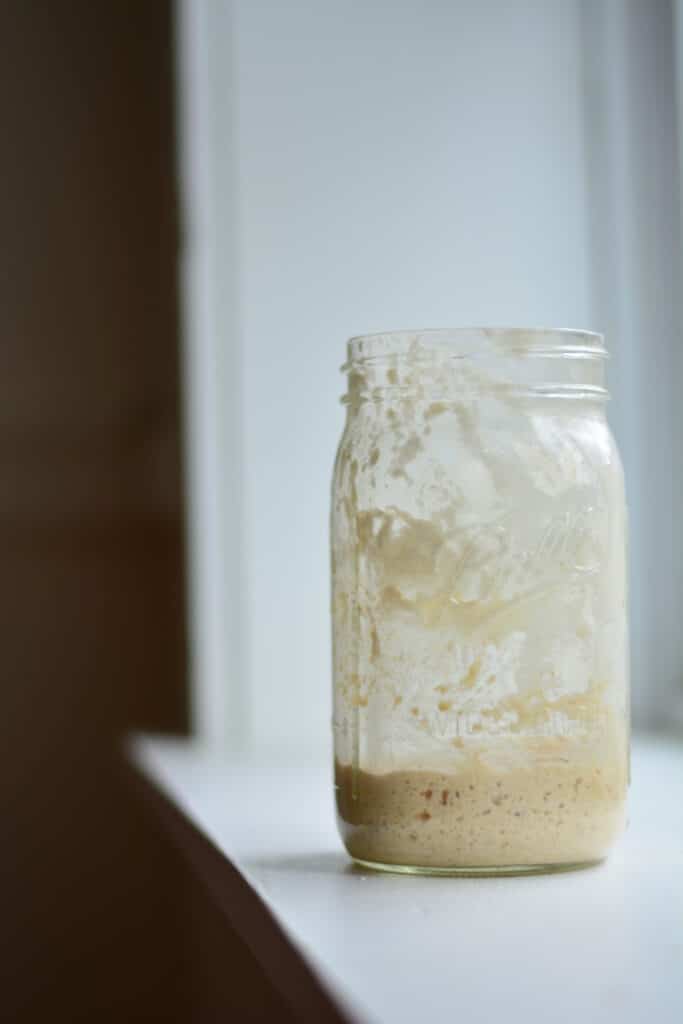
How and when to feed a fresh milled starter
Your best bet is to feed your fresh milled sourdough starter every morning, when possible. I’ve personally found that my fresh milled starter isn’t happy in the fridge, so I keep mine at room temperature. If you’re able to keep your starter in the fridge, feed it once a week.
My method for feeding my starter is very eyeball-ed and simple.
- Discard starter if it’s starting to have too much “bulk” to it. I don’t like to feed massive amounts of starter, I see it as a waste of flour. Save the discard for recipes later.
- Add filtered water to your starter until it’s watery and “murky” looking. How much water you add depends on how much starter you want the next day.
- Mix the starter + water together.
- Add flour until your starter becomes thick and well-mixed. I aim for pancake batter-like thickness.
- Fresh milled starters soak up a little more water than conventional flour ones, so keep it just a tad less thick as you’re feeding it than you’d like it to be in the end.
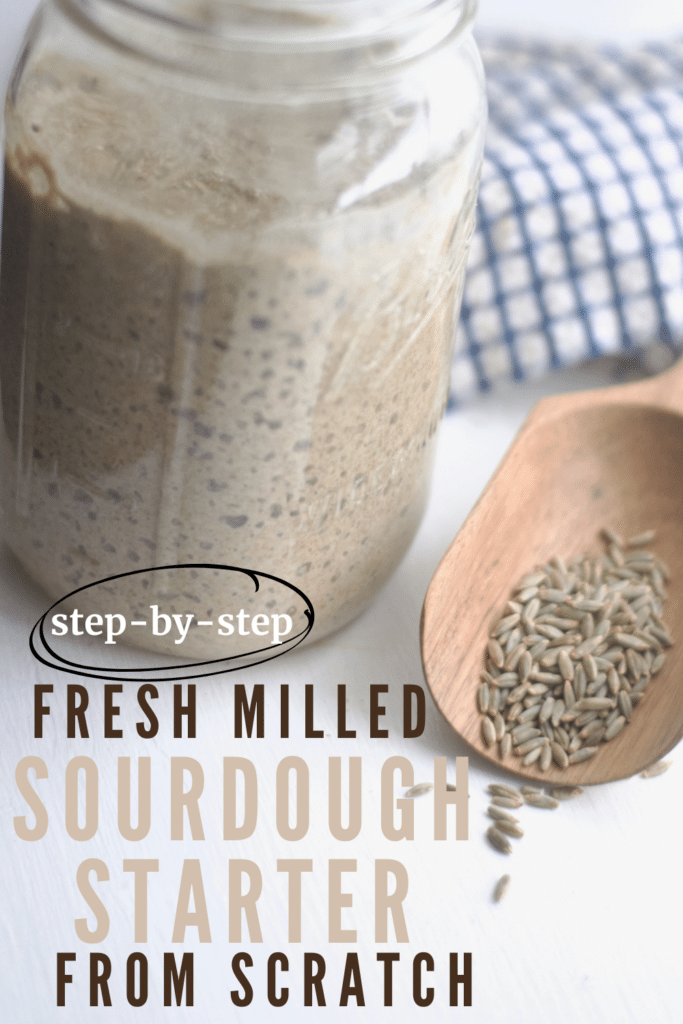
fresh milled sourdough starter, step-by-step
Ingredients
- rye flour see notes
- water
Instructions
- Day 1: In a clean jar, mix equal parts water and flour by weight together, stir well, and cover with something breathable (NOT airtight). Let sit. You can measure with volume or weight, just keep the flour and water in a roughly 1:1 ratio.
- Day 2: Discard about half of your starter, then feed it. The easiest way to make sure you’re feeding the proper amounts at first is to weigh how much starter you have, then feed it the same weight in both flour and water, making sure it’s a thick, pancake batter-like consistency. If it’s thinner than that, add a little more flour.
- Day 3: Again, discard half of your starter, and feed it the same amount of flour and water that the starter weighs.
- Days 4-6: Continue this feeding pattern, feeding every 12-24 hours. I like to feed my starter first thing each morning to stay in a routine. You should start to see bubbles and some activity in your starter by now.
- Week 1-2: Your starter should be bubbling, doubling in size after it’s fed, and looking happy by the beginning of week two. But don’t try to make bread with your starter before it’s actually active and established. In the first few weeks, even if a starter looks active and happy, it most likely isn’t strong enough to make bread with yet. Be patient and try making discard recipes with your starter at first (like discard crackers or overnight griddle cakes) before diving into fresh flour sourdough bread.
Notes
What you’ll need to make a fresh milled sourdough starter from scratch:

More like make a fresh milled sourdough starter (step-by-step):
- Which wheat berries to use (a simple guide)
- Sourdough with fresh milled flour: what you need to know
- Sourdough bread recipe made with fresh milled flour
- The best fresh milled flour blueberry muffins
- Join Fresh Flour University today & learn all the tips it took me 7 years to master. Use code SOULYRESTED to save $$.
I am having trouble getting started. I mix the freshly milled flour and water together in equal parts, but after 12 hours when I go to discard and add new flour/water, the starter that is left in the jar is a very doughy ball that I can’t get to dissolve. I mix and mix, but it won’t break up. I’m using hard red wheat and filtered water. I cover the jar with milk cloth so that it can breathe. Any ideas what I could be doing wrong?
Hi Rachel, sorry to hear you’re having trouble.
It sounds like you simply need a higher water ratio when you’re feeding your starter. Add a little more water than you think you’ll need, because starters with fresh flour thicken overtime as the flour soaks up the water. If you have a scale at home, try using equal weights of flour/water when you feed. (If it’s still thickening into a ball, add even more water.) Hope this helps!
So I’m guessing you don’t use a cup of water to a cup of flour, which as a total newbie, would like a better explanation and clarification. Not getting the feed with rye until you want to make bread. Then add what? Was a little frustrated with this one.