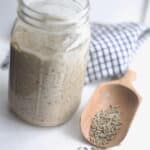
fresh milled sourdough starter, step-by-step
Ingredients
- rye flour see notes
- water
Instructions
- Day 1: In a clean jar, mix equal parts water and flour by weight together, stir well, and cover with something breathable (NOT airtight). Let sit. You can measure with volume or weight, just keep the flour and water in a roughly 1:1 ratio.
- Day 2: Discard about half of your starter, then feed it. The easiest way to make sure you’re feeding the proper amounts at first is to weigh how much starter you have, then feed it the same weight in both flour and water, making sure it’s a thick, pancake batter-like consistency. If it’s thinner than that, add a little more flour.
- Day 3: Again, discard half of your starter, and feed it the same amount of flour and water that the starter weighs.
- Days 4-6: Continue this feeding pattern, feeding every 12-24 hours. I like to feed my starter first thing each morning to stay in a routine. You should start to see bubbles and some activity in your starter by now.
- Week 1-2: Your starter should be bubbling, doubling in size after it’s fed, and looking happy by the beginning of week two. But don’t try to make bread with your starter before it’s actually active and established. In the first few weeks, even if a starter looks active and happy, it most likely isn’t strong enough to make bread with yet. Be patient and try making discard recipes with your starter at first (like discard crackers or overnight griddle cakes) before diving into fresh flour sourdough bread.
Notes
I recommend using fresh milled rye flour, but other options are hard white/red wheat, spelt, einkorn or khorasan.