
Last Updated on August 2, 2026 by Michelle
Make espresso in a moka pot
When I first fell in love with coffee, I was depressed about the price of espresso machines. My instagram explore page was full of folks making their cup of joe with $700+ espresso machines.
When I found out that most espresso machines are toxic? I was even more depressed.
I knew they had internal plastic parts with hot water running through them all the time and that didn’t sit well with me, but honestly I was willing to turn a blind eye in the name of my morning cup o’ coffee, until I learned that those fancy machines routinely harbor mold, in lots of crevices, well that ruined my dream of saving up for my dream machine.
But I knew buying $7 lattes from a coffee shop didn’t solve any of the above problems.
Enter: the moka pot. The holy grail of non-toxic, affordable at-home espresso.
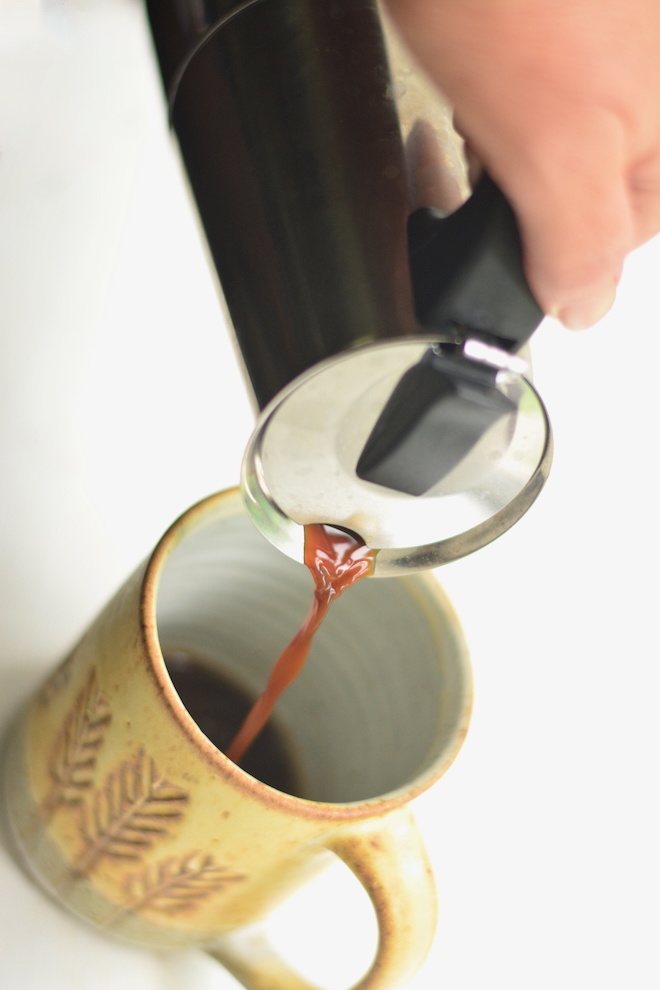
Still, once I had my moka pot in hand, sometimes my espresso came out good, and other times it was watery or bitter.
Fast forward a couple years and I now make perfect espresso at home every single day.
No toxins. No plastic parts. No bitter, weak, or watery espresso.
Just me, my $30 stainless steel moka pot, and perfect espresso.
Why use a moka pot?
Using a moka pot to make espresso at home is;
1) affordable (my stainless steel moka pot is only $30!),
2) allows you to avoid toxins (most moka pots are completely stainless steel and free of plastic parts), and
3) makes delicious espresso quickly and easily, once you get the hang of it.
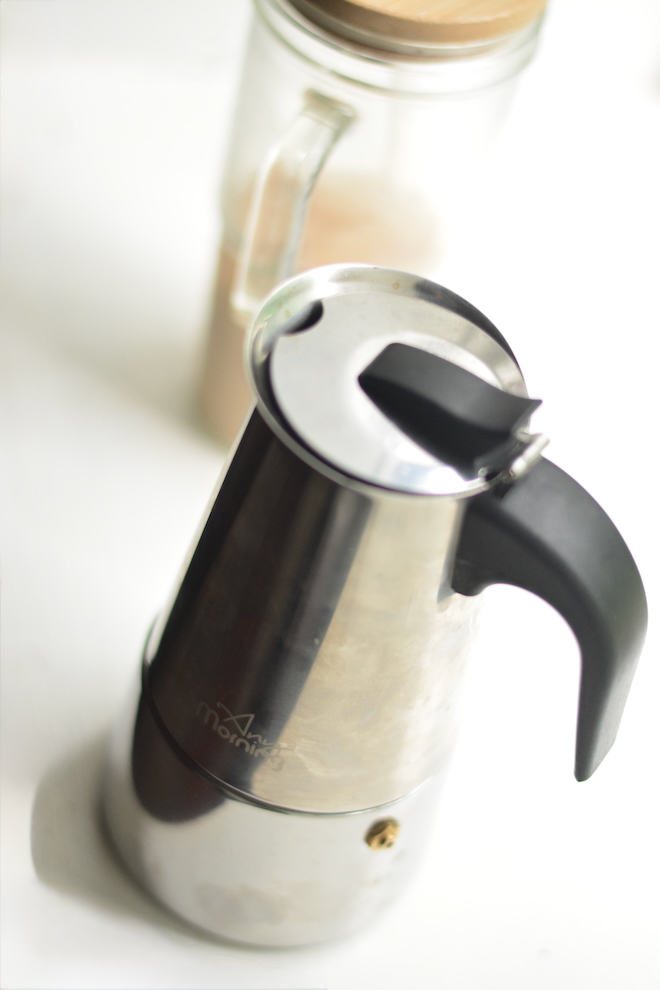
Can a moka pot make espresso?
Technically, moka pots don’t brew true espresso. While I refer to the strong, rich, concentrated coffee that my little moka pots churns out as “espresso,” I’m pretty sure a true coffee snobs would correct me.
Moka pots use the pressure of steam to brew a very concentrated coffee, which I use as espresso in hot or iced lattes, americanos, and even to make the best homemade coffee ice cream.
But I can’t tell the difference between the espresso I make in my moka pot versus espresso I’ve made in “true” espresso machines (which use pump-driven pressure, not steam, to make espresso).
How a moka pot works
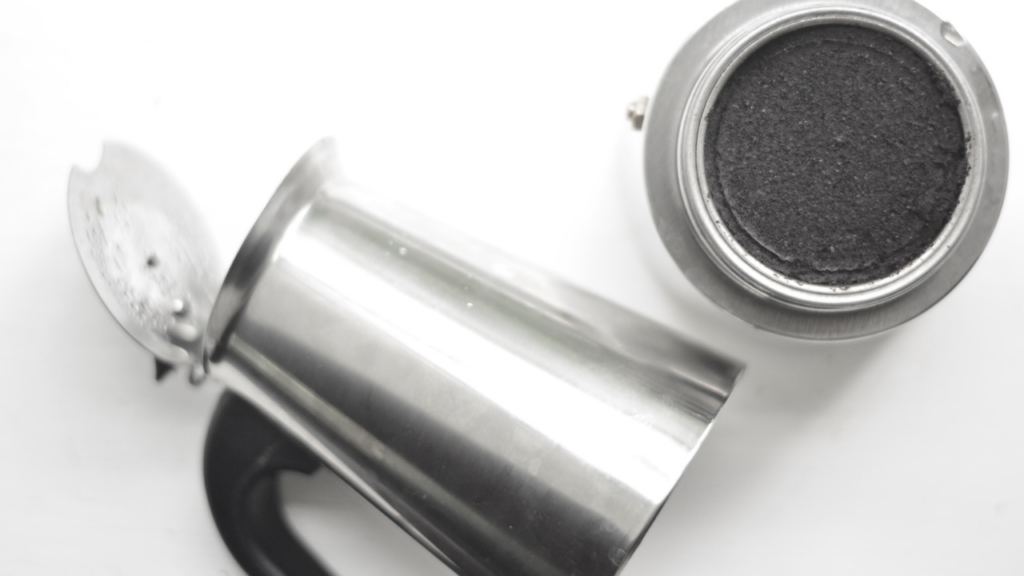
Moka pots have three parts:
- BOTTOM–the bottom part is where the water boils
- FILTER–the steel filter funnel is the part you fill with coffee grinds
- TOP–this is where the espresso brews into
To make coffee in a moka pot, you add water to the bottom part, add coffee to the middle funnel part, and wait for the espresso to brew out the top. The water heats in the bottom, pressure builds and pushes the hot water through the coffee grounds in the middle, and the espresso is forced out the top through steam pressure.
Moka pot without plastic
When you’re shopping for a moka pot, look for one with all stainless steel parts (or some glass and the rest stainless steel). Beware of aluminum moka pots, as they often look like steel but they will leach trace amounts of aluminum into your drink… no thank you.
I own 2 moka pots:
- a small size one for when I’m making espresso for just me, and
- my 6-shot moka pot for when I’m making espresso for company too.
Moka pots without plastic come in several sizes. The “3-cup “size makes roughly a double shot of espresso, while 6- and 10-cup options make 2 double shots and 3 + double shots worth of espresso in one run.
When deciding on the best size for you, keep in mind that you have to fill the machine every time you use it. The water must be filled (to the base of the little valve), and the coffee funnel must be filled.
Of course, you can always make extra espresso and refrigerate whatever you don’t use, if you choose a large size moka pot. Or, conversely, you can use a small moka pot multiple times in a row until you’ve made the amount of espresso you need on any given day.
Moka pot vs. french press coffee
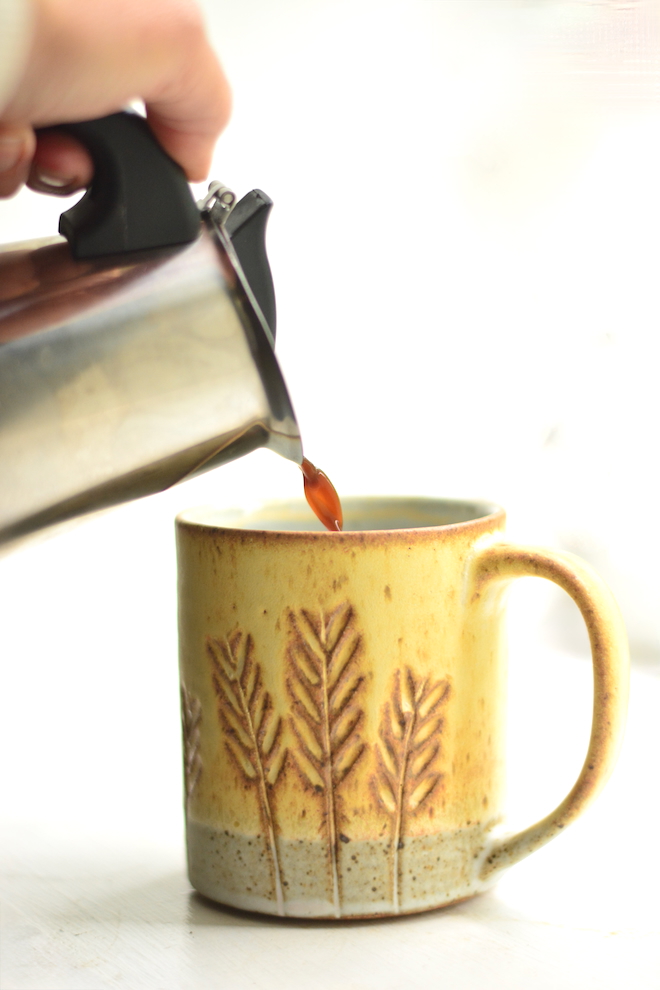
Moka pots use finely ground coffee grounds to brew strong, intense, espresso-style coffee, using steam pressure, on the stove. A french press, on the other hand, simply sets on your counter (not the stove) and creates a cup of coffee by steeping very coarse ground coffee in pre-heated hot water before separating the grounds from the coffee with a mesh plunger.
They both take about the same amount of time to create your final cup of joe, but in general the moka pot tends to take a few more minutes overall, from prep time to finished cup of coffee in your hand.
Both a moka pot and a french press can be used to make many different types of lattes, cappuccino, americanos, and cafe au lait if you know the right way to use each machine. Mind you, a pure-bred coffee connoisseur would probably correct me here, but I’ve made delicious ones of all of the above with both machines, at least delicious to me.
Fancy espresso machine vs. moka pot
While moka pots certainly aren’t for everyone, they’re my favorite way to make delicious espresso at home. But if you’re on the fence, let’s talk about the pros/cons of fancy espresso machines and moka pots.
Pros of a fancy espresso machine: Most fancy espresso machines have cool features like steam wands for easy heated and steamed milk and some have built-in grinders as well.
Cons of fancy espresso machine: High price tag, uses many plastic parts including plastic tubes to heat and transport water (which also commonly allows mold to grow), takes up lots of counter/kitchen space. These machines can also be confusing or have a long learning curve to make good espresso.
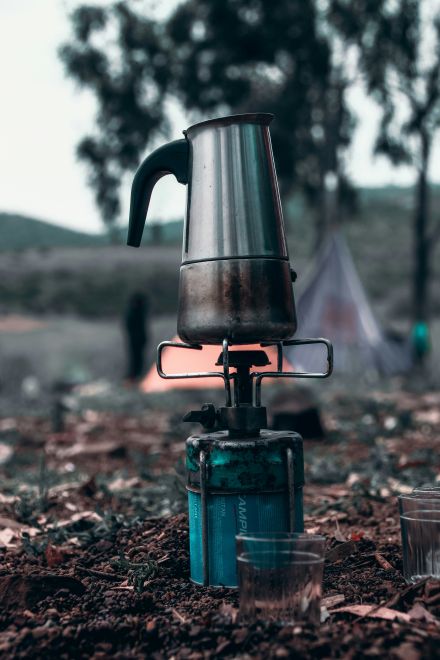
Pros of a moka pot: My favorite things about moka pots are that they’re small, compact, and easy to store, even in very small spaces. Using a moka pot has helped me reduce my exposure to plastics, and I always have fresh espresso just a few minutes away. Because of their small size, moka pots are also great for traveling, camping, or using in trailers or RVs.
Cons of a moka pot: There are some downsides to moka pots. The biggest downside for me is that if I want a hot latte, I have to heat and steam milk completely separately, while lots of fancier espresso machines include a steam wand. You also have to make the amount of espresso that your moka pot is designed for, every time. As an example, if you purchase a 6-cup size moka pot, you have to make 6 shots-worth of espresso every time you use it.
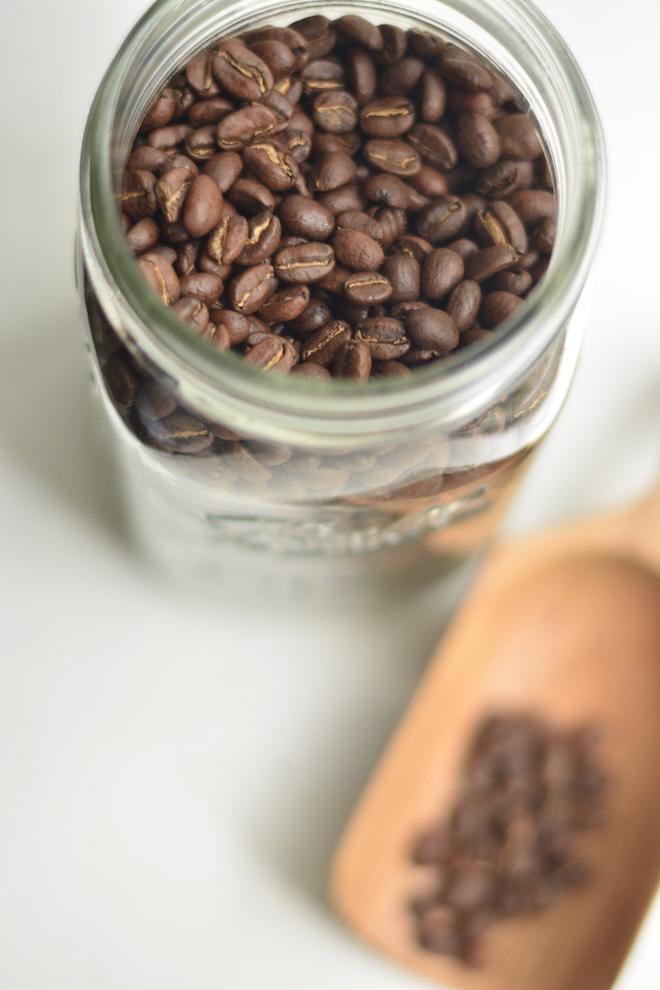
Best coffee beans to use in a moka pot
Good espresso starts with good coffee. Look for these things when choosing a coffee to make espresso in your moka pot:
- The correct grind. Moka pots require espresso-ground (extra fine) coffee, which is usually one grind size finer than “fine” coffee. Anything coarser, and your espresso won’t brew properly.
- Organic and shade-grown. For smooth, rich, flavorful coffee, opt for organic and shade grown. Coffee naturally grows in the shade, but commercial coffee growers force coffee plants to grown in the hot, unnatural sun, leaving the resulting beans acidic and bitter. Shade-grown coffee is coffee how it should be–sweet, flavorful, and never bitter.
- Mold-free. If you want to reduce exposure to toxins, check that your coffee is tested for mold. Many conventional coffee roasting processes allow for quick and rapid mold growth. Ick, right?
- This is more of a personal choice, but I’ve found that light roast coffee tends to produce the best tasting espresso in a moka pot. If you’re struggling with bitter espresso, try switching up the roast of your coffee. Light roast coffee packs all the same flavor as darker roasts, but with a sweeter and less bitter finish.
My favorite coffee in the world is tested to be mold-free, grown in the shade always, and certified organic. Use the code “soulyrested” to save on the best coffee, even at already-discounted bulk prices. But don’t just take my word for it–try it out, risk-free. If you don’t love it, they’ll refund you. No questions asked.
How to clean and maintain a moka pot
One of the things I love about moka pots is how easy they are to maintain.
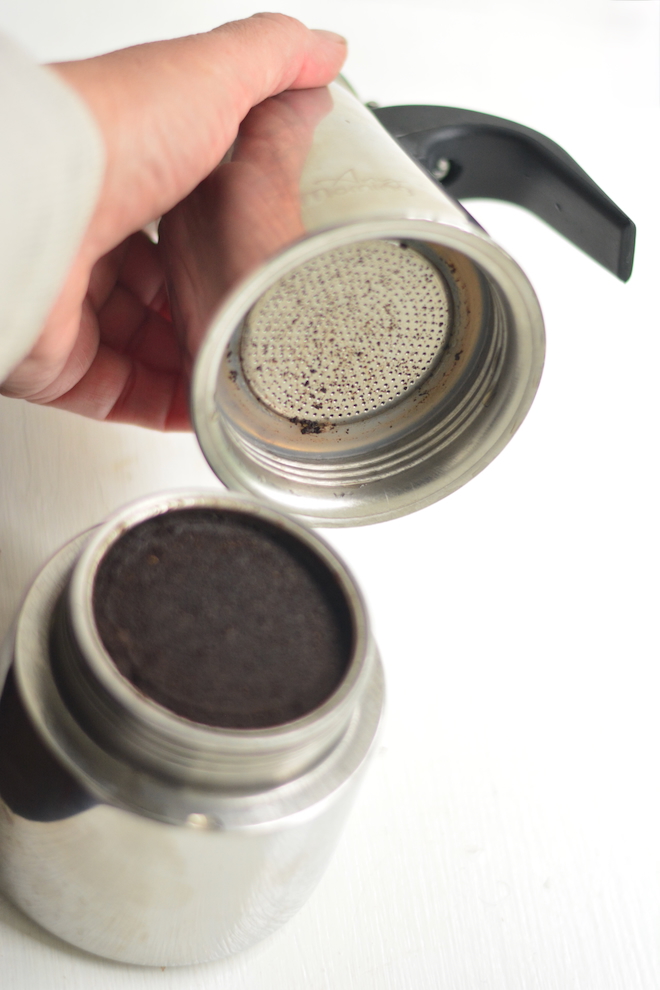
How to clean a moka pot after brewing espresso
On a regular basis, all your moka pot needs is a simple emptying of the filter and a little rinse + air dry. It’s really that simple!
Never use soap to clean your moka pot, and never run it through the dishwasher. Both of these will strip your moka pot of its natural oils and make your espresso taste metallic-y.
Do make sure your moka pot dries thoroughly between uses, or it can rust.
How to deep clean a moka pot
Once in a while the oils will build up too much in your moka pot. You’ll know this is happening if your espresso slowly starts to taste more bitter.
To deep clean your moka pot, fill the bottom chamber of the pot with a 50/50 mix of distilled white vinegar and water.
Place the (empty) coffee filter basket in its usual position, screw the top on, and brew as you normally would brew espresso.
Remove from the heat once the vinegar water has all run through, and dump out.
Next, do the same thing, but with just water in the bottom chamber, no vinegar this time. Once all the plain water has run through the moka pot, pour it out, rinse your pot, dry, and put away.
Your moka pot is now deep cleaned and ready to make delicious espresso.
How to make espresso in a moka pot
Once you know a few tips, it’s surprizingly easy to make delicious, nontoxic coffee wtih a moka pot.
EQUIPMENT
- 1 large (6-cup) moka pot
INGREDIENTS
- 18-20 grams espresso-ground coffee
- 1 1/2 cups of water
DIRECTIONS
- Heat water to boiling.
- Fill the moka pot brew basket to the top with the espresso ground coffee. Unlike with a traditional espresso machine, coffee in a moka pot does NOT get tamped down. Simply fill it to the top and smooth it out, so it’s flat when it’s full.
- Fill the bottom of the moka pot with boiling hot water, until the water reaches the bottom of the release valve (you can see this release valve on the inside as well as the outside).
- Gently place the filled brew basket in the bottom part of the moka pot and wipe off any grinds that are on the rim.
- Tightly screw the top part of the moka pot onto the bottom part, using a towel to hold the (very hot!) bottom in place.
- Place the moka pot on the stove, on a medium high heat.
- Open the top flap so you can monitor the brew.
- The coffee will slowly start to fill up the top part of your moka pot. When it begins to make a distinctly different sound of sputtering instead of bubbling, instantly remove it from the heat.
- Carefully carry your hot moka pot to the sink and, with the top flap now closed, rinse the bottom half of the pot under very cold water. This will stop the cooking quickly and prevent your espresso from tasting bitter.
- Pour out and use your espresso.
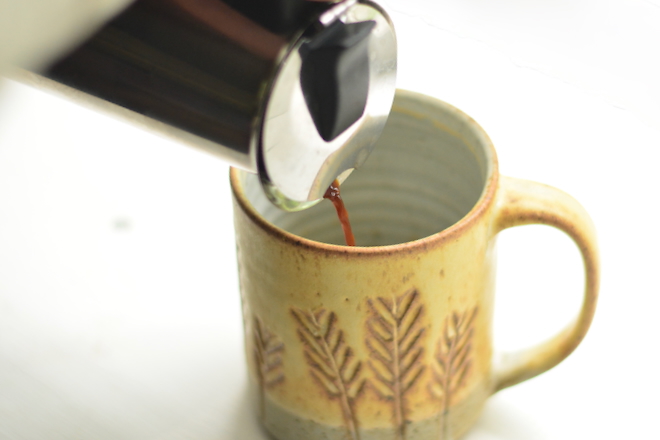
Tips for making the best (never bitter) espresso with a moka pot
-
- Make sure your pot’s clean. Too much oil build-up makes your espresso bitter. (Scroll up for instructions for deep cleaning your moka pot.)
- Source the right beans. Organic, shade-grown coffee produces the smoothest, sweetest and least biter (yet flavorful) espresso. I use exclusively this coffee.
- Use the right grind size–even “fine” grind usually isn’t fine enough, it has to be “espresso grind.” If the grind is too coarse, your espresso simple won’t brew (extract) properly and will be watery and flavor-less. Lots of companies sell espresso ROAST, but make sure the grind size is also for espresso. Or use a coffee grinder to grind your own for the freshest flavor and perfect grind.
- Loosely fill your brew basket with coffee. Never tamp down coffee in a moka pot. That will impede the boiling water underneath the grounds from bubbling up into the top, slowing down the brewing process, and giving you a bitter, over-extracted cup of coffee. Not to mention the danger that your pressure valve could explode.
- Start with boiling water, so the espresso brews faster and isn’t bitter. Don’t brew using cool water in your moka pot.
- Fill your moka pot correctly. Only fill the water to the bottom of the release valve, no higher.
- Screw the top on tightly before brewing, so the espresso has enough pressure to brew correctly.
- Replace the rubber ring in your pot every so often (about once a year depending on usage) to keep the pressure strong
- After brewing, run your pot under cold water to instantly stop the brew process. (Those last few drops of espresso tend to be the most bitter of the whole brew.)
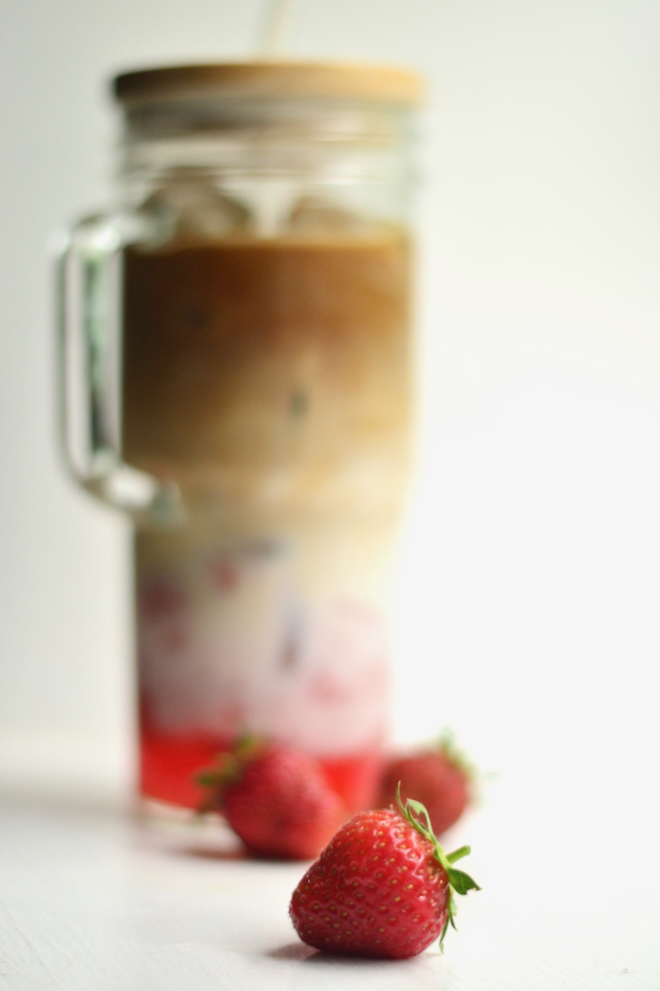
Moka pot iced latte
Here’s how I make an iced latte with a moka pot.
- Brew your moka pot espresso as usual.
- While your espresso is brewing, get a glass ready with any flavors/sweeteners you desire, ice, and milk.
- Pour the hot espresso over the flavored syrups, ice, and milk.
- Stir to combine, taste test to determine if the ratio is right, and add more milk, flavor, or a splash of cream if needed.
- Enjoy your moka pot iced latte!
What moka pot is best
There are lots of great moka pots on the market. I eventually settled on this one and this one for a few reasons (yes, I own two. I explain why above). If you’re in the market for a moka pot, keep these things in mind:
- Material–I stick with all stainless steel, but there are some decent steel/glass options as well. Stay away from aluminum moka pots if you’re looking to reduce your heavy metal exposure.
- Size–Choose the correct moka pot size for you. My daily-use moka pot is the 3-cup size. I like my lattes strong, so I use all the espresso that the 3-cup size makes in one latte. My daughter prefers lighter lattes, so she uses half the amount.
- Price–Keep your budget in mind, and look for a moka pot that works best for you. Even the highest-quality moka pots are very budget friendly! I purchased mine for $30 about 3 years ago, and it’s still going strong.
What size moka pot should I buy?
The sizing on moka pots can be confusing. Keep in mind that whichever size you choose, you have to make that set amount of espresso each time you use it.
Let’s break it down.
3-cup sized moka pots
This is my daily-use moka pot size. It makes roughly 2-double shots worth of espresso. For me, I like my lattes on the stronger side, so I use all of the espresso this size moka pot makes in one latte. This size is great for if you’re single, the only coffee drinker in your house, or if you just don’t like to waste any espresso. Makes 1-2 lattes.
6-cup sized moka pots
This size moka pot will make roughly two double shots-worth of espresso each time. This is great for couples (do you always make your husband a latte when you make yours?), when you have a friend over, or if you like really strong lattes. Makes 1-3 lattes.
10-cup sized moka pots
The largest size moka pot (at least in the brand I prefer), this will make over 3 double-shots worth of espresso in each run. This size is great for if you drink really strong coffee, often have company over, or want to store leftover espresso in the fridge for the week. Makes 3-5 lattes.
Why is my moka pot espresso bitter?
There are a few main reasons you’re getting bitter espresso from your moka pot.
- You’re using the wrong coffee, or the wrong grind size. I stick with shade-grown, light-roast coffee for the sweetest, lowest acid espresso. And make sure you’re using espresso grind. It’s a little finer that “fine” ground coffee, and a little coarser than turkish-grind coffee. The correct grind size is essential to not-bitter espresso in a moka pot. Too fine, the water won’t be able to get through the coffee as it brews. Too coarse, the water will push through the coffee too easily, creating a weak, watery espresso.
- Your moka pot might need to be cleaned. If the coffee oils build up too much, your espresso will come out bitter. See above for maintenance and deep cleaning moka pot instructions.
- You’re using either too low or too high heat. If the heat is too high when you’re brewing your espresso, it will taste burnt. If the heat is too low, the water will push through the grounds too slowly, leaving you with a bitter brew. Play around with the temperature of your specific stove and see what tastes the best. For me, I stick with a med-high heat (set to a 7 out of 10) for a perfect brew.
- You’re not rinsing your espresso. If your coffee is turning out bitter, try running the bottom of the moka pot under cold water for a few second as soon as the brew is done (when it starts “gurgling” or sputtering).
Best non-toxic espresso maker
In my opinion, moka pots are the best non-toxic espresso makers. They’re affordable, completely free of plastic parts, and simple to use. As a bonus, they’re compact and easy to store, as well.
Other non-toxic coffee makers worth mentioning:
- Glass or stainless steel french press
- Manual espresso makers
- Fancy espresso makers that are plastic-free (there are only a couple on the market, this is one that I know to be free of plastic, but haven’t used.)
- Stainless steel percolator (to make “drip-style” coffee)
How to make espresso in a moka pot
Equipment
- 1 stainless steel moka pot
Materials
- coffee, espresso grind
- water
Instructions
- First, boil water in a tea kettle or a separate pan.
- Fill the moka pot basket to the top with espresso grind coffee, but don't push it down, simply gently smooth the top out so it's flat. Set aside.
- Once your water is boiling, fill the bottom of your moka pot until the water reaches the bottom of the metal valve/bolt.
- Place the coffee basket on top of the hot water-filled bottom and carefully strew the top onto the bottom. Make sure it's on tightly.
- Place the whole moka pot on med-high heat.
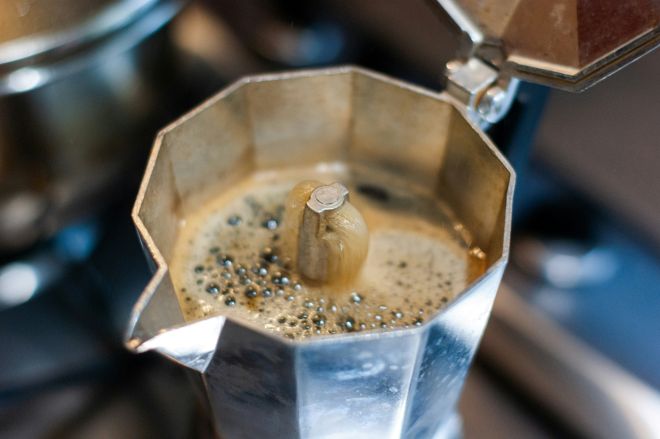
- Leave to brew, covered, until you hear sputtering. Open the top and you should see foamy bubbles coming out the top.
- Quickly remove the moka pot, run the bottom under cold water (to stop the cooking and keep your espresso from getting bitter) and use as desired.
Notes
What you need to make espresso in a moka pot:
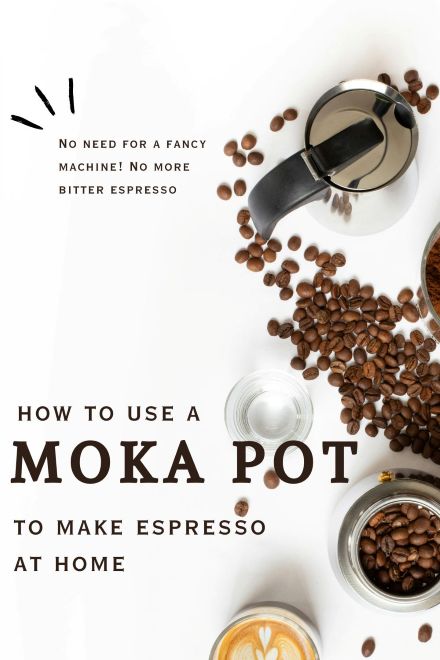
More like how to use a moka pot to make espresso at home:
- Protein latte: easy vanilla latte at home
- Coffee ice cream recipe with no refined sugar
- Homemade tea that TASTES like coffee
- “Starbucks” cherry chai latte from scratch
We have a press but I like this better. I am always afraid of breaking the glass in our coffee press when I make it. I like the fact that this does not have any plastic either. I will look into one of these too. You have some great suggestions. Thanks
I have never heard of a moka pot! We use a French press for all our brewing needs. But we don’t drink fancy coffees. I have never liked lattes personally, too much milk….. I might feel differently about a latte made with milk from my cow.