
Last Updated on July 13, 2026 by Michelle
The day my first flour mill arrived I was overwhelmed.
But the truth is, I was overwhelmed even before my mill arrived. And if you’re in the same boat figuring out how to choose a flour mill, I’m here to simplify it for you. After over a decade of milling my own flour and either owning or using 6 different flour mills, I’d say I’m somewhat of an expert.
And today we’re going to find your perfect match. Your flour mill match, that is.
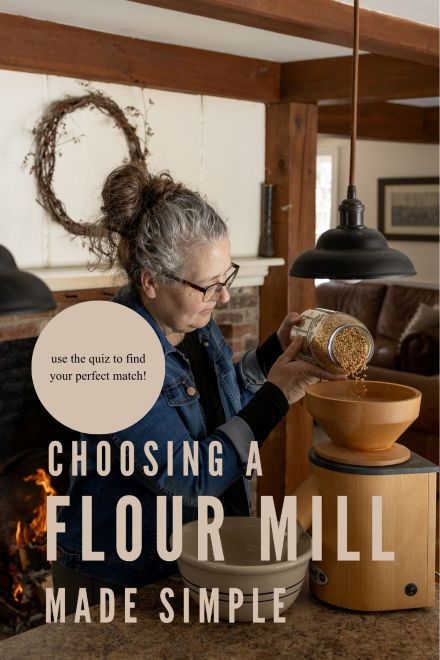
At the end of this post, I’ve created a flour mill “quiz” to help you ultimately decide which mill is best for you based on your lifestyle, budget, and how you use flour the most.
-> If you’re looking for a quick suggestion, scroll down and take the “choosing a flour mill” quiz. <-
Benefits of milling flour at home
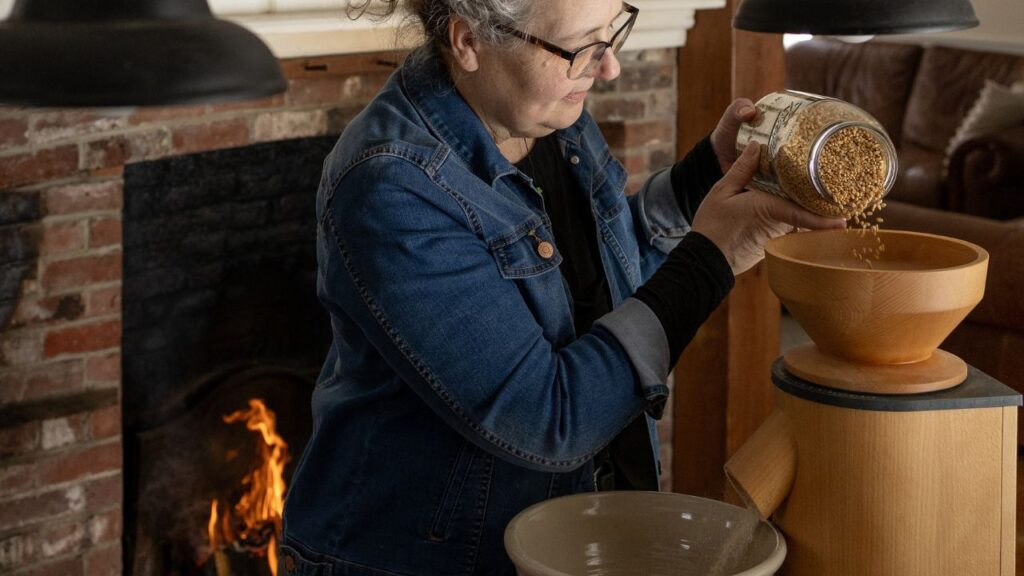
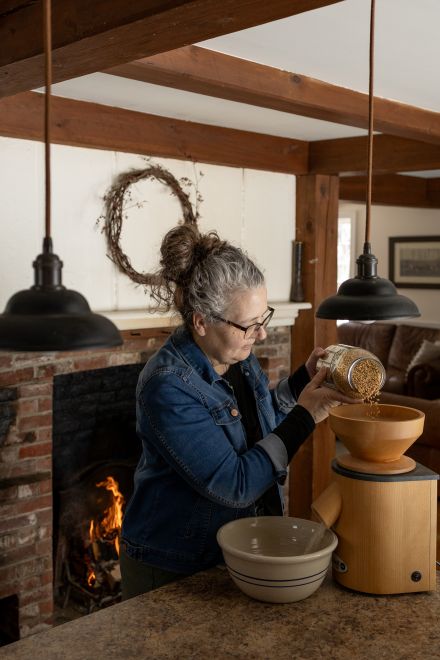
There are tons of physical reasons to mill your own flour at home with a flour mill. And we’ll go over those. But the truth? One of my favorite things about milling flour is that it’s therapeutic. Something about the routine of grinding wheat berries into flour is grounding to me.
It’s an age-old practice that I have the ability, thanks to modern countertop flour mills, to do right in the comfort of my own kitchen.
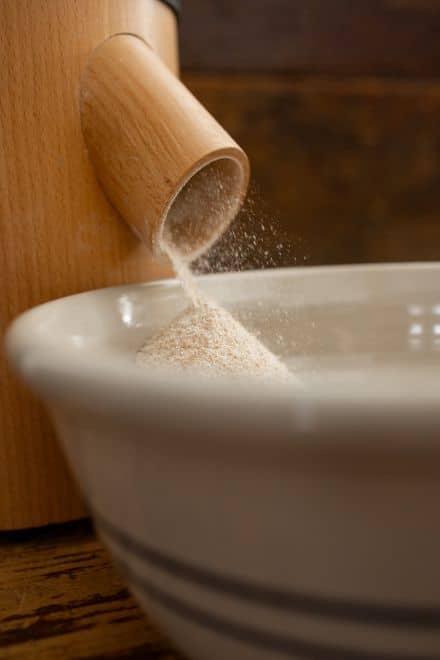
The smell of fresh milled flour, the sounds of the stones working, the feeling of warm, soft fresh flour coming out of the mill can’t be replicated.
So my #1 benefit of milling flour at home after 10+ years doing it? Enjoying the process.
But if you’re not interested in the romanticized benefits of milling flour, let’s talk about all the practical reasons.
Why mill flour at home?
- Nutrition (store bought flour doesn’t contain all the good stuff and is very old by the time it hits your kitchen)
- Flavor (there’s nothing like the earthy, sweet, nutty flavor of bread made with fresh milled flour)
- Variety (to keep things fun and also extra-nutritious, you’re able to play around with turning all kinds of grains into flour)
- Support (I love supporting small family farms keeping regenerative wheat farming alive, while also feeding my family the best grains)
- Security (I’m not a preper by any means, but I love having a secure stash of grains in my basement at all times)
- Therapy (there’s nothing more grounding and relaxing to me than the process of milling flour at home! It’s FUN!)
How to choose a flour mill: the contenders
The two main types of flour mills on the market are stone mills and impact mills.
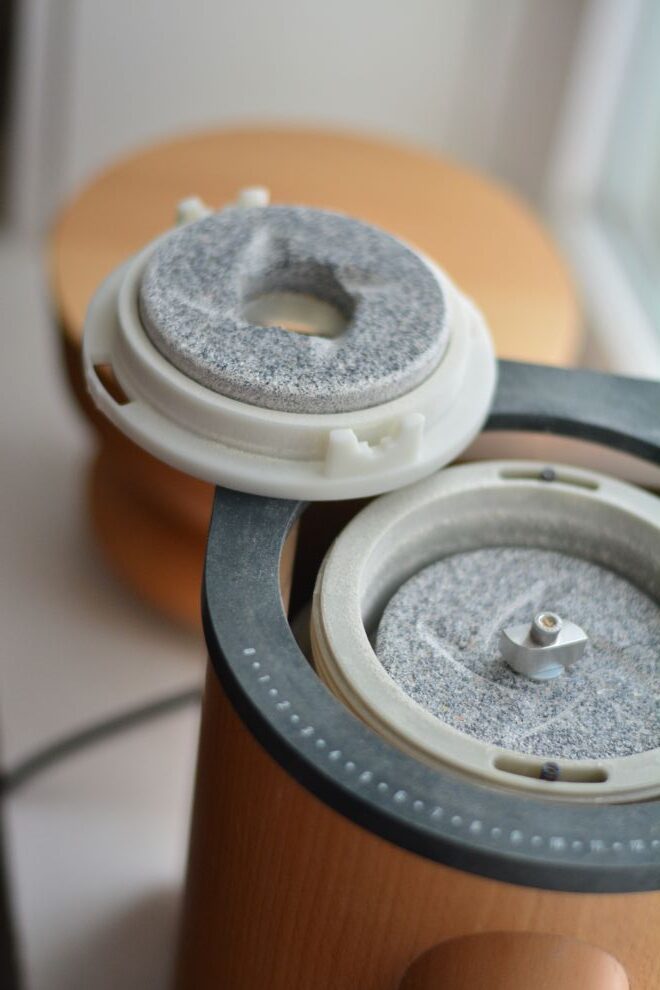
Stone mills use a traditional two-stone method to grind wheat berries in between grooved stones, resulting in flour.
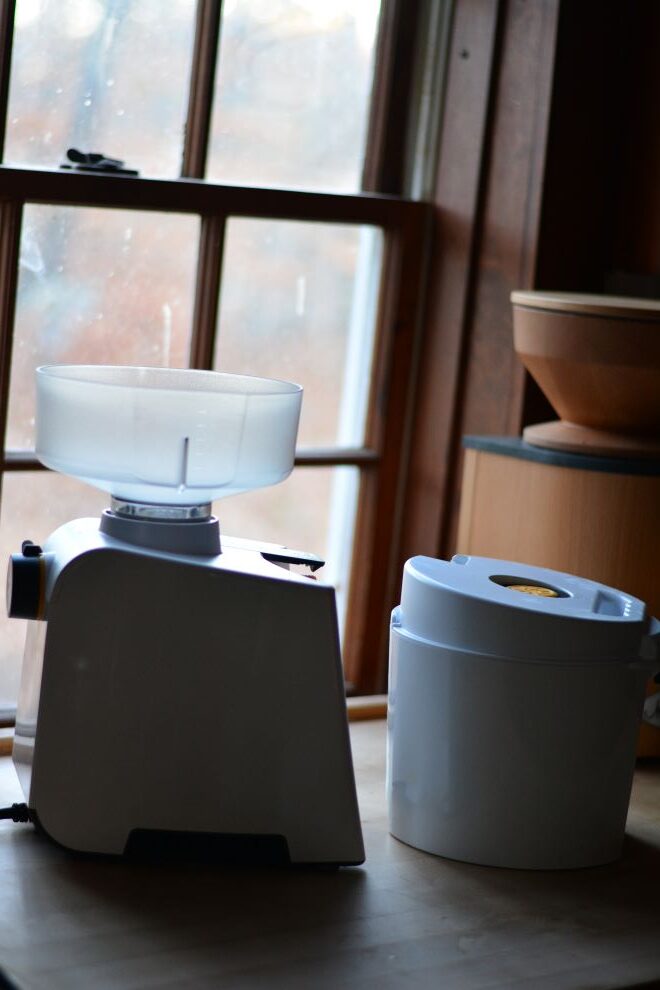
Impact mills use internal stainless steel “teeth” to pulverize wheat berries into flour.
They’re both great options for home millers.
Choosing an impact flour mill:
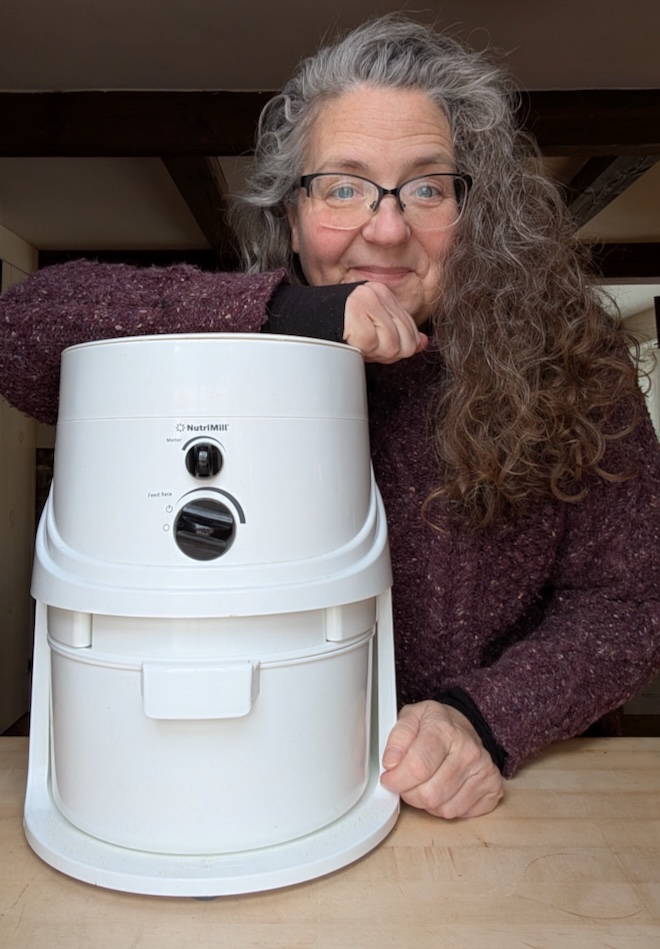
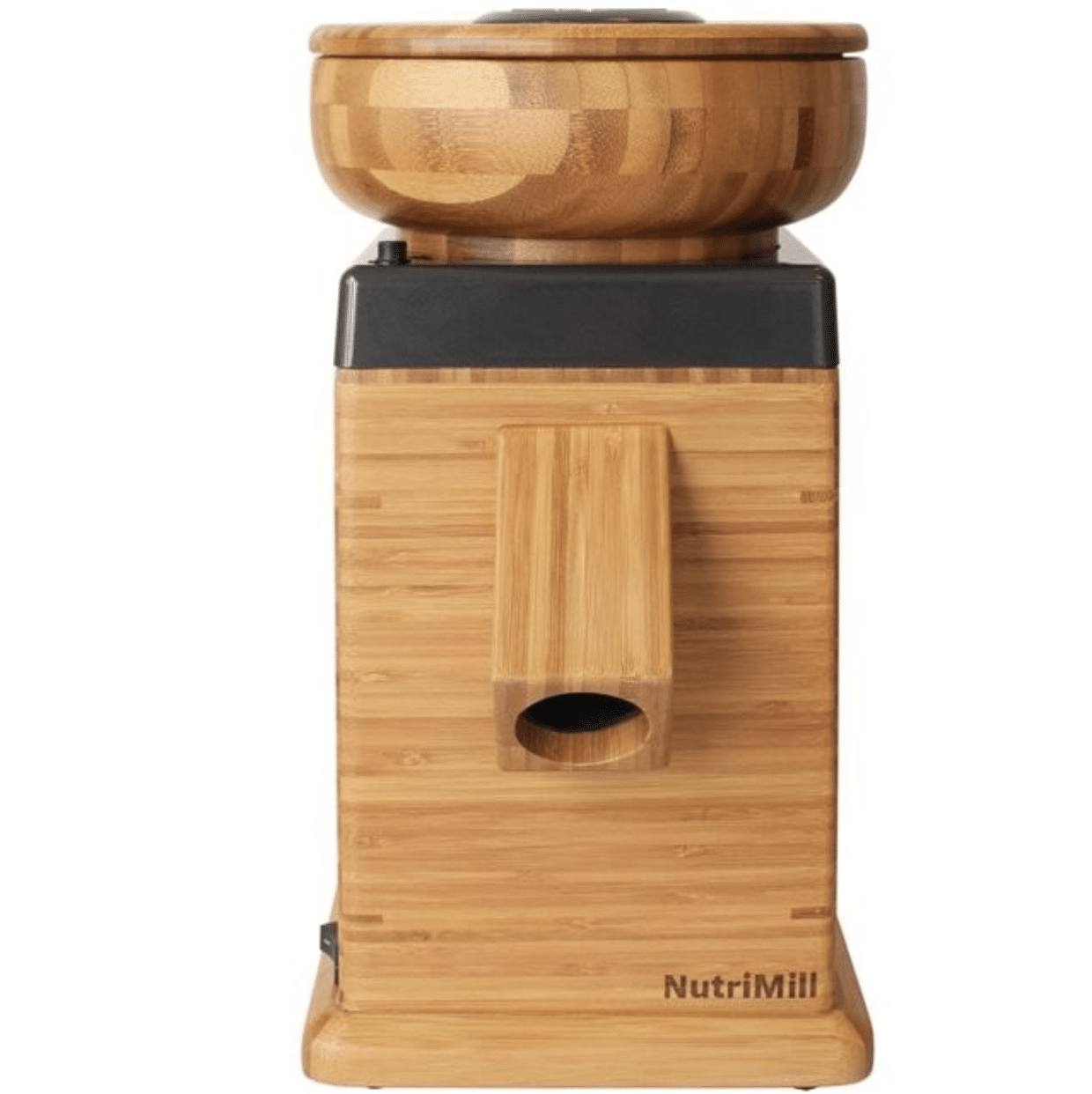
A great flour mill option for new millers. The Classic mill is an enclosed-style impact mill, meaning that it mills the flour internally, into a built-in bowl, which you remove to access the flour. The Classic mill makes very fine flour, but is limited in milling coarse or cracked grains.
Cost: $329 – $20 with code SOULYRESTED
A slightly more compact and a more budget-friendly version of the Classic mill, the Impact mill is the most affordable flour mill on the market. It mills fine flour quickly, but it’s flour bowl is on the small side, which simply means that if you’re milling a lot of flour you’ll have to stop, empty the flour bowl, and mill another round.
Cost: $249 – $20 with code SOULYRESTED
Choosing a Stone flour mill:
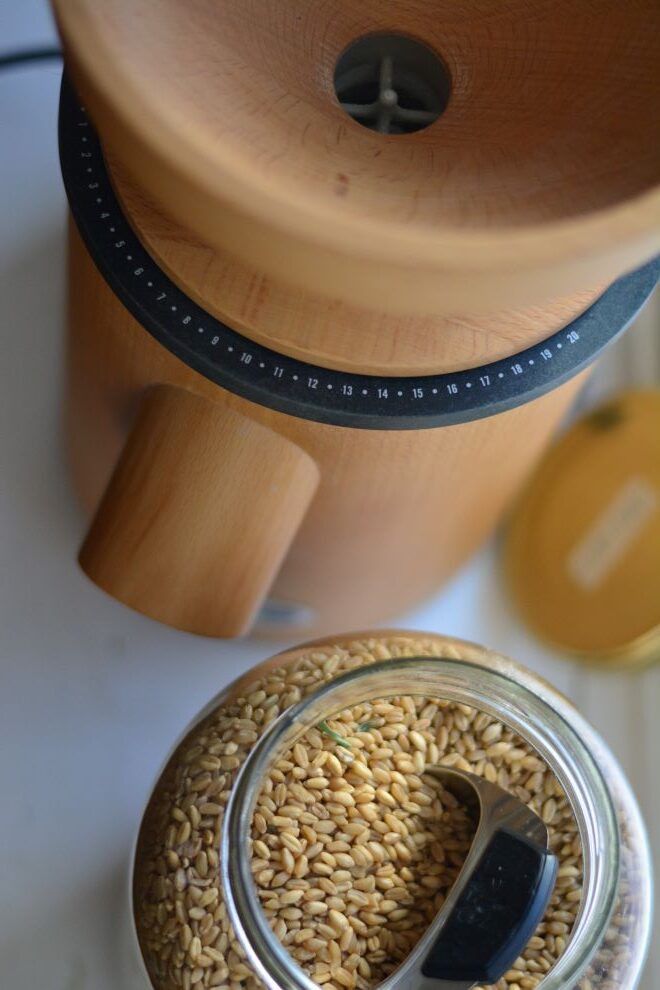
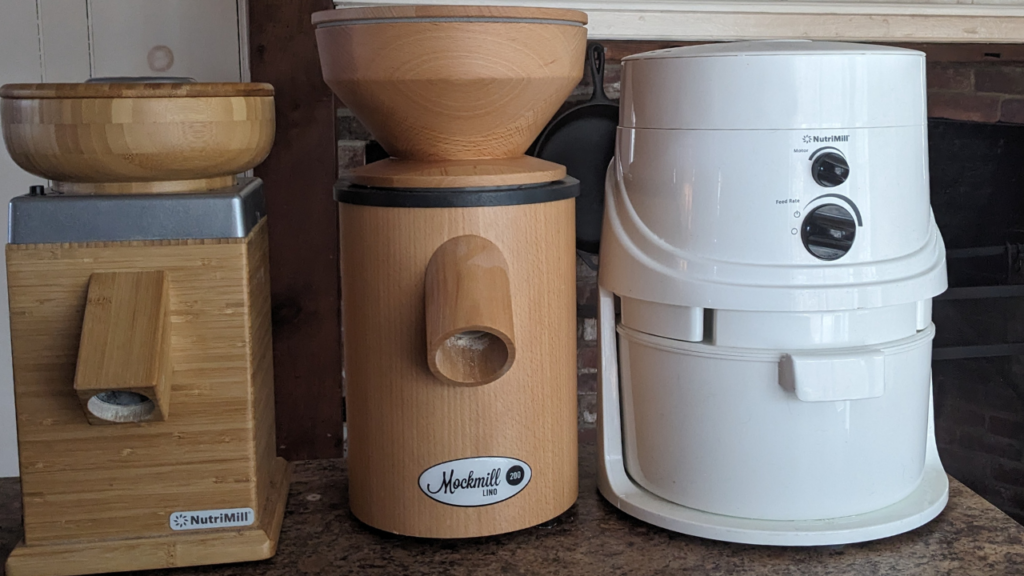
These mills are on-demand, stone-mill workhorses. The numbers at the end are their milling output–Mockmill 100 mills at a rate of 100 grams of flour per minute, and the Mockmill 200 mills at 200 grams per minute. Other than milling speed, these two mills are the same. Inside, the Mockmill utilizes two stones to effortlessly grind wheat berries into flour. Adjust the grind of your flour with a handle on the side.
Cost: $380-$470
The Mockmill Lino line contains the same internal mill as the Mockmill 100 & 200, but the Linos are housed in a beautiful wooden exterior. So just like we talked about above, the Mockmill Lino 100 mills at a rate of 100 grams per minute, and the Mockmill Lino 200 mills 200 grams per minute. If you want Mockmill power and reliability but aren’t concerned about how it looks on the outside, stick with the Mockmill 100 or 200 to save cash. If you want Mockmill power and a beautiful wooden mill, grab a Mockmill Lino 100 or 200.
My daily-use flour mill is a Mockmill Lino 200.
Cost: $680-$775
Mockmill offers a professional version of their mills. This means it has a more expensive cooling system than their other mills, allowing for hours of milling without a break. This is really only worth spending the extra money on if you’re using it in a professional kitchen capacity. It’s great for cottage kitchen bakers, sourdough farmstand gals, small bakeries, or other areas where you need to mill VERY large quantities of flour. Most average kitchens don’t need that much flour, though, and find the Mockmill 100/200 offer more than enough power.
Cost: $890
Nutrimill’s stone mill offering is the Harvest mill. This flour mill is popular for it’s beauty and small footprint. It’s a stone mill capable of milling flour from fine-coarse. If you’re in the market for a compact, beautiful stone mill, the Harvest might be for you. As a personal sidenote, the Harvest mill isn’t my personal top choice, especially for beginners. It can be tricky to use, especially if you want fine flour.
Cost: $499 -$20 with code SOULYRESTED
These natural stone mills are becoming popular for their completely plastic-free design. Rather than using manufactured stones like most other mills, Salzburg sources natural granite. They’re pricey, so consider these mills a major investment, but they’re built to last longer than one person’s lifetime. I haven’t personally used these mills, but I’ve heard great things from a couple internet “friends” who have. Also keep in mind there are additional customs fees to have these mills shipped to the U.S.
The Salzburg MT12 model can mill 4,000 grams of grains/flour before needing a rest.
The Salzburg MT18 model can mill 8,000 grams of grains/flour before needing to rest.
Cost: $1,300 – code SOULYRESTED to save %
Other flour mills:
Komo: another stone mill option, but higher price point than Mockmill and hard to find distributers in the U.S.
Hand-crank: romantic, but not super practical for milling enough wheat for making bread, especially on the daily.
Kitchen Aid attachment: mills flour very slowly and ineffectively, and often burns out the motor of your mixer.
Hand crank vs electric flour mill
Hand crank flour mills utilize your sheer upper body strength to turn wheat berries into flour.
Electric mills utilize an electric power source to mill flour.
Although hand-cranking a flour mill sounds romantic (and it can be helpful if the power is out!), it’s not really practical for everyday flour milling. You’ll find yourself tired, frustrated, and defeated all before you even start baking.
I highly recommend electric mills for most home bakers.
Stone mills, impact mills, and burr mills: what’s the difference?
Stone mills use two grooved stones (one on the top, one on the bottom) to grind wheat into flour. On the contrary, impact mills crush wheat by bashing it through metal “teeth.” Burr mills are usually another term for stone mills, although some burr mills can be made of steel. Burr mills are simply any mill that crush grains between two spinning surfaces.
How to use a home flour mill: the basics
Starting out with fresh milled flour can be intimidating. Especially if you’re standing in front of a beast of a flour mill and unsure how to use it. Let’s simplify that process.
- Acquire wheat berries. If you’re not sure which wheat berries to purchase or where to buy them, start here.
- If you’re using a stone mill, always make sure the mill is TURNED ON before adding wheat berries. If you’re using an impact mill, make sure to add wheat berries BEFORE turning the mill on.
- Adjust your stones if using a stone mill. To make fine flour, turn your stones until you hear them chirping. Then, turn the stones until they’re just slightly more part. The stones should be just slightly touching, enough so that you hear a low, pleasant “hum,” but not so tight that they’re screeching or high-pitched sounding.
- Add your wheat berries, if using an impact mill.
- Mill your flour: if you’re using a stone mill, add the wheat berries to the hopper while the stones are milling. If you’re using an impact mill simply add the wheat berries, adjust the settings to the flour you’d like, and turn the mill on.
- Enjoy your fresh milled flour!
Which flour mill should I buy in 2026?
While there are lots of options for flour mills, my top picks for 2026 are listed below.
- Mockmill Lino 100 & 200. These made the list because they truly have it all: versatility, beauty, and functionality.
- Nutrimill Classic and Impact. These bad boys are super beginner-friendly, budget-friendly, and they’re constantly sold out, which tells me they’re top choices.
- Mockmill 100 & 200. The more wallet-friendly Mockmill options, with the same power and functionality of the wooden (Lino) versions.
- Nutrimill Harvest. These mills are hard to get your hands on in 2026 as they’re constantly sold out. This is a beautiful countertop stone flour mill.
How to choose a flour mill quiz
I know making a big choice like which flour mill will serve your family is a big one. I get it.
So I’ve created this little “quiz” that might help narrow your choices down.
Q1: Are you on a budget?
yes -> either:
- Nutrimill Impact for the most budget-friendy
- Mockmill 100 for the most affordable on-demand stone mill
no -> continue on
Q2: Do you prioritize how your flour mill looks/want to keep your mill on your counter 24/7?
yes -> either:
- Nutrimill harvest (the prettiest mill with the smallest footprint)
- Mockmill Lino (either 100 or 200, both have a beautiful wooden exterior)
- Salzburg natural stone mill
no -> continue on
Q3: Do you bake large batches of bread at a time?
yes -> ether:
- Mockmill 200 (my personal daily-use flour mill) OR Mockmill professional for very long milling times without breaks
- Nutrimill Classic (large batch, closed-container milling)
no -> continue on
Q4: Do you want to minimize the amount of dishes used to mill flour?
yes -> Any model of Mockmill, the Nutrimill Harvest, or Salzburg
no -> Nutrimill Classic or Impact mill
Q5: Are you interested in the variety of grains you can mill, or mostly stick to bread/pastry flours?
variety -> Mockmill 100 or 200
bread/pastry -> Nutrimill Classic or Impact mill
Q6: Are you passionate about your mill having zero plastic in it’s design?
yes -> Salzburg natural stone mills
no -> stick to Mockmill which has very little plastic
Quick guide: what matters most to you?
Budget ->Nutrimill impact (most budget friendly) or Mockmill 100
Aesthetic -> Mockmill Lino. Nutrimill Harvest, Salzburg
Milling large batches of flour -> Mockmill 200 or Mockmill professional or Nutrimill Classic
Less dishes to wash -> Any Mockmill, the Nutrimill Harvest or Salzburg
All-around versatility -> Mockmill 200
Variety in milling -> Mockmill 100 or 200
Sticking to bread/pastry flour -> Nutrimill Classic or Impact
Having zero plastics touching your food -> Salzburg
The all-around best flour mill: Mockmill Lino 200
If it’s in your budget, my top flour mill recomendation is the Mockmill Lino 200. It’s my daily-use, never-lets-me-down flour mill.
It covers all the bases: versatility (can mill anything from superfine flour to course/cracked grains, all with a simple sliding of the hopper), aesthetic (the Lino line of Mockmills all come in a beautiful wooden exterior), speed/volume (mills fine flour quickly, with continuous milling meaning it can mill lots of flour at once), less dishes (due to the on-demand style, it’s a one-dish wonder), and budget (the Mockmill 100 is also available in the wooden Lino model, making it easier on your wallet).
As a bonus, even when Mockmills are sold out, they’re available for sale on backorder, meaning your mill will ship the second it’s available.
Grab your Mockmill Lino 200 here.
The flour mills:
Quick links to all the flour mills mentioned here


More like How to Choose a Flour Mill, simplified:
- The Ultimate Guide to Choosing a Grain Mill & 6 Questions to ask
- Make a Fresh Milled Sourdough Starter from Scratch (step-by-step)
- Wheat berries: Everything you Need to Know
- The Best Sandwich Bread with Fresh Milled Flour
I am keeping my eye on the mock mill. I want to use it everyday.