Last Updated on September 29, 2026 by Michelle
What is fresh milled flour?
Fresh milled flour is simply real flour. Using a home grain mill, wheat berries (the whole grain wheat kernel, essentially unmilled flour) are ground into flour and used as soon as possible. The reason using fresh milled flour quickly is important is because flour is actually a perishable food.
Just like tomatoes, eggs, or milk, flour is actually best and most nutritious the sooner you eat it (after milling).
You see, whole grain wheat berries contain oils, that are kept safely inside the outer casing of the wheat. When kept as whole wheat berries, they last pretty much forever without spoiling. But as soon as those oils inside the wheat are exposed to air (when they’re milled into flour), they start going bad.
The sooner you can use flour after it’s milled, the more nutrients remain.
How do I start milling flour at home?
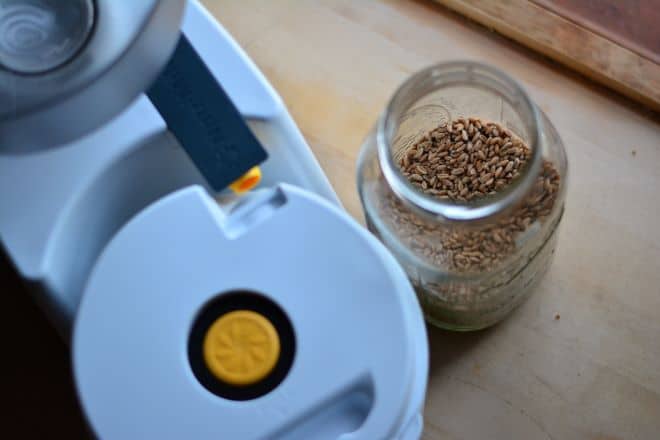
In order to start milling flour at home, you need two things: a grain mill and wheat berries.
Now, there’s some recommendations for using other household appliances, like a coffee grinder, blender, or food processer to grind wheat berries into flour, but I don’t personally recommend that. I’ve heard and see too many horror stories where folks destroy an expensive machine trying to make it grind super-hard wheat berries into flour.
You’re much better off investing in a great grain mill. Otherwise, you risk wasting money needing to re-purchase expensive appliances if they burn out.
When you’re new to milling flour, figuring out which wheat berries to use can be suer confusing. See my Ultimate Guide to Wheat Berries here, or my simple grain chart here.
Which wheat berries to make flour with
Here’s a very simple breakdown of which wheat berries to use when milling flour at home:
-> ancient grains
I use ancient grains as my all-purpose flour. They’re great in baked goods, pastries, bread (I usually add vital wheat gluten if I’m using ancient grains for bread, though, because they’re lower in gluten). Some of my favorite ancient grains are einkorn, spelt, khorasan, emmer (farro), and barley.
-> heritage grains
Heritage grains are the older (not hybridized) versions of hard red and hard white wheat. I use heritage grains for all my bread making. My current favorites are rouge de beaux, turkey red, and dakota snow.
(Use code “soulyrested” to save on all heritage grains!)
-> hard red/hard white (modern grains)
These are your “classic” bread flour grains. These are bred specifically to be high gluten and make tall, fluffy bread. Shop organic, regenerative hard white wheat berries.
-> soft white (modern)
Soft white wheat is used for all kinds of baking and pastry making.
-> alternative grains (gluten-free)
If you’re looking to avoid gluten, alternative grains are a great option for you. Some of the grains in this category would be buckwheat, millet, sorghum, chickpeas, oat groats, and so on. Learn all about alternative grains here.
Why is fresh flour better than store bought flour?
In short, store bought flour is the processed, refined version of what real flour should be.
Milling your own flour allows you to enjoy nutritious, real, whole grain flour, straight from your mill. No middle man, no processing, no added ingredients.
Just you, your grain mill, and wheat berries.
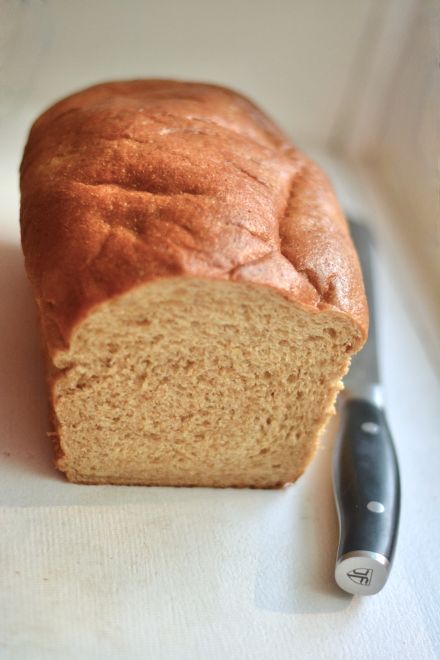
Fresh milled flour = 1 ingredient (whole grain wheat berries, ground into flour).
Store bought flour = only the starchy part of wheat + synthetic vitamins + bleaching agents + dough enhancers, maturing agents, and added enzymes.
Fresh milled flour terms:
If you spend any length of time on a trendy Instagram page where the protagonist owns a grain mill, you’ll come across some fresh flour terms that I figured we should talk about.
what is a grain mill
Back in the day, milling flour used to involve huge milling stones that could only be turned by livestock like oxen. These days, we’re able to harness that same power, but with a tabletop, electric home grain mill.
Grain mills come in two different forms: stone mills and impact mills. Stone mills use two rotating stones, just like the heavy ones from the olden days, to grind wheat berries into flour. Impact mills, on the other hand, use metal teeth to “shatter” wheat berries into flour. Although lots of folks prefer stone mills, there’s not truly a difference in the flour from a stone mill or an impact mill, at least in my experience. They’re both great kinds of grain mills.
If you want a full rundown on stone mills versus impact mills, read about that here.
what are wheat berries
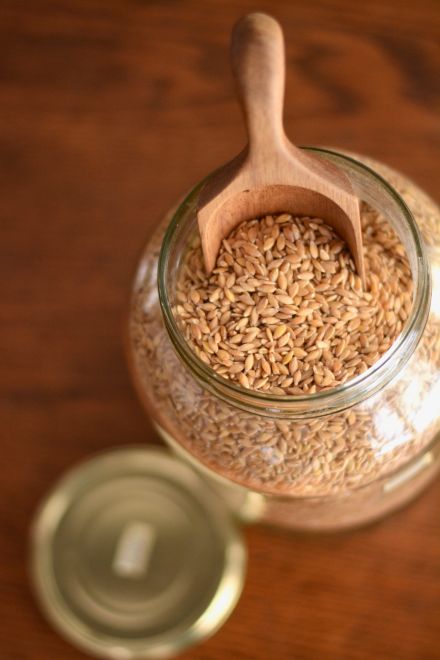
Wheat berries are the whole kernel form of wheat. If you were to walk into a wheat field and grab a handful of wheat stalks, shake them really hard, and remove the hulls, you’d be left with wheat berries.
Wheat berries are made up of three parts: the bran, the germ, and the endosperm.
The bran is the outer casing of the wheat berry that keeps the oils and nutrients inside the berry fresh indefinitely.
The germ is the part of the wheat berry that would sprout if you planted the wheat. It’s essentially the embryo of wheat. It also contains nutrients to keep the plant alive long enough to continue growing before it’s mature enough to make it’s own food.
The endosperm is the starchy, carbohydrate part of the wheat berry. Again, if you were to plant the wheat, it’s the part that would sustain growth after the nutrients in the germ were used up.
what is fresh flour
Fresh flour is simply flour that’s been milled from wheat berries and used fresh. Ideally, true fresh milled flour shouldn’t sit too long before it’s used. The natural, healthy oils in the flour will start to go rancid and loose nutrients.
Does fresh milled flour bake differently?
Technically fresh milled flour does bake differently than commercial flour does. That’s for a few reasons.
One, because commercial flour has added ingredients to help dough develop gluten, bake better bread, make more tender baked goods, and so on. Obviously fresh milled flour doesn’t contain those.
Two, fresh flour does contain bran and germ, which can pose somewhat of an issue in baking from time to time. For instance, when you’re making bread with fresh flour the bran tends to “cut” the gluten strands since it’s somewhat “sharp.” I’ve found the best way around this is to knead my dough for a little longer, and add vital wheat gluten if I’m feeling fancy.
Fresh milled flour recipes
If you’re just starting out with fresh milled flour, I often recommend that people actually don’t use specifically fresh milled recipes. Which i know is especially strange coming from someone who shares fresh milled flour recipes… But if you start out with recipes you know well, you’ll be more likely to be successful. That being said, once you’ve made a couple of your family’s classic recipes with fresh flour, you’ll probably be ready to graduate to new recipes. Here are a few of my favorites.
- fresh flour sourdough sandwich bread (soft & sturdy)
- the best sandwich bread with fresh milled flour (yeast)
- homemade tortillas with fresh flour
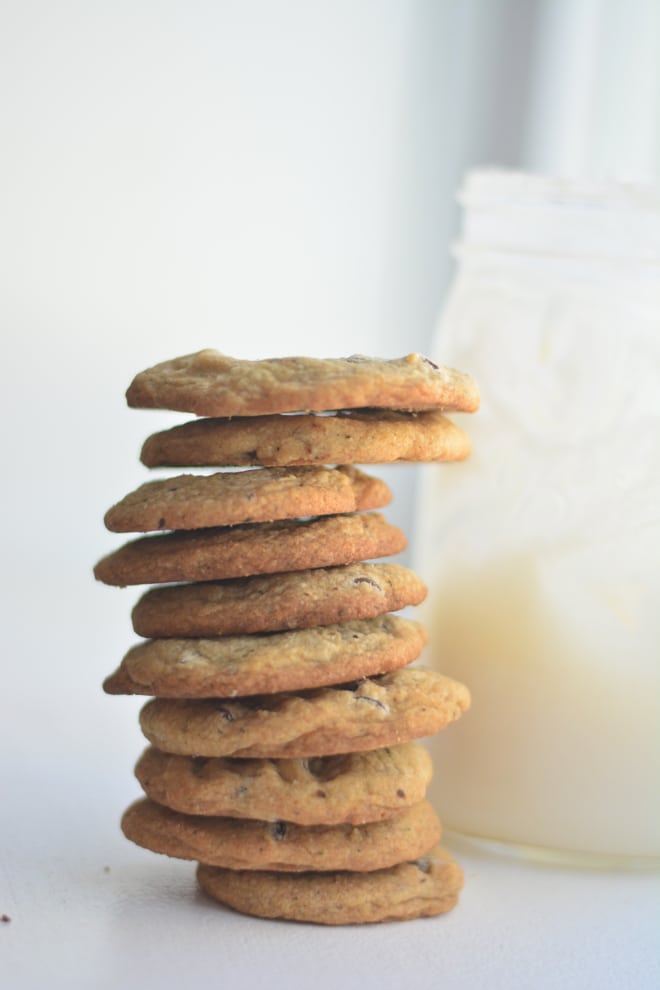
- fresh milled einkorn chocolate chip cookies
- the best fresh milled blueberry muffins
- lemon bars with fresh flour
- lasagna noodles from scratch
Want more? See my full library of free fresh milled flour recipes.
What’s bad about store bought flour?
The easiest way to explain why I choose not to buy flour at the store anymore is for two reasons:
What’s missing from modern flour,
And what’s added to modern flour.
- What’s missing: All flour starts as whole grain wheat kernels called wheat “berries.” Historically, flour is made simply by grinding those wheat berries into flour. But once we realized that flour could turn from a use-quickly food into a long-term shelf-stable food, everything changed. You see, the bran and germ parts of the wheat contain oils. These oils hold lots of nutrients, but they’re also what cause flour to go bad quickly. Once flour millers realized that removing these two parts of the wheat through sifting and heating, the powdery, starchy, white flour we know of was born. Flour should be whole grain, ground wheat: the bran, germ, and endosperm. Instead we just get the starchy endosperm in our modern flour.
- What’s added: Flour should be one ingredient: whole wheat berries, ground into flour. Instead, modern flour comes as a cocktail of ingredients, including synthetic vitamins, dough enhancers & maturing agents, enzymes and bleaching agents. I don’t know about you, but I prefer when my food is as close to it’s original form as possible, and I certainly don’t like eating added preservatives when they don’t even need to be there. Leave it to commercial industries to turn a one-ingredient superfood into a a 12-ingredient science experiment.
More like What is Fresh Milled Flour:
- 5 ways to afford a grain mill on a budget
- Where to purchase wheat berries for fresh milled flour
- How to make a fresh milled sourdough starter, step-by-step
- Full library of FREE fresh milled flour recipes
- Join Fresh Flour University