
Last Updated on October 18, 2026 by Michelle
I love a good coffee shop experience as much as the next guy. But at-home coffees and drinks?
Making your own coffee allows you to use good coffee (not the mold-ridden beans most coffee shops use, yikes!), control the ingredients (no fake syrups here!), and you also save a ton of money.
BUT.
Have you ever made a coffee at home… that just, well, doesn’t taste as good as the latte your local coffee shop makes?
You saved yourself $7, but you find yourself still craving a coffee shop coffee, even while you sip your homemade drink?
We’ve all been there.
But no longer. We’re breaking out.
Out of the spending $7+ on coffee shop coffees, that is.
We can do better. So here are my top 7 ways to make at-home coffee taste like a coffee shop.
7 ways to make at-home coffee taste like a coffee shop
We’ll talk about all of these in-depth, but here’s the rundown on my 7 tips:
- Make it salty.
- Use the right coffee.
- Add a splash of heavy cream.
- Use enough ice (for iced lattes/coffees).
- Add colostrum powder for an extra-creamy coffee.
- Don’t be shy with the sweetener (if you’re craving a sweet coffee).
- Learn how to make your own easy syrups. You don’t have to leave flavored coffee behind!
- (bonus) Use the right equipment–it doesn’t have to be fancy, but it does need to suit your needs and make good coffee.
How to make better coffee at home: make it salty
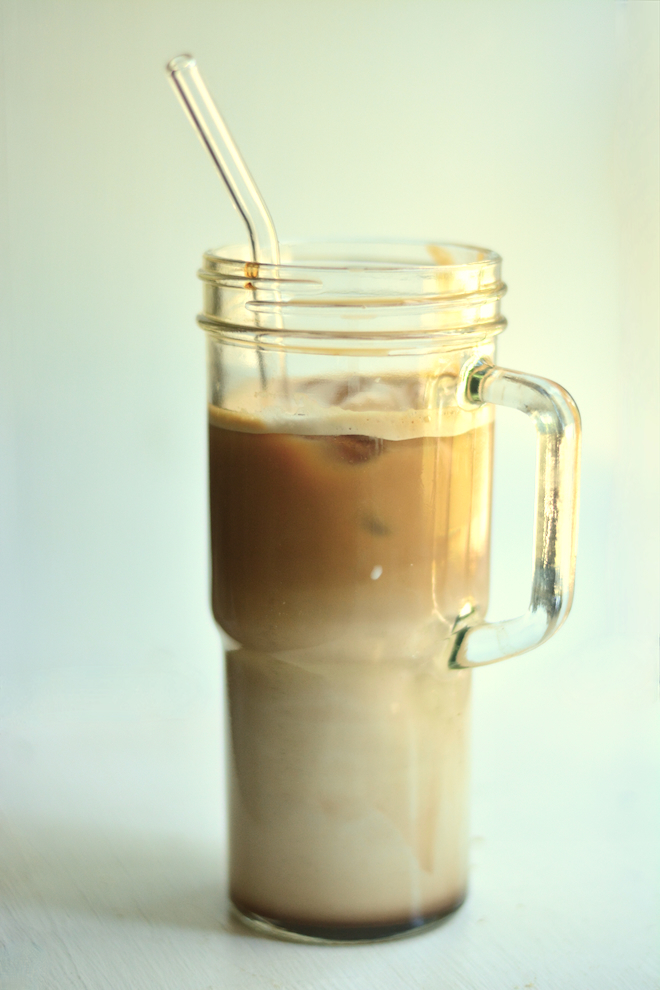
If your espresso is tasting bitter, stale, or sour, try adding a pinch of salt to the warm espresso, either before or after it’s finished brewing.
Don’t add too much (unless you want a salty-tasting latte). Just enough to take the edge off the bitter espresso. Just a tiny pinch will do the trick.
This works because the sodium interacts with how we perceive taste. It literally suppresses the flavor of bitterness!
As an added bonus, the salt will also help the naturally sweet flavors in the coffee stand out! You might notice more natural notes of chocolate, caramel, or more nuttiness in your coffee (which flavor notes you’ll taste depend on the roast of coffee you’re using).
Salt + espresso are a match made in heaven: the salt simply balances out the bitter espresso and makes your latte taste sweeter, less bitter, and more smooth and rounded out, all before we even add sweetener.
What type coffee should I use for at-home coffee?
Here’s the thing about coffee… there’s tons of bad coffee in the world.
I’m talking toxic, mold-ridden, acidic, bitter, poorly roasted coffee. And you can taste it in your cup.
Coffee naturally likes to grown in the shade. So what do commercial coffee growers do? Grow coffee in the full, hot sun. This results in more acidic, bitter coffee that often gives you headaches because of the unnaturally high acid.
Shade grown coffee, on the other hand, is lower in acid, naturally, and tastes sweeter and less bitter.
During the harvesting process, coffee should be harvested in such a way that only ripe coffee cherries are harvested. Commercial coffee growers? Mechanically harvest all cherries at one time: ripe and unripe, including broken cherries. This means that broken, unripe cherries are included in the roasting process and are in your final cup. Unripe cherries are very bitter, and broken cherries harbor mold.
Hand-picked coffee is a different story. Only ripe, high-quality cherries end up in your final cup. Not only does that taste better, but you’re also less likely to be drinking mold.
Roasting coffee is best done at low, regulated temperatures. So, naturally, commercial coffee roasters often roast beans at hot, fast temperatures to cut down on processing time and roast more coffee at a time.
Lower temperature, carefully roasted coffee allows for better flavor development, a smoother taste (less “burnt” flavor), and leaves you with a sweeter cup of coffee, naturally.
So which coffee should I buy?
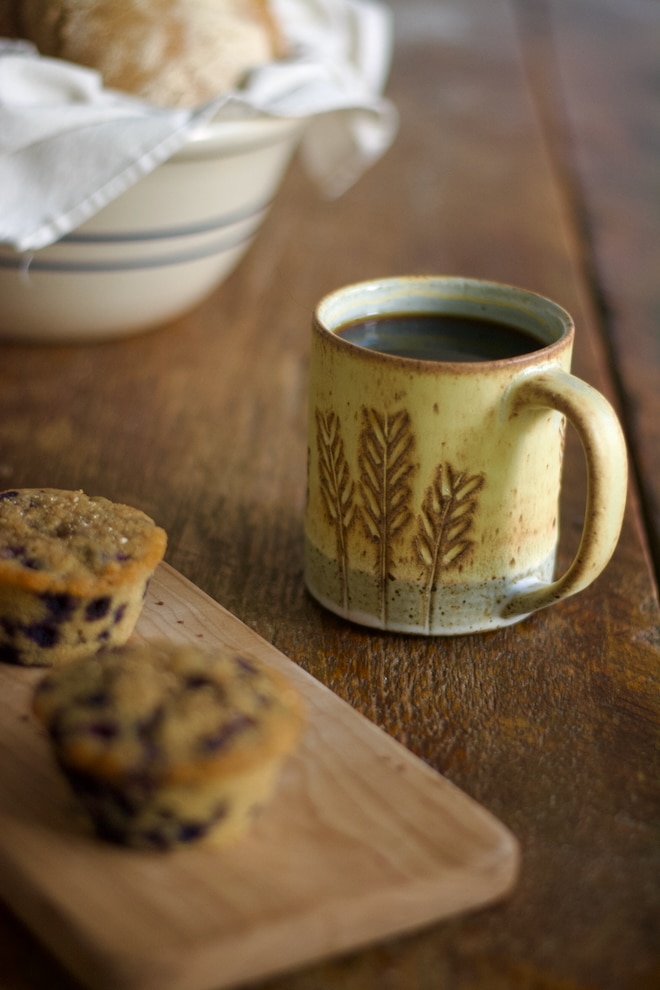
I’m so glad you asked. I could nerd out about coffee all day long, but you’re probably not interested in that. The main things to look for in a GOOD coffee are:
low-acid,
shade-grown,
organic,
hand-picked,
low-temperature roasted
…These things will give you the best tasting cup.
It’s hard to find a coffee that meets all of these qualifications, but THESE GUYS do. They’ve been my go-to for years. I used to avoid coffee (I replied on my homemade not-coffee tea for this reason) because I got headaches and brain fog after drinking it.
After I researched coffee and made the switch, I’ve been headache-and-brain fog-free ever since.
If you want to enjoy truly healthy coffee, use code “soulyrested” to save.
Add a splash of heavy cream for better at-home coffee.
I can’t fully explain why, but adding just a splash of heavy cream to my homemade lattes always elevates it.
It gives your coffee that little extra “umph” that coffee shop lattes have. It tastes creamier, less bitter, more smooth and more luxurious.
Give it a try–just a splash, though. Not too much heavy cream or your latte will feel, well, heavy. You could also make a homemade cold foam for the top of your latte and have a similar effect.
Simple cold foam base recipe:
- 3 tablespoons heavy cream
- A splash of maple syrup (or honey or simple syrup)
- Any flavor you like (optional)–I like to add a splash of vanilla extract or some cinnamon
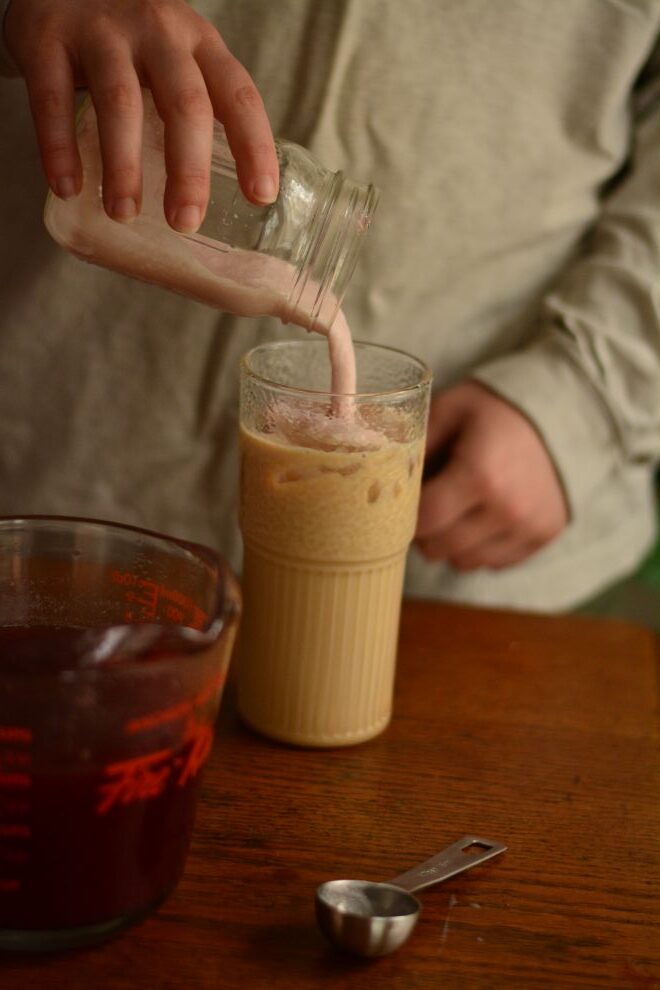
Simply froth that together until it’s thick, but still pourable. Add to your favorite latte or iced coffee.
Grab my pumpkin cold foam recipe here.
At-home coffee tips to taste like a coffee shop: ice
We all know that coffee shops add a lot of ice to their iced lattes and coffees.
And we’re all guilty of rolling our eyes about it from time to time… we all know this helps them keep costs down and make drinks look bigger than they are.
However.
There is something about having lots of ice in an iced latte that just feels… right sometimes.
If you’re making iced lattes at home and they just don’t seem to taste as good as coffee shops, try adding more ice. Trust me.
How (and why) to add colostrum powder to at-home coffee
When I first started adding colostrum powder to my iced lattes, it was purely for the healthy benefits. (Better skin plus a healthier gut and better immunity? Yes, please!)
But soon after, I started realizing that my lattes were creamier, more flavorful, and had better flavor than ever. And when I skipped a day of adding my colostrum powder, I realized why. Something about the creamy, rich, butter-y colostrum truly elevates your coffee.
BTW, if you’d like the added benefit of caring for your bones and joints, choose the colostrum + collagen powder. Same rich, creamy taste, with added joint health thrown in (hello, mid-life achy joints!). Stick with the “regular” colostrum if your main goal is gut health.
I can’t prove this, but from my personal experience I swear low-acid coffee + colostrum are a powerhouse together. Both are easy on your stomach and the gut-healthy benefits of the colostrum seem like they work really well with the healthy benefits of drinking shade-grown coffee.
How to sweeten at-home coffee like a coffee shop
Listen, we all know that coffee shop syrups are sweet.
If you’re craving that sweet, flavorful coffee shop coffee, you’re going to need to add a decent amount of sweetener. Like, more than you think.
I don’t always want or crave a sweet coffee, but if you’re in the mood for a sweet flavorful coffee shop coffee, don’t feel guilty about adding lots of sweeter–they do it at coffee shops.
Learn how to make your own coffee syrups at home
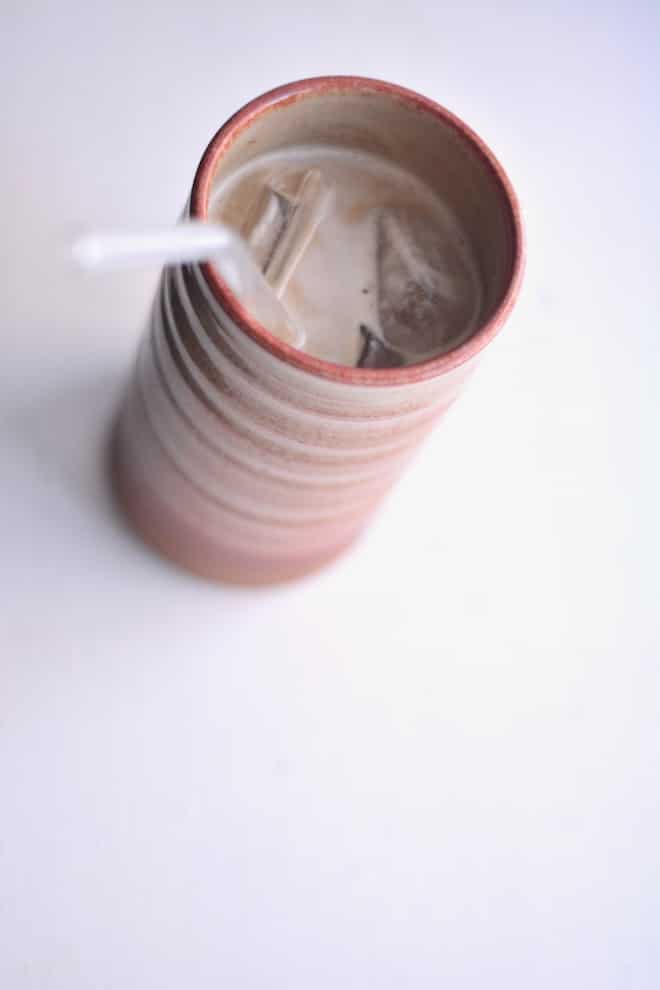
The best coffee shops are making their own syrups. So why not save money (and use better ingredients) and make your own syrup at home?
Most syrups are very simple to make. If you’re looking for a very simple at-home coffee syrup, try my homemade strawberry syrup recipe. Although, truthfully, it’s really an any-fruit syrup. I also love raspberry or blueberry!
Use your strawberry syrup in an iced strawberry latte, a strawberry matcha latte, or even make a chocolate-covered strawberry frappe by adding your syrup to this mocha frappe recipe. Yum!
Or, if you want to skip making syrups all together (and if you’re trying to hit protein goals), try adding your favorite protein powders to coffee.
My favorites are my protein vanilla latte and protein peppermint mocha latte.
Best at-home coffee syrup recipes:
- Caramel sauce (made with maple syrup)
- Strawberry (or any fruit) coffee syrup
- Homemade peppermint syrup
- Floral lilac syrup
- From-scratch Dr Pepper syrup (Dr Pepper lattes are surprisingly delicious!)
Using the right equipment for at-home coffee
When I first started making coffee at home, my goal was to save up and invest in a fancy, $700 espresso machine.
Surely, that’s what makes the best coffee, right? Not really.
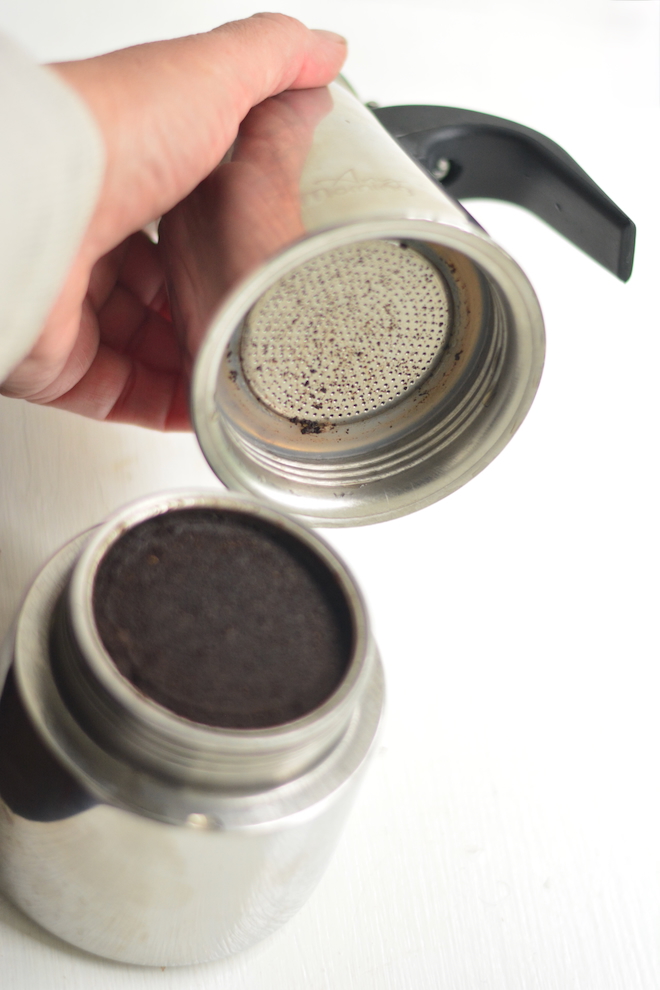
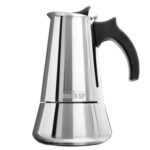
These days, I actually make my espresso in a $30 moka pot that I’ve had for years. And my coffee has never tasted better. So apparently it was never really about the machine!
Not to mention, my moka pot is completely stainless steel, while expensive machines are adding microplastics to your coffee by sending heated water through plastic tubes. Gross.
My top 3 tools for making good coffee at home include: a stainless steel moka pot, GOOD coffee, and fun latte cups (for that better-than-coffee shop experience.
My bonus pick for the best tasting coffees at home is my trusty colostrum powder. I seriously don’t make a latte without it.
What you need to make at-home coffee taste like a coffee shop:

More like 7 ways to make at-home coffee taste like a coffee shop:
- homemade coffee ice cream recipe
- Grow chicory for “coffee” anywhere in the US
- vanilla colostrum latte
- how to use a moka pot to make espresso at home