Last Updated on November 1, 2026 by Michelle
When my first grain mill showed up, I was overwhelmed.
Wheat berries, what are those? Dough enhancements, what are they? Should I add extra gluten to my dough? When should I sift my fresh flour? Hard wheat berries, soft wheat berries, ancient grains, oh my.
A decade ago, there was much less information about fresh milled flour available. I felt lost, alone, and wasn’t sure how to figure this contraption out–let alone how to actually bake with fresh milled flour.
This post is, essentially, everything I wish I had understood starting my fresh milled flour journey.
If there’s anything I didn’t cover, let me know in the comments.
Milling your own flour: why & how
First, let’s cover the basics. Why are we talking about fresh milled flour, grain mills, and wheat berries anyways?
The answer is pretty simple. It’s because flour should be one of the most nutritious foods we eat. But you can’t buy real flour at the grocery store. You have to make it yourself.
Sadly, flour milling has become so commercialized that the “flour” product we can pick up at the grocery store is only a bleached, heated, treated, sifted, synthetic-vitamins-added cousin to REAL flour. Commercial flour only contains 1/3 parts of whole grain wheat kernels (called wheat berries). The parts they leave out? They’re the nutritious ones.
But the parts they leave out are also the parts that go rancid quickly and easily–so they’re in the way of selling shelf-stable flour. So they “must” be removed.
Milling your own flour allows you to enjoy the most nutritious flour in the world–right from your home mill.
What you need to know before milling flour: grain mills
First, you’re going to need a grain mill. Wheat berries are very tough to grind, so I strongly discourage you from using your mixer, coffee grinder, or any other home appliance to mill wheat berries into flour. Invest in a real grain mill, designed to handle the tough job of milling wheat into flour.
stone grain mills
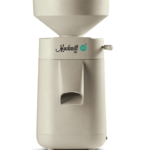
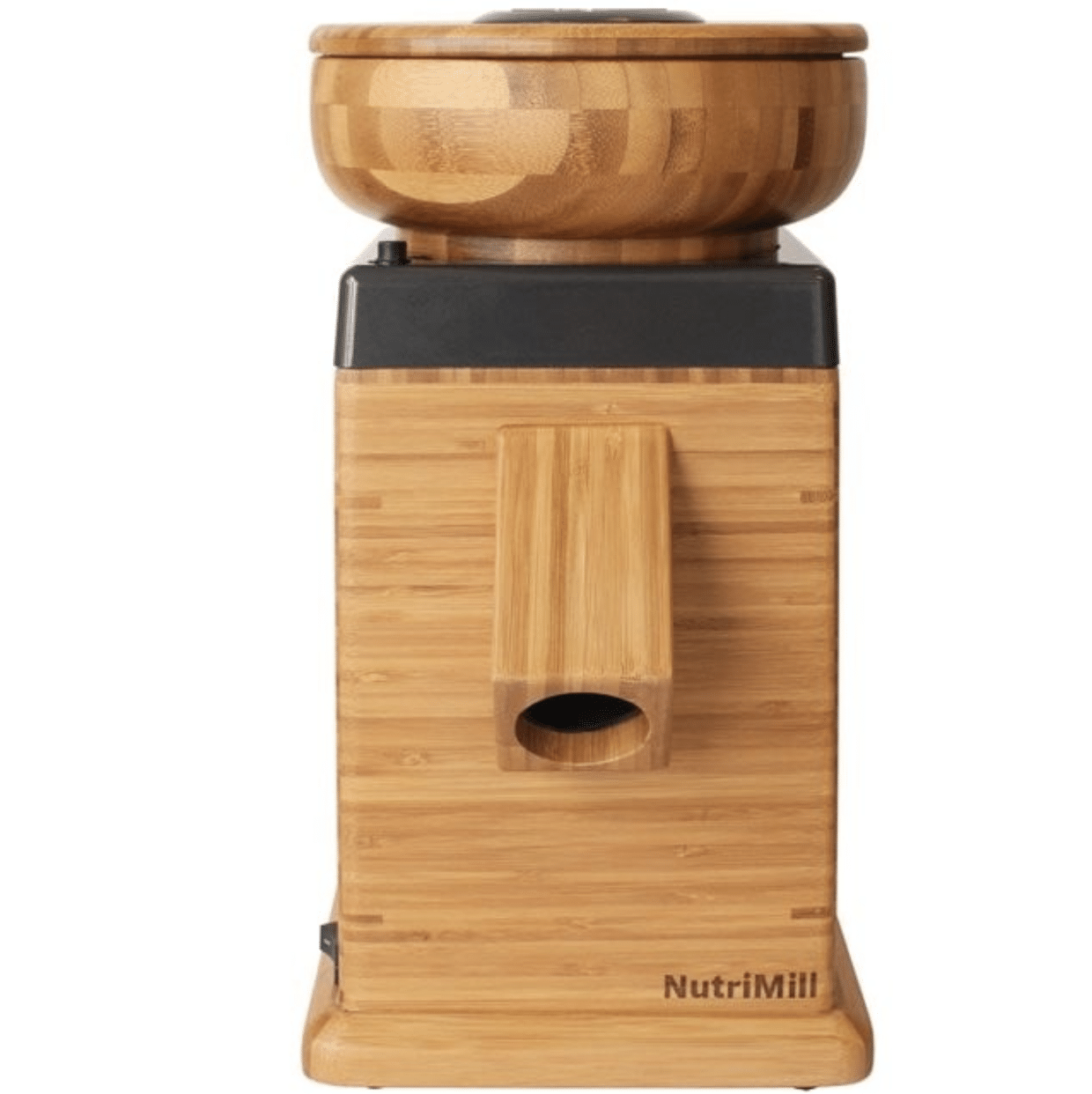
Stone grain mills literally just use two stones, on the top and the bottom of the mill, to grind the wheat into flour. Stone mills are generally on-demand style, meaning the flour comes out a spout as it mills. Stone mills generally have the largest range of flour milling capabilities, easily milling fine flour or milling coarsely-cracked grains.

impact grain mills
Impact grain mills utilize stainless steel “teeth” to grind the wheat into flour. These mills are usually closed-canister style, meaning you never actually see the “teeth,” and your flour drops into a canister as it mills, which you can remove and access the flour after it’s done milling. Impact mills are great for milling large batches of superfine flour at a time.


manual grain mills
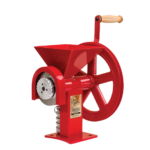
Manual grain mills are non-electric. You must use simply your muscles to grind the grains into flour, the old-fashioned way. These are super cool for using when the power is out, but they’re not always very practical for everyday use, especially if you bake bread.
-> If you’re not sure which grain mill might be best for you, see my Ultimate Guide to Choosing a Grain Mill (& 6 questions to ask before you buy!).
Know before you start milling flour: wheat berries
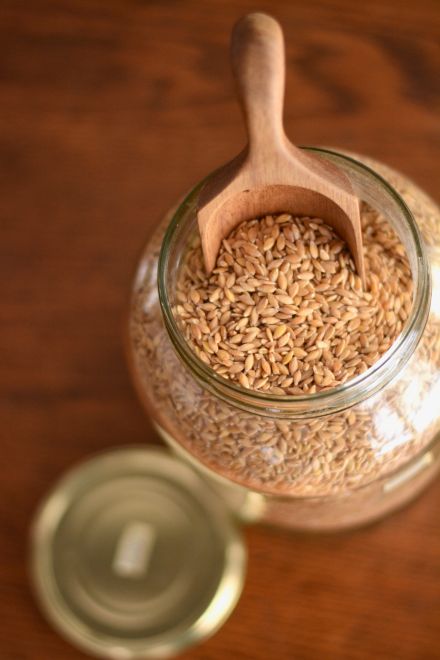
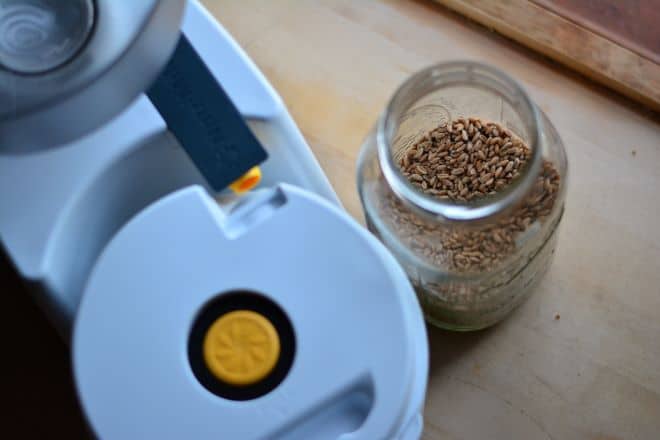
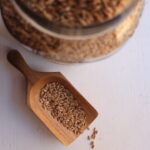
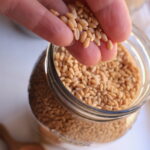
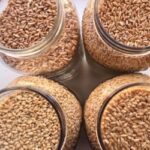
If you were to walk into a field of grain, pluck some wheat heads off the stalk, and knock it into your hand, what you’d be left with is wheat berries. They’re the whole grain, kernel form of wheat–which gets milled into flour. If kept in their whole form (not cracked or milled), wheat berries can last indefinitely. This is thanks to the bran–the hard outer casing of the grain that keeps the oils inside protected from air and light.
Learn more about storing wheat berries 101 here.
modern grains
These are grains that have been hybridized in the last century–since the Green Revolution of the mid-1900s. These are widely-grown commercial grain varieties. They’re perfect fine to use for milling into flour, but just know that modern grains tend to be less nutritious and have less flavor than heritage grains.
If you’re using modern grains, try to stick to organic ones, as modern grains especially are often heavily treated with fertilizers and pesticides.
heritage grains
Heritage grains are varieties of grains not quite as old or as traceable as ancient grains, but they’ve been grown for centuries, and avoided the hybridization of the Green Revolution. Heritage grain varieties are flavorful, nutritious, and can be used in a 1:1 ratio as a “replacement” for modern grains.
My favorite heritage grains include:
ancient grains
Ancient grains are types that have been around since ancient times. These can be traced to ancient Egypt (having been found in ancient Egyptian tombs), the fertile crescent where ancient grains were among the earliest cultivated crops, or even back to the ancient days of China dynasties. These grains are untouched by modern wheat breeding programs, and are more nutritious with more “simple” genetic make ups than modern grains have – which means that often gluten-intolerant (NOT celiac!) folks can sometimes tolerate these grains.
My favorite ancient grains are:

Fresh milled flour: tips, tricks & more
Working with fresh milled flour can be tough, especially as you get into the swing of it. I’ve learned a few things that make it easier, though, in my decade+ of milling flour.
vital wheat gluten
If you’re struggling to get your fresh flour bread dough to rise well, try adding vital wheat gluten. Add up to 1 tablespoon per cup of flour you use. Don’t go over that ratio, though, as too much gluten can actually be a bad thing.
kneading for longer
I’ve found that doughs made with fresh milled flour need to be kneaded for longer than dough made with all-purpose or bread flour. Which makes sense, because most store bought flour has added dough conditioners an enhancers to make bread develop gluten faster and easier. So be patient, and knead your dough. (p.s. this is why I highly recommend a high-powered mixer for fresh flour dough. I burned out a Kitchen Aid mixer before I invested in this bad boy, which always handles long knead times like a champ. Use code “soulyrested” if you need a good mixer)
sifting, when needed
Especially if you’re starting out with fresh milled flour, there are times when sifting is helpful. I don’t recommend sifting on the regular (because you’re removing some of the nutrients we’re working hard to preserve!), but sifting allows you to get the feel of using fresh milled flour without all the obstacles. Simply sift less as you get into a groove.
Which wheat berries to use for fresh milled flour
Using the correct wheat berry for what you’re making is half the battle of mastering fresh milled flour!
Here are my favorite grains to use for bread, sourdough, baked goods, cookies/brownies, pastries, and pasta…
Which wheat berries to use for any baking:
Bread/yeast dough
The best grains to use for bread and yeast doughs are hard wheat berries or ancient grains. I prefer using heritage hard wheat berries as opposed to modern hard wheat berries for extra flavor and nutrition.
If you’re using ancient grains for bread, you may want to add vital wheat gluten, since ancient grains have low gluten potential. This makes ancient grain bread naturally more dense without a little help. (See above for more vital wheat gluten info.)
My favorite wheat berries to use for bread are heritage hard red/white grains:
Sourdough
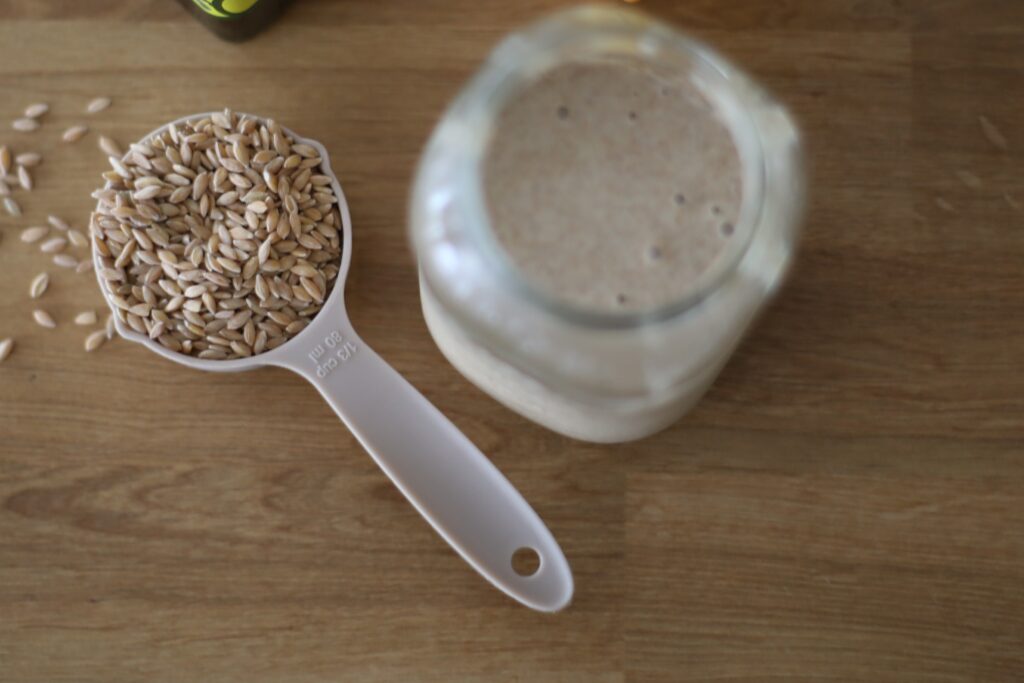
Making sourdough with fresh milled flour can be tricky. You’re essentially fighting two naturally-changing elements: sourdough starter (a living yeast), and fresh milled flour (each batch of grain/flour is different). Your best bet for sourdough fresh flour is to use hard wheat berries. You can either use modern hard white/red wheat berries, or heritage hard white/red grains (see above).
Ancient grains can be used to make fresh milled sourdough, but it adds another layer of difficulty.
My favorite wheat berry to FEED my sourdough starter is rye:
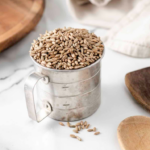
Tender baked goods (muffins, cakes)
To make tender baked goods where you want a soft crumb, it’s best to stay away from hard grains. These grains will cause more gluten development, leading to tough baked goods.
Stick with either ancient grains or soft wheat berries. My favorite soft wheat berries are heritage varieties for better flavor and nutrition.
My top picks for wheat berries to make tender baked goods:
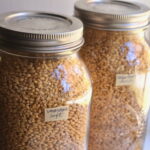
Pastries, biscuits, pie crust
Your best bet for flaky pie crusts, buttery, soft biscuits and tender pastries is going to be either soft grains or ancient grains. Einkorn is an especially buttery-flavored ancient grain that mills into a very fine flour great for any pastry. Heritage soft white/red wheat berries are another great option. My favorite “biscuit” flour is a 50/50 blend of heritage soft white (see above) and spelt.
My favorite grains for tender, buttery, flaky pastries:
Cookies & brownies
Cookies and brownies are both very flexible baked goods. You can use almost any grain for these bad boys: rye makes great brownies, hard white/red work well for cookies. Other great options for brownies or cookies are; soft wheat berries (see above), ancient grains, or alternative grains like buckwheat, sorghum, or millet.
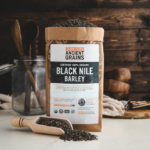
My all-time favorite cookie/brownie grain has to be and form of barley:

Pasta
The “pasta” grain is classically durum. Keep in mind that khorasan (a.k.a. kamut) is very closely related to durum, and is another great pasta grain. Homemade pasta dough is pretty flexible and almost any grain can work. If you’re looking for that “classic” firm bite, al dente pasta, stick with durum or khorasan:
My favorite grains to use for homemade pasta:
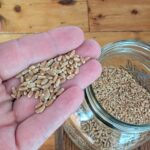
What wheat berries should I start milling my own flour with?
If you’re overwhelmed by the number of wheat berry and grain options, I get it.
When I was first starting out with fresh milled flour, I was in the same boat.
If you’re not sure which grains to order or which ones you’ll use/need, my favorite heritage grain company sells an amazing starter kit that will cover anything you want to make, from bread to baked goods to pasta.
-> Grab a heritage grain starter kit, and save with code “soulyrested”
More like what you need to know before milling your own flour:
- Choosing the right wheat berries: a guide
- 5 ways to afford a grain mill on a budget
- How to bake with kamut/khorasan & mistakes to avoid
- The best fresh milled flour blueberry muffins