Last Updated on October 12, 2026 by Michelle
Keep reading if you want simple herbs to start changing your life…
The herbs you already use in your kitchen can improve your everyday wellness routine.
I love finding simple ways to make better use of the things we already grow, make, and keep in our kitchens. And when it comes to herbs, I think many of us are missing out on something wonderful.
We grow basil for pesto… We sprinkle oregano on pizza… We tuck sage into a favorite fall recipe…
But these familiar kitchen herbs have been used for centuries for much more than simply making our food taste good.
In episode 242 of the Simple Doesn’t Mean Easy podcast, I sat down with herbalist and plant medicine maker Shannon Mayernik to talk about three familiar culinary herbs—sage, basil, and oregano—and how we can begin using these plants in more old-fashioned, traditional applications.
One of my favorite takeaways from our conversation?
You don’t need an elaborate home apothecary or a cabinet full of specialty herbs to begin learning about traditional herbalism. Sometimes, you can start with one plant growing right outside your kitchen door.
Meet Shannon Mayernik: Herbalist, Educator, and Plant Medicine Maker
Shannon Mulligan-Mayernik is an herbalist, educator, and plant medicine maker based in northern New Jersey. Along with her husband, she co-owns Mayernik Kitchen, a modern-day herbal apothecary and medicinal herb farm.
What I especially love about Shannon’s work is that it connects growing plants with actually using them. She and her husband grow many of the herbs that go into their products, making their work a true seed-to-product process.
Shannon’s background includes training with the Chestnut School of Herbal Medicine, an apprenticeship with herbalist Robin Rose Bennett, and education in culinary nutrition, food preservation, and flower essence practice. She also shares her knowledge through classes, workshops, online education, and a ten-month herbal apprenticeship that follows the growing season from seed starting through harvest.
In other words, Shannon brings both hands-on experience and a deep respect for traditional plant knowledge to this conversation.
You can learn more about her work, herbal products, and educational resources at Mayernik Kitchen.
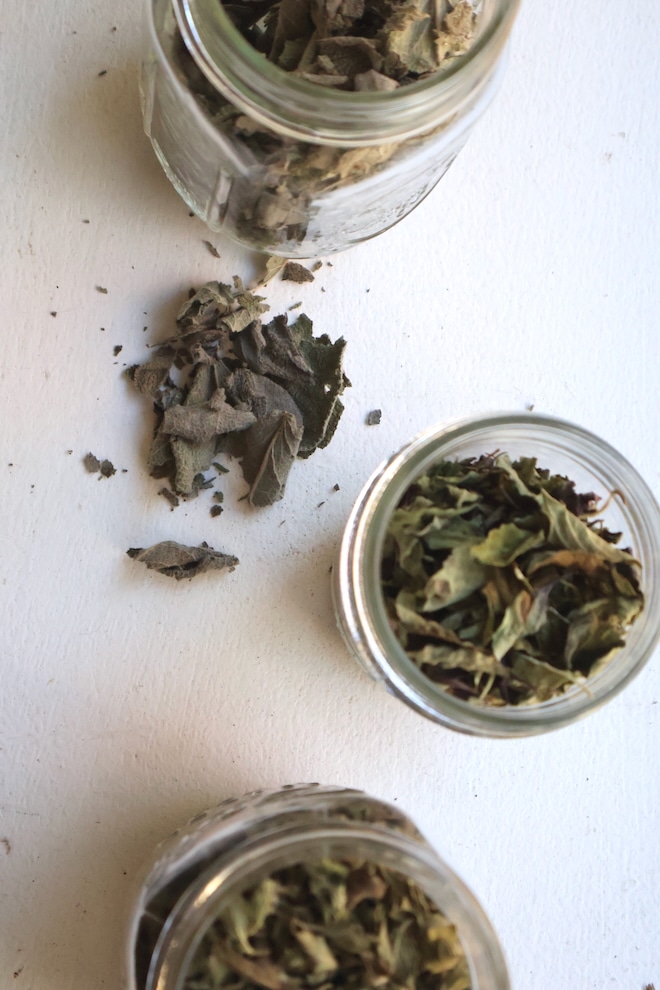
Why Culinary Herbs Deserve a Place in Your Herbal Education
We are so quick in today’s modern society to organize herbs into categories that never consider the full benefits and use of the herbs.
We think mint is for tea; basil is for pesto; oregano belongs on pizza; and sage is for stuffing at Thanksgiving.
And while, sure, these herbs are all great to use in those ways, we shouldn’t stop there.
Traditional herbalism looks at plants through a broader lens. Many familiar culinary herbs have traditionally been used in preparations such as teas, infusions, tinctures, oils, and vinegars. Their potential uses depend on the plant, the preparation, and the person using it.
One single basil plant can offer more possibilities than we’d ever expect.
I love this because it takes some of the mystery out of herbalism. You don’t have to know everything before you begin. You can start by learning about one familiar plant, understanding how it has traditionally been used, and exploring simple ways to incorporate it into your kitchen routine.
And if you already grow herbs, you’re one step ahead.
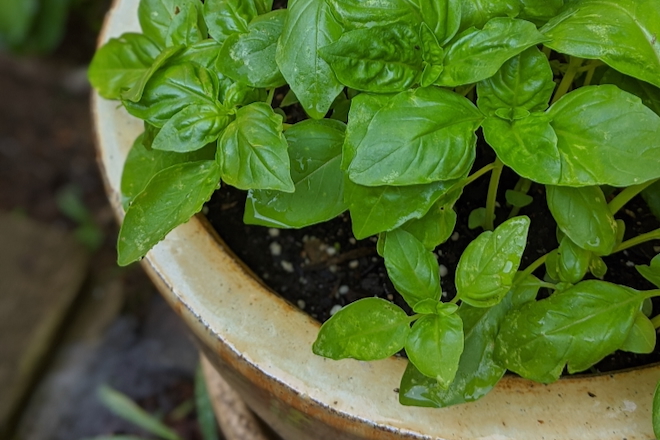
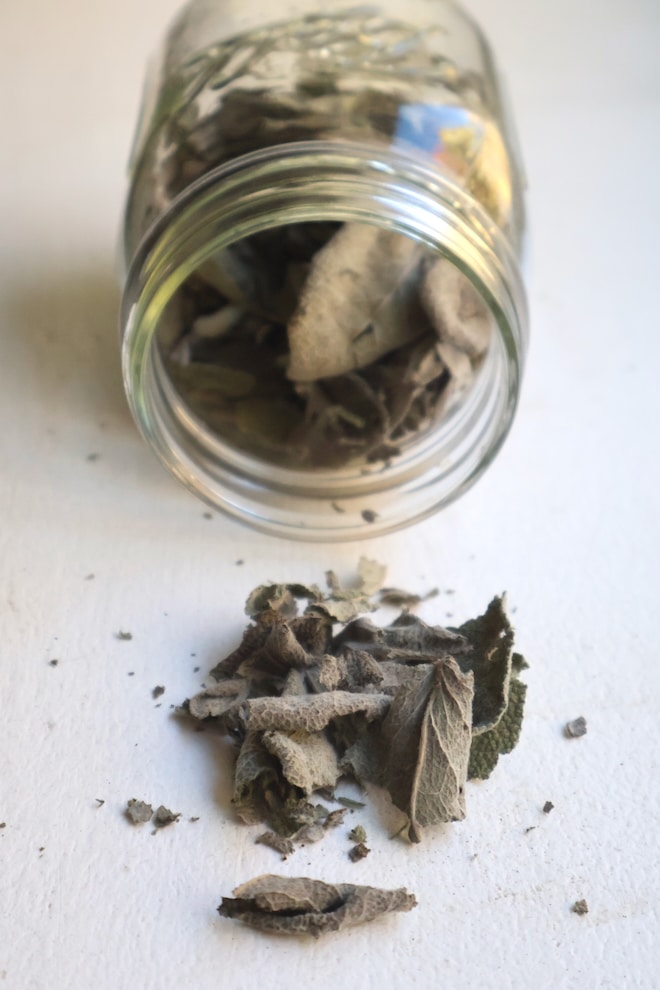
1. Sage: More Than a Thanksgiving Herb
Sage is one of those herbs that often gets brought out for a particular recipe or season. But it’s worth getting to know, way beyond the holiday dinner table.
Sage has a long history of traditional herbal use, and we should thing of sage as more than a seasoning.
How can you use sage as an herbal tea?
One of the simplest ways to use this herb is to make a sage tea.
You don’t need special equipment or an elaborate recipe to try a basic sage tea. A mug, hot water, and a small amount of sage is enough to get started.
You can place fresh or dried sage in your mug, cover it with hot water, and let it steep. When it’s ready, strain out the leaves or use a tea infuser.
A simple cup of tea doesn’t always need to become a complicated project. Some herbal preparations require longer extraction times, particularly when you’re working with roots or other tougher plant parts. But for a simple cup made with sage leaves, you can begin with a shorter steeping time and adjust the strength to your taste.
Sage has a distinctive aroma and flavor, so I would start with a modest amount and see what you think. You can also toss a few sage leaves into any cup of tea that you’re steeping.
I know I’m always looking for ways to make everyday routines simpler. If making a cup of herbal tea feels approachable, you’re much more likely to do it than if you think you need a dozen ingredients and a detailed set of instructions.
How to use the flowers from your herbs
Here’s another helpful reminder from my talk with Shannon: the flowers you pinch off your herbs don’t automatically belong in the compost pile.
Shannon shared that herb flowers can also be used in simple preparations, including teas. So the next time you’re in the garden and remove a basil blossom or another edible herb flower, find out if that particular flower is one you’d like to use either culinary or medicinally, rather than automatically throwing it away.
A little curiosity can go a long way in the garden.
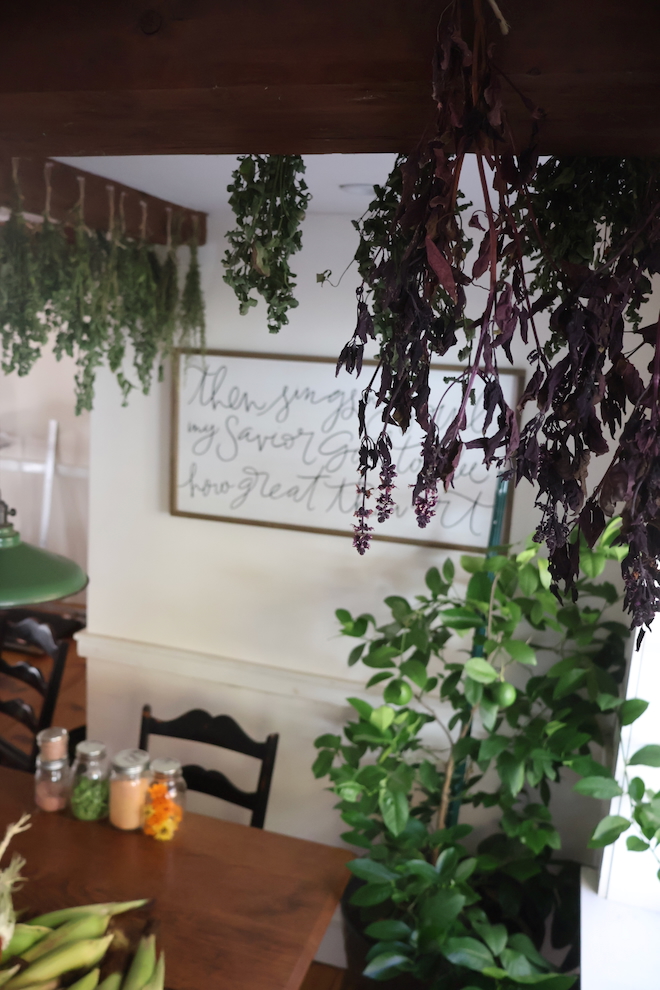
I just harvested the last of my purple basil for the fall and hung them to dry in my kitchen. I intentionally left the blossoms on the plant. I can snip them off and soak them in oil or vinegar once their dry (read on for more about that) or I can crush the blooms up with the leaves and use them medicinally.
2. Basil: A Familiar Herb With More Possibilities
Basil is probably one of the easiest herbs for many of us to recognize. We grow it for fresh summer meals, homemade pesto, salads, and all sorts of delicious things.
But Shannon also discussed basil’s traditional herbal uses. Basil is great for digestive comfort, and it helps with relaxation.
Can you make tea from culinary basil?
Culinary basil can be used to make a simple herbal tea, but it does have s a strong flavor, so start with a small amount and adjust according to what tastes good to you.
You might be surprised by how different an herb tastes when you prepare it as a tea instead of adding it to a meal. If you’ve never tried basil this way, it can be a simple opportunity to get to know a plant you already have in your kitchen or garden.
Shannon also discussed basil’s traditional use as a nervine—a term used in herbalism for plants traditionally associated with supporting the nervous system and relaxation.
That brings us to an important distinction…
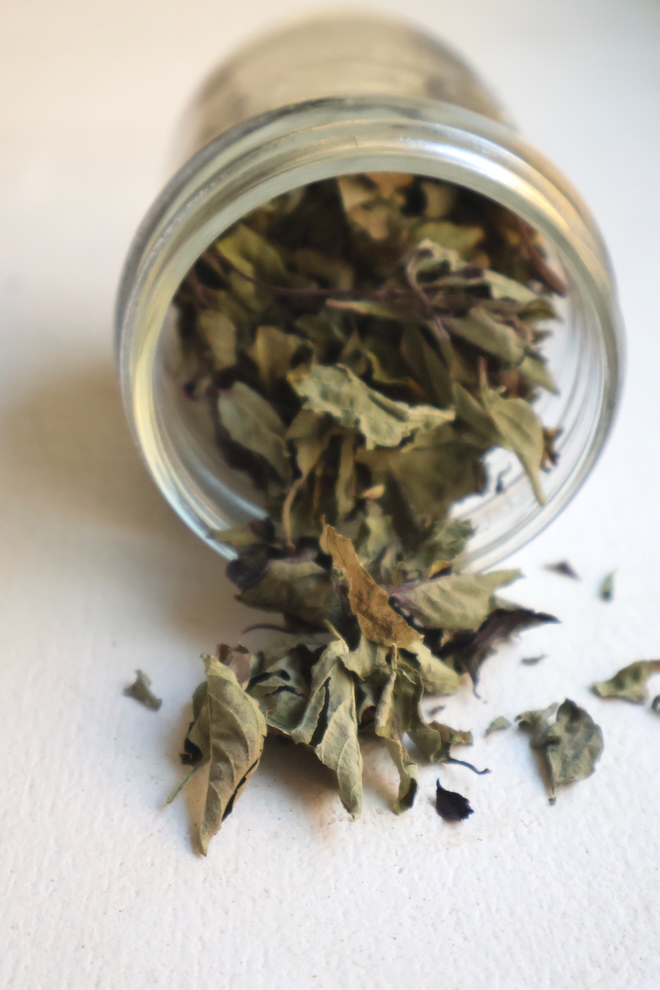
Italian basil and Tulsi basil are not interchangeable
During our conversation, I asked Shannon about Tulsi basil because I’ve used it in tea blends of my own.
Tulsi, also known as holy basil, is different from the familiar Italian basil many of us grow for cooking. Shannon explained that Tulsi has a long history of traditional use, particularly in Indian herbal practices, and is commonly discussed in connection with stress support.
Although both plants are called basil, they have different characteristics and traditional uses. So if you’re interested in exploring Tulsi, look specifically for Tulsi or holy basil rather than assuming your usual culinary basil is the same plant.
And you might love this stress-relieving, 4-ingredient tea blend I drink daily that include Tulsi basil (it’s so easy to make): Hibiscus tea: how to blend it and make it yourself.
This is a good example of why learning a little about the specific herb matters. Common names can be confusing, and knowing exactly which plant you’re using is an important first step.
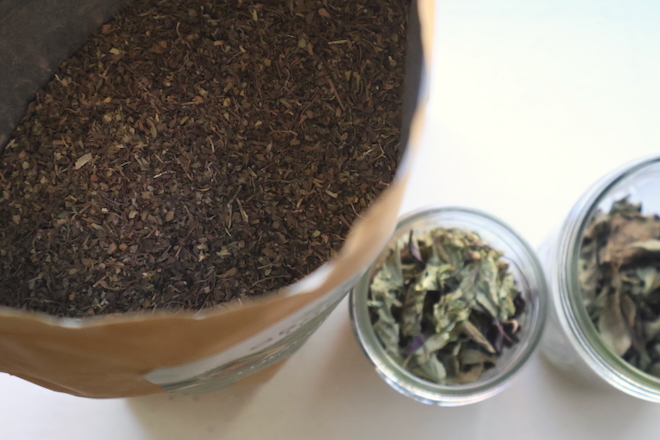
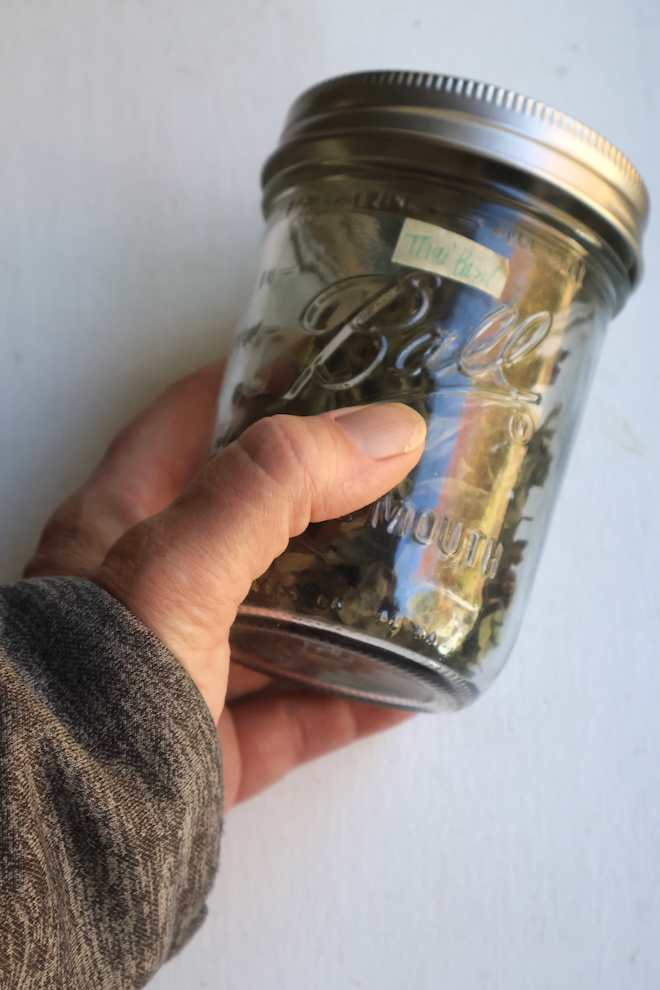
I’ve never grown Tulsi basil myself, so I source organic leaves here. Typically when you purchase herbs, they’ll arrive all crusted and ready to use. When I dry and store my own herbs, I prefer to leave them as whole leaves and crush them as I use them, releasing the medicinal oils of the plant right before using them (a little like fresh milled flour, honestly, which releases all the nutritional oils of the wheat berry right when you’re going to bake with the flour. More about why I mill my own flour here.)
3. Oregano: A Kitchen Staple Worth Exploring
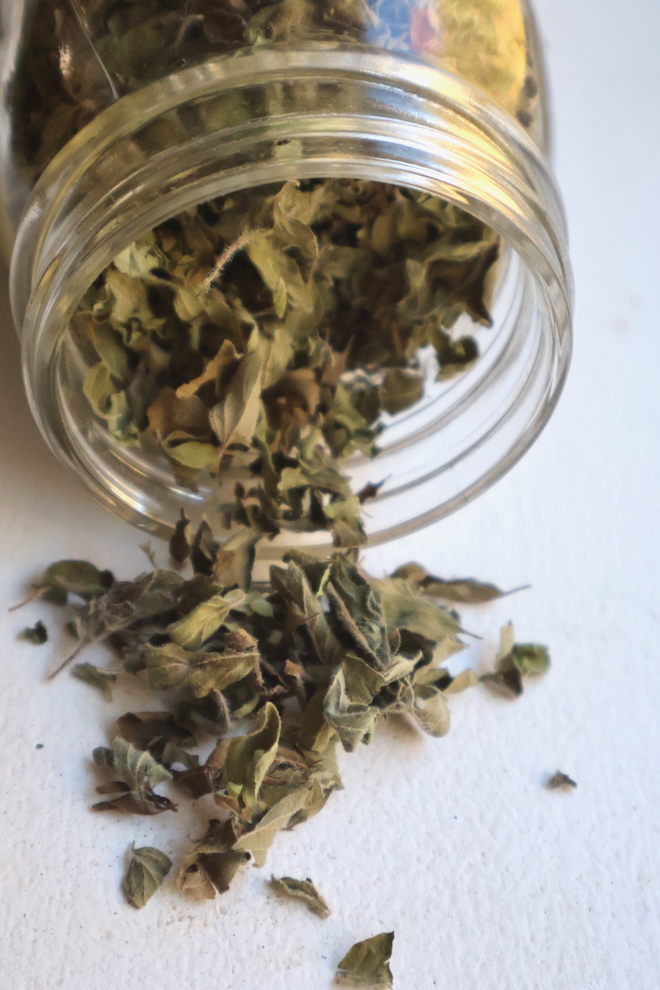
Oregano is one of those plants that can really earn its keep in a home garden. I’ve grow it myself for years, and I love having it available for cooking. (Sidenote: it’s also a wonderful herb to grow for our chickens, here on our small family farm.)
In our conversation, Shannon discussed oregano’s traditional herbal uses, including its use in preparations associated with seasonal wellness. She also emphasized that oregano is a strong, pungent herb and may not be suitable for everyone.
That distinction is important. You might love a plant like oregano as a culinary ingredient but not like a concentrated preparation of it.
Listen to the full episode here for more on that.
Oregano tea, oil, and vinegar
When we start to think beyond oregano as simply a dried seasoning, we can make wonderful herbal oils and vinegars that we love using in our everyday cooking.
Think about how often you reach for olive oil or vinegar in your kitchen. What if you made an infusion that adds the flavor of oregano (or another herb you love) to something you already use?
An infused oil can be delicious drizzled over roasted vegetables or potatoes. An herbal vinegar can be used in salad dressings or other recipes where vinegar already belongs.
The beauty of this approach is that it connects the natural wellness and medicinal qualities of herbs with something so practical that you reach for everyday. You aren’t necessarily adding a whole new routine to your day. You’re finding a different way to use an ingredient that already has a place in your kitchen.
A note about infusions: Culinary herb infusions are not all prepared or stored in the same way. Fresh herbs can introduce water into oil, creating food-safety concerns if the preparation is handled incorrectly. Follow a tested food-safety method for the specific herb, oil, and storage conditions; don’t assume a homemade fresh-herb oil is safe to keep at room temperature for weeks. Dried herbs also need to be handled and stored appropriately. If you’re new to infused oils and vinegars, start with vinegar, it’s easier.
A note about essential oils: Don’t confuse oregano essential oil with the plant itself. Essential oils are highly concentrated, and ingesting them can be dangerous. Don’t ingest oregano essential oil or use it as a substitute for properly prepared culinary herbs.
How to Harvest Culinary Herbs Without Wasting Them
While it’s amazing growing an herb plant (or two, or dozens: read about my herbal tea garden here) having a plant is only part of the picture. Learning how to care for it, use what it produces, and preserve it can make the whole experience so rewarding.
Here are a few practical ideas from our conversation:
1. Harvest regularly
All growing season, enjoy using the herbs you grow instead of simply letting them sit in pretty pots.
Regular harvesting can be part of caring for many leafy culinary herbs. Learn the growth habits of each plant so you know how and when to prune it to help it thrive.
2. Learn where to make the cut
For herbs such as basil and oregano, always cut above a leaf node—the place on the stem where leaves or branches emerge. WATCH THIS SHORT VIDEO to learn how to harvest and preserve basil.
Knowing where the nodes are helps you understand where new growth may develop. Rather than randomly snipping leaves, take a moment to observe the plant’s structure and learn how it responds to pruning. It will reward you with a lot more growth and more wonderful herbs to use all year long.
WATCH THIS SHORT VIDEO to learn the simplest way to preserve basil.
3. Keep an eye on the flowers
Many herbs eventually begin to flower as part of their natural life cycle. If you want to encourage continual growth, regularly removing flowers will help keep some plants producing leaves for longer. Bonus: your leaves will be more nutritional dense because your plant is putting it’s effort into the leaves instead of growing more flowers.
The best approach depends on the herb and what you want from it. You may want to encourage leafy growth, collect flowers, or allow some plants to flower and set seed.
And remember what we discussed above: flowers you remove may still have plenty of uses.
4. Pay attention to the weather
Not every herb behaves the same way in every climate.
Rosemary can be surprisingly difficult to overwinter in some Mid-atlantic areas of the U.S. Here in New Hampshire, it’s completely impossible.
But sage and oregano have been much more reliable for us.
Your growing zone, winter temperatures, moisture, and growing conditions all affect how herbs grow. If one plant doesn’t thrive, it doesn’t necessarily mean you’re doing something wrong. Sometimes it’s simply not the easiest match for your location.
Simple Ways to Explore Herbal Preparations at Home
You don’t have to begin by making a complicated tincture or building an entire home apothecary.
Shannon and I talked about several ways people traditionally prepare herbs, and I especially appreciated the reminder to keep things approachable.
Here are a few preparations to learn about as you grow your herbal knowledge.
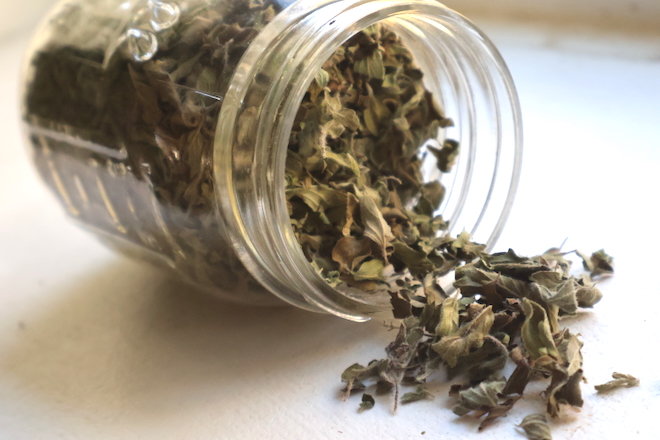
- Herbal tea: A straightforward way to explore the flavor of a suitable fresh or dried herb. Use a clean mug, hot water, and an appropriate amount of plant material.
- Herbal infusion: A term often used for steeping plant material, such as roots, in water. The preparation time depends on the herb and the part of the plant being used.
- Herbal vinegar: A way to combine suitable herbs with vinegar for culinary use. Choose food-safe ingredients and a reliable method.
- Herb-infused oil: A flavorful addition to cooking when prepared and stored according to appropriate food-safety guidance. Because oil can create an environment where harmful bacteria grows if moisture is present, use a tested recipe and storage instructions.
- Tincture: An herbal preparation commonly made with alcohol or another suitable solvent. Tinctures vary in strength and preparation, so learn the method for the specific plant and purpose rather than assuming one recipe works for every herb.
One thing I love about Shannon’s approach is that she encourages curiosity. You can learn about a plant, try a suitable preparation, take notes about what you did, and build your knowledge gradually.
At the same time, simple doesn’t mean careless. Correct plant identification, safe preparation, and appropriate storage all matter.
A Few Important Safety Reminders About Medicinal Herbs
I love learning about traditional herbalism, but I also want us to approach it thoughtfully.
Herbs can contain active compounds, and natural doesn’t automatically mean totally foolproof. The effects can vary depending on the plant, the amount used, the preparation, your health, and any medications you take.
Keep these principles in mind:
-
Identify your plants correctly before using them.
-
Use only plant parts that are appropriate for the intended preparation.
-
Don’t assume a culinary herb, a concentrated extract, and an essential oil are interchangeable.
-
Learn about possible side effects, medication interactions, and contraindications before using herbs medicinally.
-
Seek guidance from a qualified healthcare professional for health concerns, particularly during pregnancy or breastfeeding, when managing a chronic condition, or when taking medication.
-
Don’t rely on herbal preparations as a replacement for medical care when it’s needed.
The traditional uses we discussed are a starting point for learning, and just like traditional medicine as well, there is of course no promise that an herb will prevent or treat an illness.
The Simple Lesson with Herbs: Use What You Grow
If you only take away one message from this conversation with Shannon?
Begin with what you already have.
You don’t need a perfect herb garden. You don’t need to know every plant in the herbal world. And you certainly don’t need to wait until you have a whole shelf of jars and bottles before you start learning.
Maybe you begin by growing a pot of basil on your back deck. Maybe you learn how to prune your oregano. Maybe you try a simple cup of sage tea or explore how a suitable herb can be used in everyday cooking.
Small steps count.
That’s really what I love about simple living and traditional skills. We learn by paying attention, asking questions, and doing the next manageable thing. We don’t have to make it complicated to make it meaningful.
And if you already have herbs growing in your garden, consider this your reminder to go use them!
Listen to Episode 242: Culinary Herbs With Shannon Mayernik
Want to hear the full conversation? In episode 242 of the Simple Doesn’t Mean Easy podcast, Shannon and I talk about sage, basil, oregano, harvesting herbs, and simple ways to explore traditional herbal preparations.
Shannon also shares how she uses culinary herbs in oils and vinegars, and we discuss the difference between everyday Italian basil and Tulsi basil.
You can find Shannon’s herbal products and educational resources at Mayernik Kitchen.
And if you enjoy learning about herbs and traditional plant knowledge, you may also want to revisit our earlier conversation in episode 138, where Shannon walked us through elderberry, echinacea, yarrow, garlic, turmeric, and ginger.
Here’s to learning something new, making better use of what we already have, and taking one simple step at a time.
It’s not always easy, but man it’s a good, delicious life.
Frequently Asked Questions About Culinary Herbs
Can culinary herbs also be used medicinally?
Some culinary herbs have a history of traditional herbal use beyond flavoring food. Sage, basil, and oregano are examples discussed by herbalist Shannon Mayernik. Their suitability depends on the specific plant, preparation, intended use, and individual health circumstances.
Can I make tea from fresh basil or sage?
Fresh basil and sage can be used in simple teas when the plants are correctly identified and appropriate for consumption. Start with a modest amount and adjust the flavor to your preference. If you’re using herbs for a health concern, learn about the plant’s safety and limitations first.
What is the difference between Italian basil and Tulsi basil?
Italian basil is commonly grown for culinary use, while Tulsi, also called holy basil, is a different plant with a distinct history of traditional use, particularly in Indian herbal practices. They should not automatically be treated as interchangeable.
How do I harvest basil and oregano?
Learn to identify the nodes on each stem and understand the growth habits of your particular plant. For many leafy herbs, pruning above a node can encourage branching. Harvesting and flowering practices should be adapted to the plant and your growing goals. WATCH THIS SHORT VIDEO to learn how to prune both plants so you have optimal growth all summer.
Can I make oregano-infused oil at home?
Herbs can be used to flavor oils, but homemade herb-infused oils require careful food-safety practices. Make sure to dry your herbs well before infusing them in the oil. Fresh herbs can introduce moisture that creates a risk of harmful bacterial growth.
Want More Herbs for Natural Wellness?
The Ultimate Guide to Herbs for Tea
Hibiscus Tea, made with tulsi basil
Allergy Relief Tea, made with herbs & botanicals
DIY Coke… find out what herb I add to my homemade soda here
Herbs to grow for backyard chickens