Last Updated on July 26, 2026 by Michelle
When I first started out with fresh milled flour, I wanted to know the cost of milling my own flour.
But I was virtually alone in the fresh flour world and couldn’t find the numbers, so I pulled them together myself.
Fresh flour: is it worth it?
Tradwife influencers weren’t a thing. No ladies in long skirts were showing up on social media, with fancy tabletop mills, kneading their bread daily. Google was essentially void of answers. There were hardly any books published about fresh flour, aside from a few dusty ones I uncovered at thrift stores, or general “whole wheat” cookbooks.
In fact, when I penned an article many years ago about why I mill my own flour, I thought my math was thorough. Oh, how times have changed.
Comment after comment has rolled in, asking me to update my math, be more consistent, use all one type of measurement, and so on. Okay, okay. Years-ago-Michelle was just doing her best to figure out this “grain mills and wheat berries and fresh flour thing,” ‘mkay?
So today I’m updating the math and answering the all important question–fresh milled flour: is it worth it?
That’s for you to decide, I’m just here to help you run the numbers.
Why mill your own flour?
First, let’s briefly cover why we’re even talking about fresh milled flour in the first place.
Store bought white flour is heavily refined, removing the bran and germ from wheat—where most of the fiber, vitamins, minerals, and natural oils are found. Flour is also heat-treated bleached, and other ingredients added to enhance baking performance.
When we mill our own flour (especially if we’re milling ancient grains!), we’re able to provide our bodies with all the nutrients naturally contained in wheat–including the healthy oils that go rancid quickly if we try to store it after milling into flour. Essentially, wheat naturally contains vitamins, minerals, healthy fats, and all sorts of other micronutrients our bodies thrive on. Modern, commercial, white flour? Not even in the same ballpark.
My top reasons for milling my own flour include:
- To save money (we’ll break this down later)
- To eat a variety of nutritious grains (different types of grains contain different nutritional profiles!)
- To eat locally & support organic farm families (who knew flour could be a local health food, and philanthropic?)
- To be prepared (I’m not a prepper, but I love the idea of having buckets of unmilled flour on hand, always)
- To enjoy the flavor (It took a while for my white-bread-tastebuds to adjust to fresh flour, but now I can’t go back!)
Cost of getting started with fresh milled flour
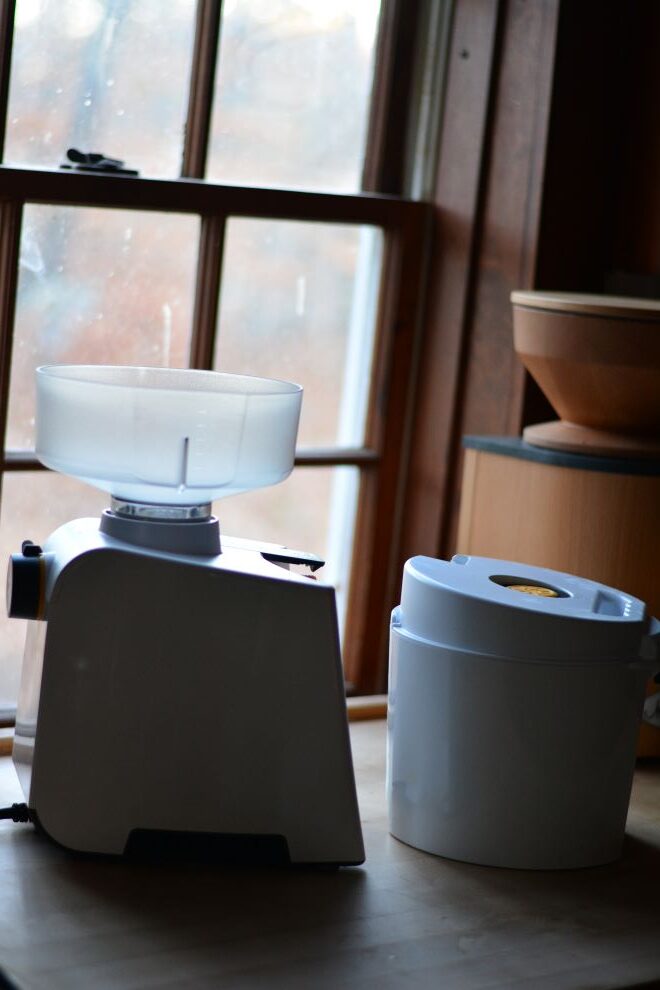
In order to mill fresh flour, you’re going to need to invest in a grain mill. Technically you can attempt to use a coffee grinder, blender, or food processer to mill wheat berries into flour, but you’re not going to like the result. Plus you risk burning out an expensive appliance.
Most home grain mills range from $250-$900. I’ve used the most affordable grain mill on the market, as well as my daily-use grain mill, which is on the pricy end. They all function well and get the job done.
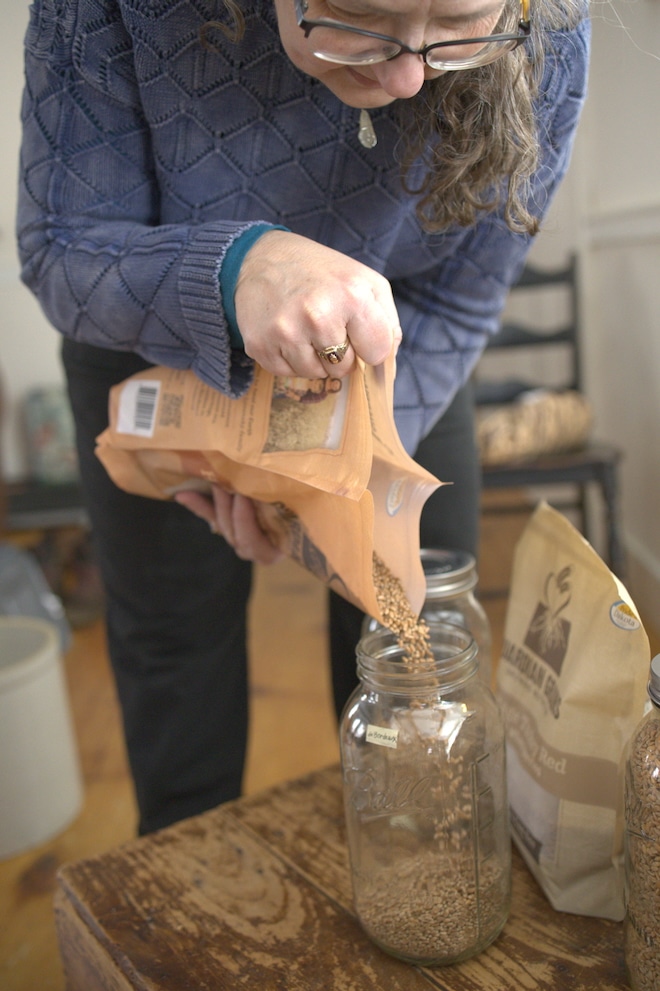
To get started with fresh milled flour, you’ll also need wheat berries. To secure the best prices, you’ll want to order them in bulk. Depending on your source, the quality of wheat you’re purchasing, and the shipping costs, you’ll usually spend around $50-$100/50 lbs of wheat berries.
Another optional start up cost is investing in a high-quality mixer. While this isn’t a need, it’s very helpful in making good bread with fresh milled flour. Fresh flour bread dough needs to be kneaded longer than doughs made with store bought flour, and you need a mixer that will handle the extra kneading time. I’ve used this one every single day for almost a decade without issues.
Cost breakdown to start milling flour
So to break it down, start up costs for milling fresh flour include:
a grain mill ($250-$900) + wheat berries ($50-$100) + optional mixer ($250-$550, depending on model) = $550-$1,550
These prices are on the high end, as well as include optional costs.
Truthfully, you can start out milling flour for as little as $250 (cost of an affordable grain mill), and a few wheat berries from Amazon or your local bulk/natural foods store.
Quick answer… fresh milled flour: is it worth it?
Yes, milling your own flour not only saves money, but also offers your family invaluable nutrients that store bought flour is missing. With an upfront investment, a small learning curve, and some wheat berries, you’re on your way to keeping more cash in your wallet while enjoying the benefits of eating the highest-quality flour in the world.
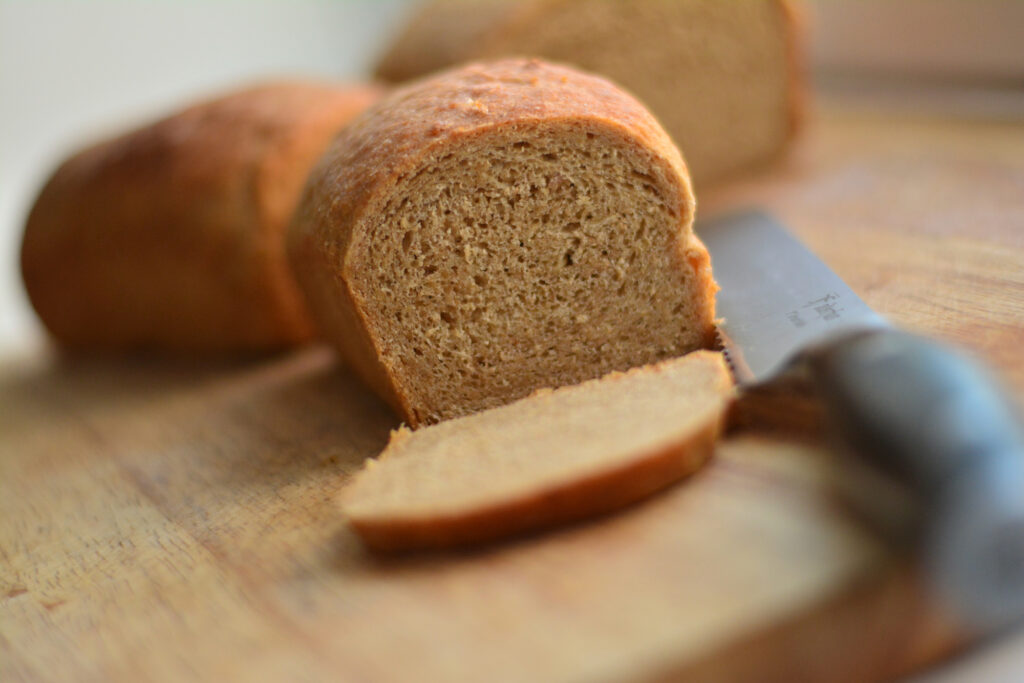
Is fresh milled flour worth it?
Alright, here’s the nitty gritty.
When I was purchasing flour from the store, I purchased organic King Arthur flour, all-purpose. These days, a bag of that same flour (per their website) costs $10.95 for 5 lbs (let’s round up to $11, shall we?).
So $11/5 lbs = $2.20 per pound of organic flour.
In comparison, I currently spend $64/50 lbs organic, hard white wheat berries.
So $64/50 lbs = $1.28 per pound of organic, fresh milled flour.
(Keep in mind that 1 pound of wheat berries translates directly to 1 pound of flour, unless you’re sifting it, then there will be some loss in weight.)
That’s a $0.92 savings per pound of flour I use.
Now, obviously there are some other factors involved (purchasing buckets to store bulk grains, taking up space in your home/basement, and so on).
Does fresh milled flour save money?
Let’s use the math above to take it one step further. An average loaf of sandwich bread uses about 1 pound of flour to make.
According to Google, the average American family consumes 2-4 loaves of bread per week. At a savings of $0.92 per pound of flour (and therefore per loaf of bread), that’s a weekly savings of $3.68.
Although that doesn’t seem like much, that adds up to almost $200/year.
And, on top of that, your family is receiving far more nutrients from the fresh milled flour than store bought flour could ever provide.
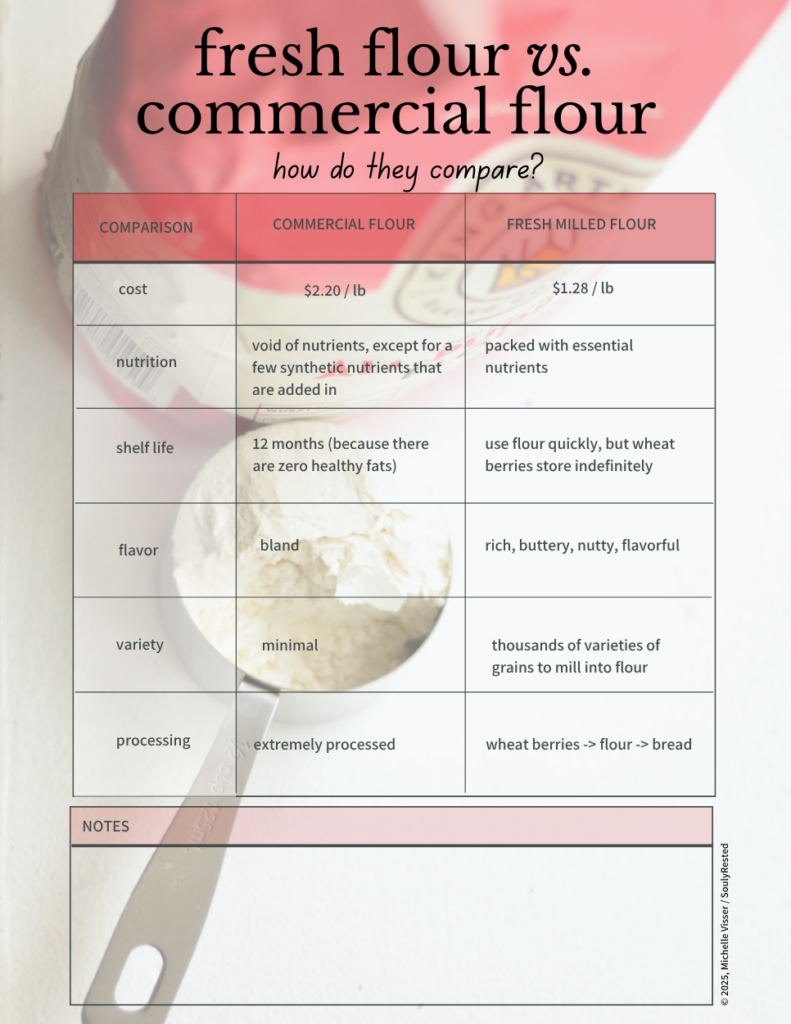
Quick reference of store bought flour versus fresh milled flour
COMPARISON COMMERCIAL FLOUR FRESHLY MILLED FLOUR
Cost $2.20/lb $1.28/lb
Nutrition synthetic nutrients are added in packed with essential nutrients
Shelf life 12 months (zero healthy fats) use flour quickly, wheat berries-indefinite
Flavor bland, neutral rich, buttery, nutty, flavorful
Variety minimal thousands of varieties of grains to mill into flour
Processing extremely processed wheat berries -> flour -> bread
How long until a grain mill pays for itself?
Think of it this way: in 1 1/2 years or less, you’ll have paid for your grain mill simply in flour savings. Please do keep in mind that these numbers aren’t exact. For instance, maybe your family exclusively uses ancient grains, or maybe you’re used to budgeting for non-organic flour at the store. I don’t know your personal numbers, but these savings reflect the dollar amounts I saw/saved when I made the switch to fresh milled flour from conventional flour.
These savings only consider bread, imagine how much more you save when you add in other baked goods and any other flour-based products you might be purchasing (tortillas, bagels, desserts, muffins, and so on).
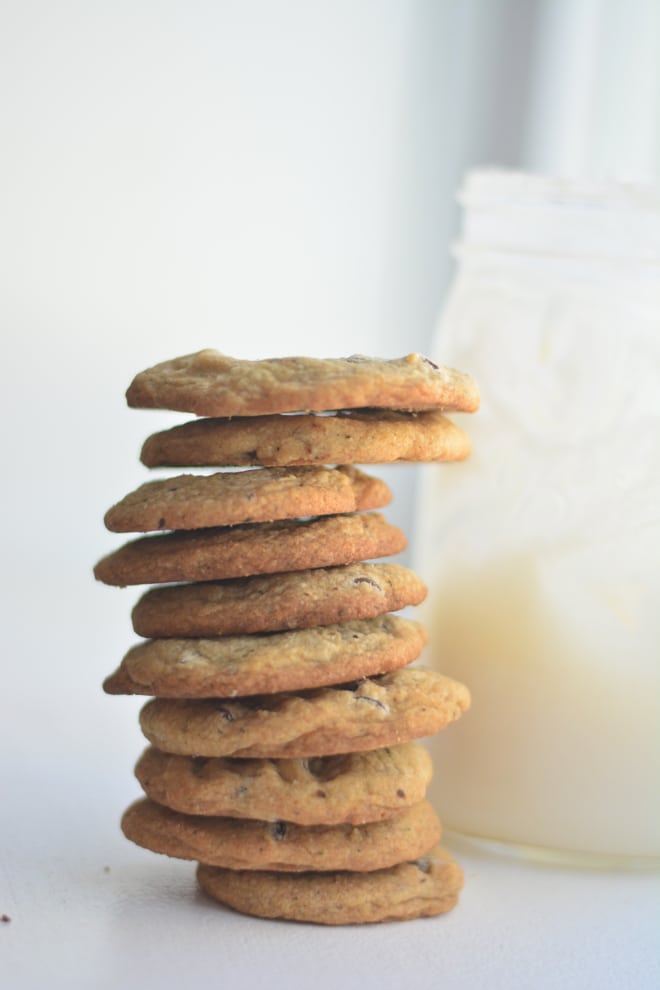
Also, keep in mind that some grains are actually much cheaper than the $1.28/pound I used as an example above. For instance, organic rye is one of the most affordable grains I can purchase (only $0.80/pound!), so I use rye often in brownies, my sourdough starter, and in these chocolate chip cookies made with fresh flour to keep costs down.
So to use rye flour instead of the commercial flour I was purchasing from the store is a $1.40/lb savings.
Homemade cookies just got much cheaper (and more nutritious!).
When fresh milled flour might NOT be worth it
Although I’ve personally seen the financial, health, and lifestyle benefits of fresh milled flour, I fully admit it isn’t for everyone.
- Fresh milled flour might not be for you if you don’t naturally enjoy baking. If you rarely use flour, don’t eat many carbs, or simply don’t find yourself with any desire to bake bread or make fresh baked goods, you might find your grain mill collecting dust.
- If you can’t afford to invest in a grain mill and wheat berries right now, it might be best to save up until you can.
- In a very limited space, it’s hard to store wheat berries. And they’re much pricier to purchase in smaller quantities instead of in bulk. That doesn’t mean milling your own flour still isn’t worth it, it will just take you longer to see the savings.
- If you’re extremely pressed for time (to the point where pausing to mill flour for 5 minutes before making bread dough just doesn’t fit in your schedule), then fresh milled flour might be tough for you right now. You might want to invest in this grain mill and make your fresh flour in large batches to keep on hand in the fridge when you need it, or maybe you’ll want to wait and revisit the idea when your life is slower and you have time to enjoy the process.

More about fresh milled flour
- How to use a grain mill
- Should I freeze wheat berries?
- Sourdough bread with fresh milled flour
- Kamut chocolate chip cookies
- Grab all my fresh flour tips and more recipes too