

Last Updated on February 24, 2026 by Michelle
If you’re wondering how to easily and successfully ferment food, you’re in the right place… it’s officially called lacto fermentation, and it’s also officially easy, if you just have a simple kitchen scale, the right salt, and if you know this basic method I’m going to show you.
How to Ferment Food
I’ve been fermenting our garden surplus for years, but this is also a great way to preserve any bits of leftover raw veggies you have that you bought at the store or farmers market and are lingering in the the recesses of your fridge.
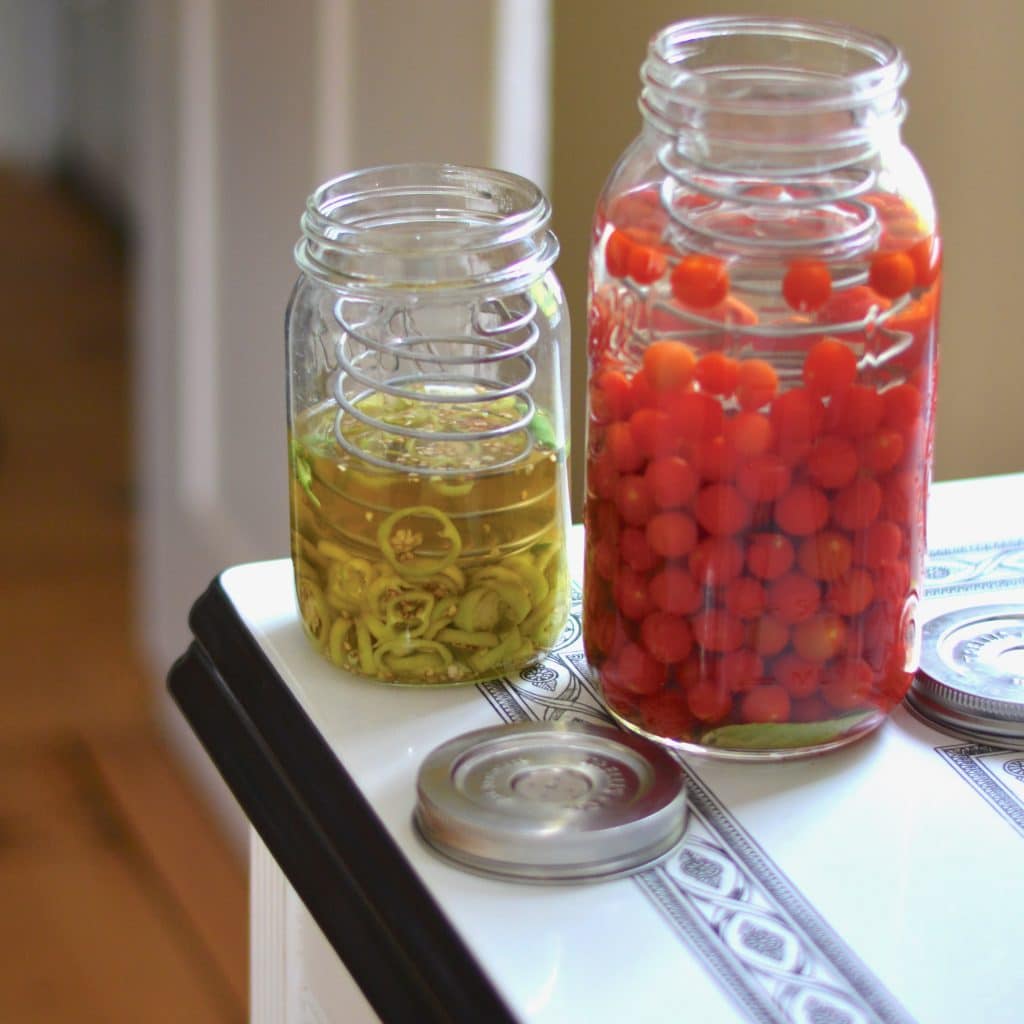
I just put my final jar of fermented cherry tomatoes away for the winter, so I thought I’d sit down and walk through the steps with you. While I’m showing you my tomatoes, know that you will follow this same process for any vegetable.

Fermenting fruit
You can also ferment fruit (in fact, I LOVE fermented fruit), but you follow a different method. Go here for:
But the recipe below focuses on fermenting vegetables.

Can I make fermented food at home?
Everyone can make fermented food at home. It’s much easier than you think, as long as you know the right details. Fermentation preserves food by changing the sugars that naturally occur in the veggie into organic acids. And you do that by using the right amount of the right salt (both details are very important… read on for more).
Fermentation is a fascinating, yet so very simple, natural process. I sometimes wonder if folks get so confused, or even kinda freaked out, about fermenting because of its naturally simple nature. We’re used to more complicated things these days. But people have been preserving food with salt since the dawn of time.


Canning, on the other hand, has only been around since the early 1800s. I don’t think it’s a coincidence that our more modern way of doing things is actually a lot more complicated and strips a lot more nutrients from our food.
Canning is great, don’t get me wrong, it’s just not the most nutritious way to preserve our foods. And, if I’m being honest, I’m not a fan. But I do it. Occationally.
Go here for my directions for canning crisp dill pickles.
And go here to find out how I make a year’s worth of pasta sauce without canning.
What’s the easiest thing to ferment?
While every ferment I do is easier than any other preservation method, I would say, hands-down, the easiest thing to ferment is also my favorite thing to ferment. Kombucha is an amazing way to improve your gut health, and–if you know the right insider’s tips & tricks–kombucha is an easy, natural way to add delicious fermented food or drink into your every day life.
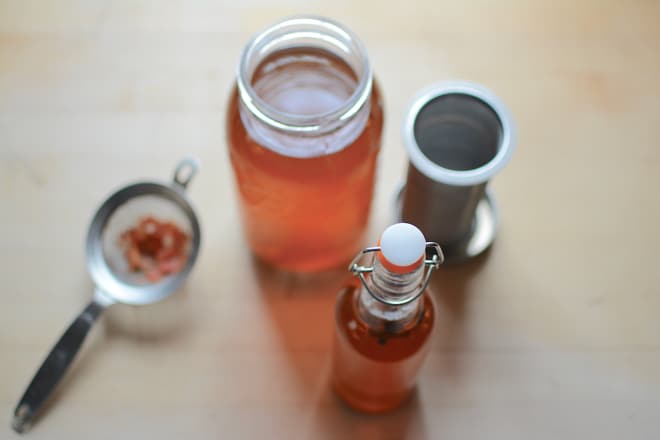
Go here for my free resources about making kombucha.
Go here to dive into Kombucha Academy. Use code SOULYRESTED and save $$.
What ingredients are used to ferment food?
The most important ingredient in any ferment occurs naturally–for free. Microorganisms in the air around us change the sugars in our food into lactic acid.

How does fermentation work?
Salt keeps all the bad microbes from being able to grow on your vegetables and spoil them. Even better, salt promotes the growth of the good bacteria that produce lactic acid. Lactic acid is the secret sauce of fermented food. It’s the magical conversion of sugars to acids.
And lactic acid helps with cancer prevention (ref.), decrease in cholesterol absorption(ref.), and reduction of food allergies (ref.).
And we know that butyric acid–the main energy source for the good bacteria in our gut–is produced while food ferments. ( source )
But that’s not all! Fermentation makes the nutrients that are present in vegetables available, a process called “bioavailability.”
A stark difference from canned vegetables, fermented vegetables retain all their nutrients and vitamins. In fact, their nutritional value increases! ( source )
You see, during fermentation, microorganisms are creating amazing nutrients, like vitamin C, B group vitamins (including the famous B12), and vitamin K.

Does fermenting add nutrients to your food?
Best-selling author, Kristen Shocke explains everything you want to know about fermenting on episode 185 of my show: the Simple Doesn’t Mean Easy podcast.
How to ferment vegetables
- Clean your food.
- Decide what salt concentration you need to use. (See below.)
- Place veggies in jar.
- Add salt.
- Fill your jar with filtered water and shake gently to agitate the salt to start dissolving.
- Place weight on vegetables, to keep them under the brine. (I use this.)
- Place fermentation lid on jar. (I use this.)
- Let sit for at least 3 days, at room temperature.
- Taste daily. When it tastes the way you want, remove weight (or spring) and fermentation lid, add a high-gauge stainless steel lid that won’t corrode from the brine, and place in fridge.

How to make a ferment brine
The brine concentration you should use for vegetables depends on the type of vegetable.
- Firm vegetables: Use a 1.5–3% brine
- Softer vegetables: Use a 5% brine
Weigh your vegetables, then multiply that number by the percentage of brine you want to make. For example, for a 2% brine, you would multiply the vegetable weight by 0.02 to decide the amount of salt you need to add.

Can you use tap water for fermenting food?
- Filter it… Use a water filter, such as a charcoal filter or a filtering pitcher, to remove chlorine.
- Boil it… Bring the water to a rolling boil for at least 20 minutes to allow the chlorine to evaporate. But make sure you let it cool completely before using it for your ferment.
- Let it sit… Pour the tap water into a bowl and leave it out on the counter overnight to allow the chlorine to naturally evaporate from the water.
How to make fermentation lids
All you need, in a fermentation lid, is to have a way to keep the bugs out but let the air in. I personally love this fermenting kit that works so nicely with any mason jar. The lid allows the brine to bubble out and the good bacteria in the air to get into my ferments, but it also keeps the bugs out.


How to Ferment Vegetables
Instructions
- Clean your vegetables.
- Weigh your vegetables, then multiply that number by the percentage of brine you want to make (1.5-5%)
- Place veggies in jar.
- Add salt.
- Fill your jar with filtered water and shake gently to agitate the salt to start dissolving.
- Place weight on vegetables, to keep them under the brine. (I use this.)
- Place fermentation lid on jar. (I use this.)
- Let sit for at least 3 days, at room temperature.
- Taste daily. When it tastes the way you want, remove weight (or spring) and fermentation lid, add a high-gauge stainless steel lid that won't corrode from the brine, and place in fridge.
What you need to ferment food


More about Fermenting Food
How to make kombucha with a SCOBY
Adding nutrients to your food by fermenting (listen)
Do you have to store your fermented foods in the refrigerator?
Not necessarily. If you have a cool dark place to store them, they can last for years unrefrigerated (I’ve kept fermented tomatoes that way for years), but they will get mushier and more fermented tasting. Placing them in the refrigerator almost stops the process entirely.