
Last Updated on March 10, 2026 by Michelle
Sandwich bread with fresh milled flour
I’ve been milling my own fresh flour for almost a decade. But it’s only been for a few years now that I’ve been making bread my family actually wants to eat.
Fresh milled flour is a nutrient powerhouse and adds a unique, delicious flavor to everything you bake. But until I figured out some important tips & tricks, well, my family didn’t like my bread. It was bricks if I used 100% fresh flour, so I want back to 1/2 store-bought and 1/2 fresh and that helped. See more tips for baking with fresh flour here.
But I had to master a few more things–like using a tangzhong which you’ll find in this recipe (don’t worry, I’ll walk you through it), and all the other insights I poured into creating the most in-depth resource you’ll find anywhere on milling & baking with fresh flour. See Fresh Flour University for more details on that.
I’m almost ready to send more than 100 of my favorite fresh flour recipes that I’ve created over the years into my publisher… watch for my new book Fall 2026, a sort of in-depth handbook for all things Fresh Flour and a cookbook in one.
And this bread recipe that I’m sharing today will most definitely be included in those pages!
p.s. if you’d like a chance to be a Test Kitchen for the book, I’d love to have you join us over in my Fresh Flour Kitchen facebook group.
Sandwich Bread made fresh milled flour changed everything
This recipe was a turning point for me. A true game changer. Our family enjoyed other “sandwich breads” I’d made before, once I got out of my bricks-for-bread stage that is, but not truly as sandwich bread.
All my breads before this were wonderful butter-slathered accompaniments to our dinners.
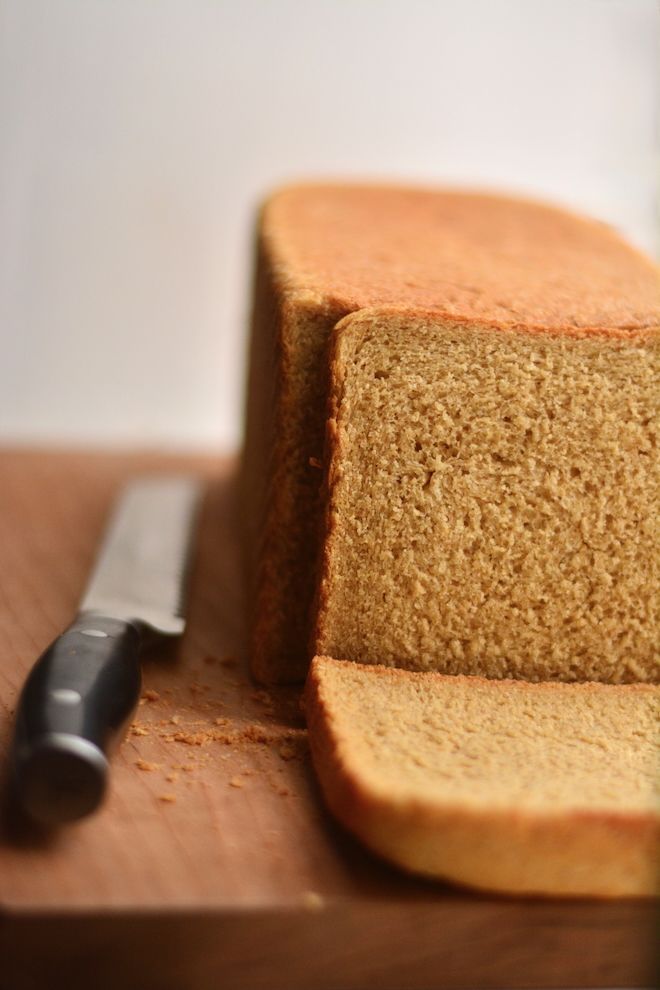
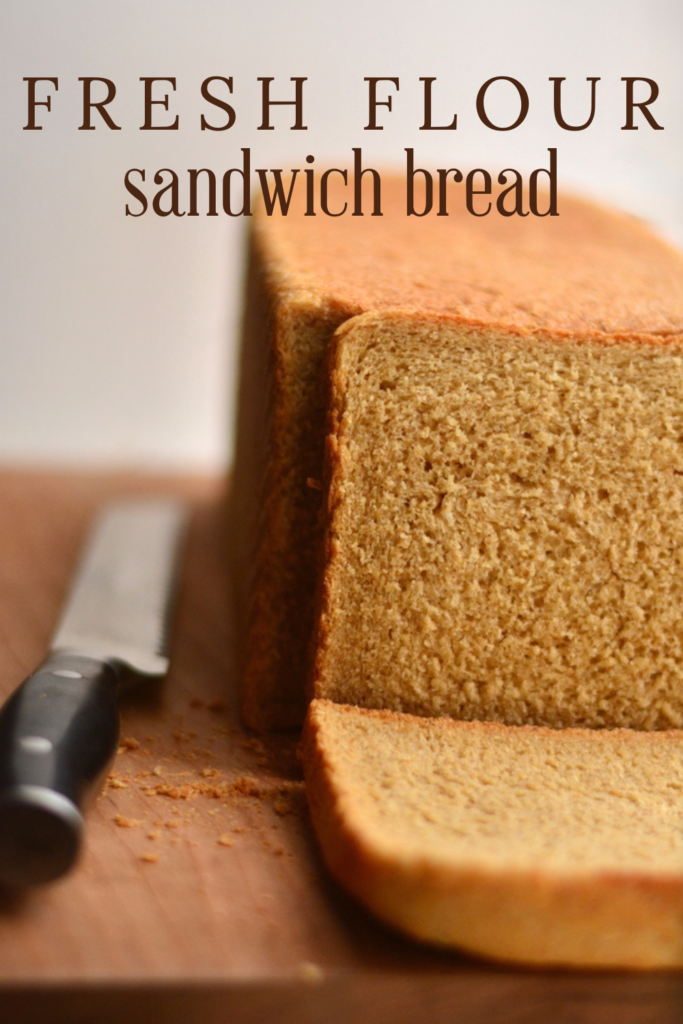
But this recipe I’m sharing today, and a Pullman pan, were the final catalysts that meant I no longer have to turn my cart down the bread aisle at the grocery store. This bread slices so easily, into perfect, thin sandwich bread pieces and offers a perfect crumb for sandwiches.
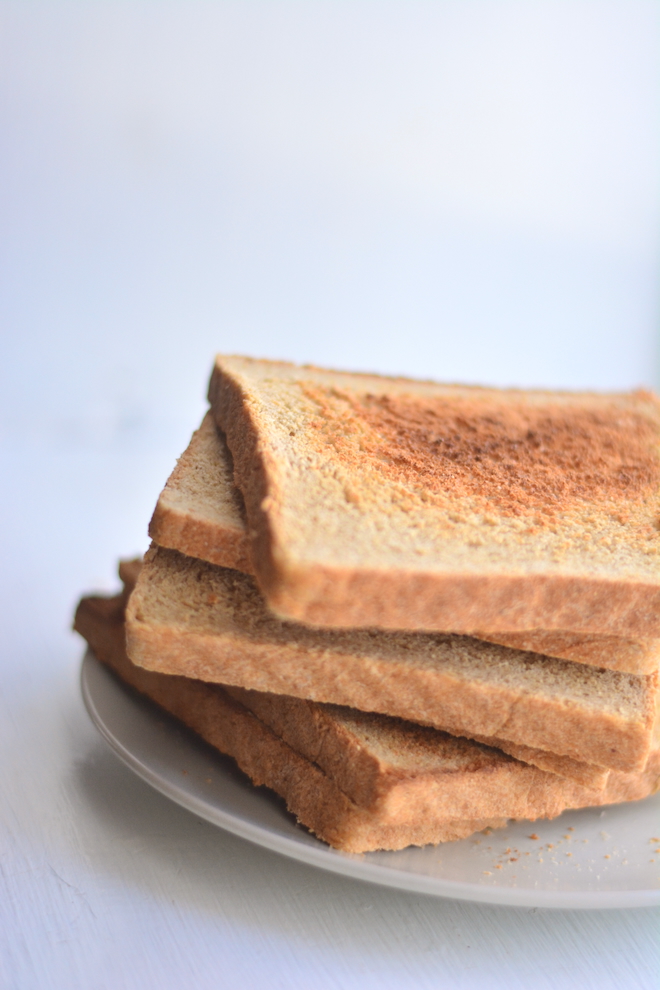
Because it’s made with a tangzhong (see below for more on that), it stays fresh for so many days! When it’s a little past it’s prime, it toasts beautifully and makes the BEST fresh toast.
Then I will slice whatever is left and store the slices in the freezer to use for toasted sandwiches later, or I’ll use the older bread for croutons or bread crumbs.
Why use fresh milled flour to make bread?
Any homemade bread is better than 36-ingredient “bread” from the store.
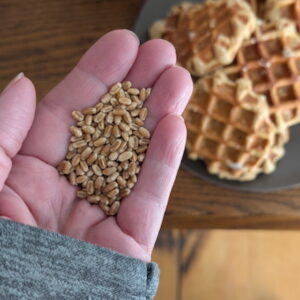
But if you want to level up your bread making game, fresh milled flour is the way to go. Flour purchased from the store actually only contains 1/3 parts of the wheat berry. And the starchy endosperm that is “flour” as we know it is sifted, heated, and treated until it has essentially no nutrients left.
But if you use a grain mill to mill your own flour? Boom. You get to enjoy all 3 parts of the wheat berry (including the most nutritious parts, the bran and germ!). This means that your body is receiving 40/44 essential nutrients it needs, all “just” from your flour.
Learn about why I mill my own flour here.
Which wheat berries should I make bread with?
The best wheat berries to make bread with are generally hard white and hard red. These grains have the highest gluten potential, which results in great bread. Keep in mind that within the category of hard white wheat and hard red wheat, there are different kinds.
There are modern breeds of hard white and red (most common), and there are heritage breeds of these types of grains, as well. Heritage grains are great for making sure you’re getting unhybridized, nutrient-dense grains. My favorite breeds of heritage hard red wheat are Rouge De Bordeaux and Turkey Red.
Other grains that can be used to make bread are Einkorn, Khorasan (Kamut), Spelt, Rye, and Durum. All of these grains benefit from adding some vital wheat gluten (or other enhancements) to your bread dough to improve elasticity and gluten. Never use soft wheat berries for bread. It won’t develop gluten, which will result in very dense bread.
I use a mixture of hard red, durum, and spelt grains to make this loaf.

What’s the best bread pan for fresh flour loaves?
A Pullman bread pan is pretty odd looking if you ask me.
I’d seen folks using them occasionally, on social media now and then, but thought they looked too “intense” and wondered by on earth someone would want such a large bread pan (and lid!) to have to store in their cabinets.
Then one day I decided to buy one. I decided if there was a chance it might help me bake my own like-the-store sandwich bread I needed to try.
Best fresh-flour related purchase I’ve made since investing in my grain mill.

What IS a pullman bread pan?
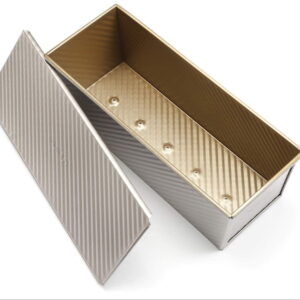
A pullman bread pan is a large, rectangular loaf pan with straight sides and a lid that slides on top.
This style of bread pan was used to make bread on the first pullman train cars–the first trains that gave passengers cars to sleep in while they traveled across the country. The passengers, of course, needed food on their journey, and the kitchens on the pullman train cars were tiny. By baking the bread for the passengers in square-topped loaves.
The lid keeps the bread from doming and, instead creates perfectly square slices, which allowed the early Pullman train cars to store 3 loaves of bread in the space that used to only store 2.
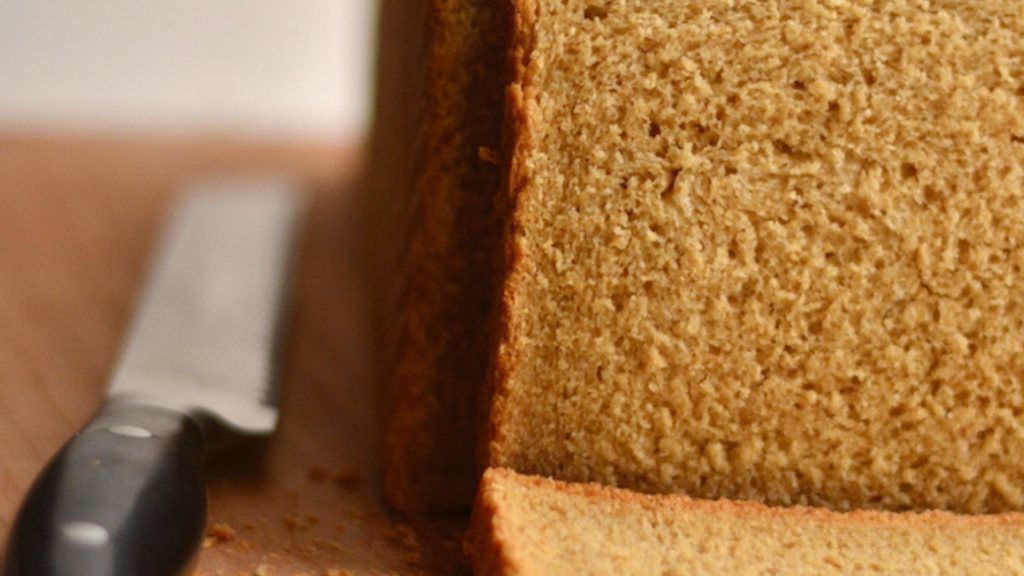
But the part I really love about this bread is the texture. It’s soft and pillowy, kinda like Wonder Bread honestly, minus the gumminess and zero taste. (Oh, and minus all those ingredients you can’t pronounce, including L’cysteine, a common dough conditioner in bread that’s made from (are you sitting down for this one?) human hair and duck feathers. Seriously. (Find out more here.)
What’s a tangzhong?
Tangzhong is bread making technique of cooking together a portion of the flour & liquid before adding it to the dough. It works by allowing the dough to absorb more liquid than usual, making your bread pillowy-soft.
To add a Tangzhong to any dough, simply whisk together flour and water in a 1:5 ratio, cook it until it thickens into a paste, then add the paste to your dough.
You’ll find bread made with Tangzhong added will be:
- Softer & fluffier
- Shelf-stable for longer
- Better at retaining moisture
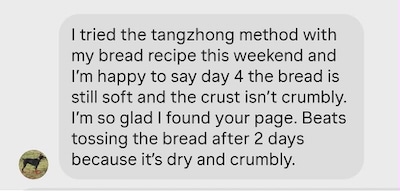
The Tangzhong method is especially great for fresh milled flour if you’re struggling with dense, dry, crumbly, or under-proofed loaves.
I’ve been touting the joy of tangzhong in fresh flour bread on instagram for a while and so many of you reach out telling me it’s a game changer for you, like it was for me.
How to make a tangzhong
To prepare your tangzhong, you’ll need:
- 6 TB milk
- 2 TB hard red flour
Go ahead and mill about 300 g of hard red wheat berries first. This will be enough hard red flour for the whole recipe. These are my personal, all-time favorite, heirloom grain for this bread: Rouge De Bordeaux Hard Red Berries (use code SOULYRESTED to always save 15%)
Make your tangzong, whisking flour and milk, and heating while constantly whisking. After just a minute or two of constant whisking, your flour and milk combination will turn into a paste. Immediately remove from heat and let cool.
While your tangzhong cools, start mixing your bread.
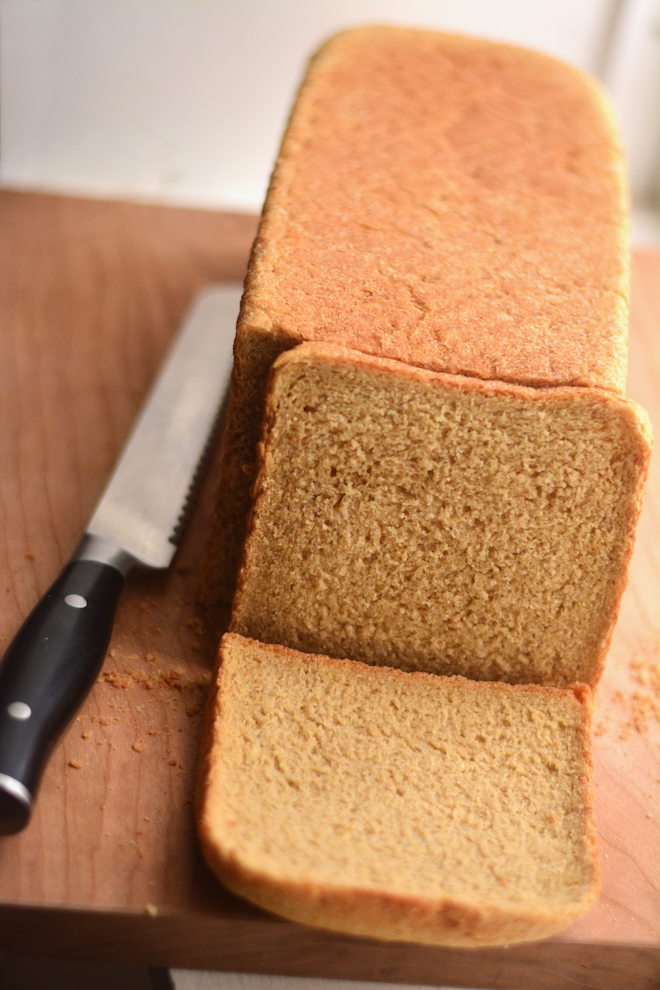
The Best Sandwich Bread with Fresh Milled Flour
While your tangzhong cools (see above), start your dough by mixing these ingredients:
- 2 cups hard red flour (145 grams)
- 1 cup durum flour (145 grams)
- 1 1/2 cups lukewarm water
- 2 teaspoons instant yeast
- 2 tablespoons honey
- 1 ½ TB vital wheat gluten
Then add the cooled tangzhong and these ingredients:
- 1/2 cup spelt flour (60 grams)
- 1 1/2 teaspoons salt
- 3 tablespoons butter (read below)
Instructions:
- Add hard red and durum flour, water, yeast, honey, and vital wheat gluten to your mixing bowl. Mix until combined and let sit, covered, for 20 minutes.
- Add cooled tangzong, spelt flour, and salt to your bowl. Mix on medium. Add butter slowly, in small pieces, one at a time, as mixer is mixing.
- Turn mixer to high and let it knead your dough for at least 10 minutes, or until you get a nice window pane.
- While mixer is kneading your dough, prepare a bowl that will be at least twice the size of your dough by lightly coating the inside in butter or oil.
- Turn dough out onto the counter and knead it briefly, mainly just to form it into a nice ball. (This is assuming your mixer has done all the hard work. If you don’t have a nice window pane your dough hasn’t built up enough gluten yet, and in that case you’ll want to keep working with it and kneading it more at this stage.)
- Roll your ball of dough in the oil in your prepared bowl, so it’s coated on all sides. Cover and sit in a warm, draft-free location to rise for about 30 minutes.
- Prepare your Pullman pan by coating the inside of the pan, as well as the lid, with a healthy fat, paying close attention to the corners.
- After your dough has almost doubled in size, or after about half an hour, it’s time to prepare it for its second rise.
- Place the dough in your prepared pan, seam side down, and let dough rise until it’s about 1 inch from the top of the pan, anywhere from 30 minutes to 1 ½ hours.
- Preheat oven to 350F.
- Bake for 50-60 minutes, until it reaches an internal temperature of 200F.
- Immediately remove from pan and let cool. Store for up to 3 days fresh or store, sliced and ready to use, for months in the freezer.
Note: I add vital wheat gluten to this bread because spelt has a weaker, more water-soluble gluten than modern hard wheats, but I like this combination. If you’d like to use a great heirloom wheat, like Turkey Red, you can try skipping the vital wheat gluten, since Turkey Red has high levels of protein and strong gluten potential.
Best sandwich bread with fresh milled flour (pullman pan)
Ingredients
For the Tangzhong
- 6 TB milk
- 2 TB hard red flour
For the dough
- 2 cups hard red flour 145 grams
- 1 cup durum flour 145 grams
- 1 1/2 cups lukewarm water
- 2 teaspoons instant yeast
- 2 tablespoons honey
- 1 ½ TB vital wheat gluten
To add with the Tangzhong
- 1/2 cup spelt flour 60 grams
- 1 1/2 teaspoons salt
- 3 tablespoons butter read below
Instructions
- Make your tangzong, whisking flour and milk, and heating while constantly whisking. After just a minute or two of constant whisking, your flour and milk combination will turn into a paste. Immediately remove from heat and let cool. While your tangzhong cools, start mixing your bread.
- Add hard red and durum flour, water, yeast, honey, and vital wheat gluten to your mixing bowl. Mix until combined and let sit, covered, for 20 minutes.
- Add cooled tangzong, spelt flour, and salt to your bowl. Mix on medium. Add butter slowly, in small pieces, one at a time, as mixer is mixing.
- Turn mixer to high and let it knead your dough for at least 10 minutes, or until you get a nice window pane.
- While mixer is kneading your dough, prepare a bowl that will be at least twice the size of your dough by lightly coating the inside in butter or oil.
- Turn dough out onto the counter and knead it briefly, mainly just to form it into a nice ball. (This is assuming your mixer has done all the hard work. If you don’t have a nice window pane your dough hasn’t built up enough gluten yet, and in that case you’ll want to keep working with it and kneading it more at this stage.)
- Roll your ball of dough in the oil in your prepared bowl, so it’s coated on all sides. Cover and sit in a warm, draft-free location to rise for about 30 minutes.
- Prepare your Pullman pan by coating the inside of the pan, as well as the lid, with a healthy fat, paying close attention to the corners.
- After your dough has almost doubled in size, or after about half an hour, it’s time to prepare it for its second rise.
- Place the dough in your prepared pan, seam side down, and let dough rise until it’s about 1 inch from the top of the pan, anywhere from 30 minutes to 1 ½ hours.
- Preheat oven to 350F.
- Bake for 50-60 minutes, until it reaches an internal temperature of 200F.
- Immediately remove from pan and let cool. Store for up to 3 days fresh or store, sliced and ready to use, for months in the freezer.
Notes

What I Use to Make this Fresh Flour Sandwich Bread

The grain mills I recommend
Go here for my Ultimate Guide to Choosing a Grain Mill, where I walk you though 6 questions to ask to decide which grain mill is best for you & your family.
More fresh milled flour info:
- Which wheat berries to use (a simple guide)
- The best lemon bars made with fresh flour
- Wheat berries: everything you need to know
- Kamut chocolate chip cookies recipe
- Grab all my tips & more recipes here
PIN this recipe here so you always have it when you need it.
This ‘Tangzhong’ sounds very interesting! I wonder why the finished bread stays fresh longer? I will have to try it. My bread comes
Out nicely now and I use 1/2 red and 1/2
White hard wheat. I also use a mixer, which I think is helpful. I never thought of testing for the window pane. My granddaughter refuses to eat the bread her Mother buys at the store or even the bread Mommy makes. She always wants grandma’s bread. Why does it take so long to cook? Do you think in part it’s because of the covered pan?.
And I love the detail of your recipe. It really helps!
I’ll be using commercial flour until I can purchase a mill, but am definitely giving this a try.
It’s not easy even finding a mill to purchase right now, there’s such a high demand!
How would I bake this if I dont have a Pullman bread pan?
You could bake this into two smaller (standard) loaves.